£12bn Offshore Wind Deal Lands as UK Green Record Draws Fire
RWE and KKR will pour £12bn into Norfolk's Vanguard windfarms, powering 3m homes by 2030 — announced days after the Jackdaw gasfield approval and the Botley West solar rejection.
By Olivia Hart
3 min read
What's News
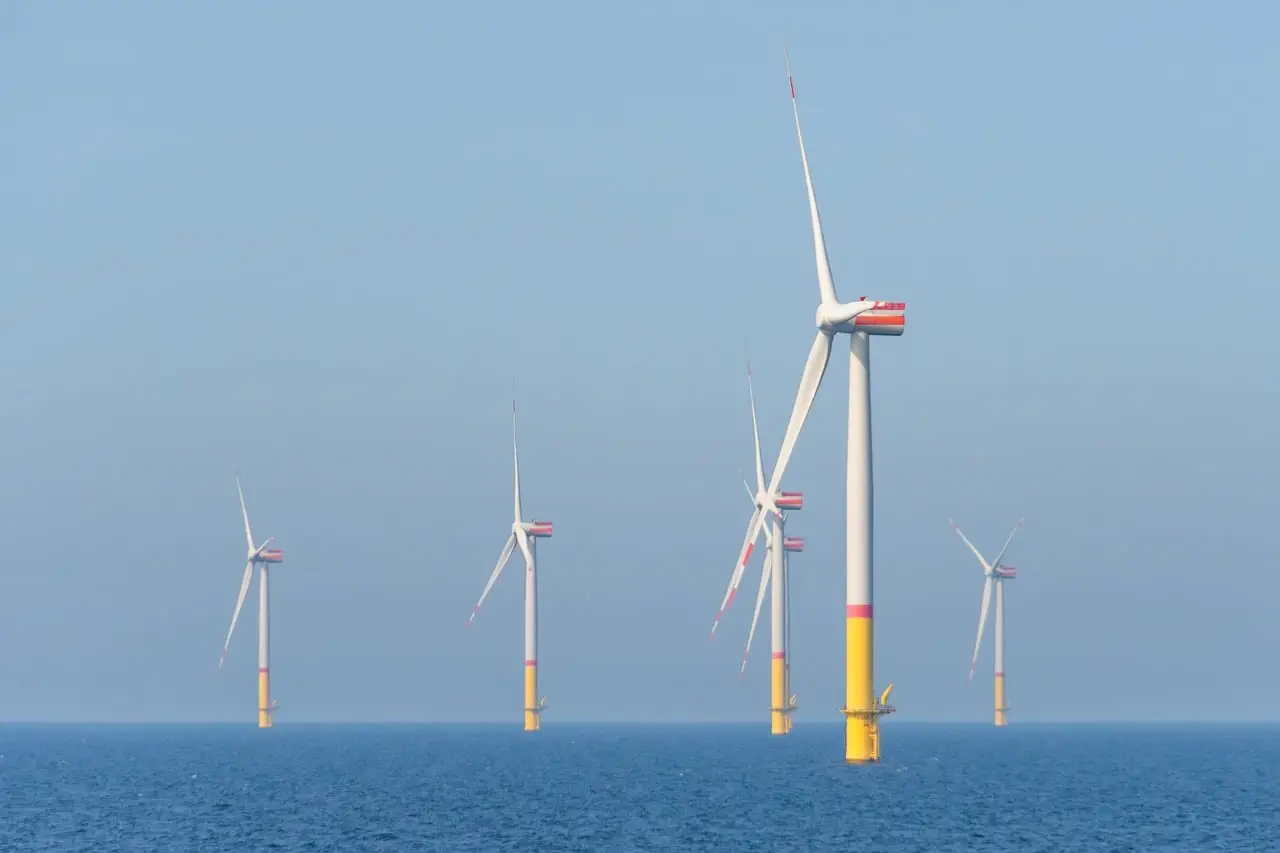
- RWE and KKR are investing £12bn in the Vanguard West and Vanguard East windfarms off the Norfolk coast, announced Wednesday.
- The projects will generate about 2.8 gigawatts — enough for 3 million homes — with power flowing by 2030 and construction starting early next year.
- The state-owned National Wealth Fund will contribute £1bn; construction supports 2,300 supply-chain jobs a year but only 100 permanent operational jobs.
- Days earlier, ministers approved the Jackdaw gasfield and rejected the £800m Botley West solar project, which would have powered 330,000 homes.
By Olivia Hart
A £12bn investment from German energy company RWE and US private equity firm KKR will build two of the UK's largest offshore windfarms off the Norfolk coast — announced Wednesday, days after the government approved the contentious Jackdaw gasfield in the North Sea.
The package funds the Vanguard West and Vanguard East projects, which the government called a deal "believed to be the biggest of its kind in UK history". Prime Minister Andy Burnham, who travels this week to the Cop31 climate summit in Turkey, framed it as a "vote of confidence for building in Britain".
Burnham did not stop at construction economics. "It is great news for bill payers because every turbine we put up is power under British control, not at the mercy of events on the other side of the world," he said. He added: "With coastal communities from Scotland to East Anglia powering Britain's future, the places that host this energy benefit from the jobs and opportunities that it brings."
The government's own wealth fund is also on the hook. The state-owned National Wealth Fund will contribute £1bn to the offshore wind projects. That state exposure matters if construction costs overshoot — a risk the announcement did not address.
What does the deal actually deliver?
Construction starts early next year, and the windfarms are set to provide power by 2030. RWE said the Vanguard project would generate about 2.8 gigawatts — roughly enough electricity for 3 million homes, or about one in ten households in Britain.
The jobs figures deserve scrutiny. RWE estimates construction will create and support 2,300 jobs each year through its supply chain. Once operational, the windfarms are expected to add just 100 long-term permanent jobs. The headline construction number covers temporary, supply-chain employment; the permanent payroll is a fraction of it.
SSE also moved on Wednesday. The company said the latest phase of its Berwick Bank B windfarm off the east coast of Scotland would "support" 2,600 existing jobs — a word choice that preserves existing positions rather than creating new ones.
Energy Secretary Miatta Fahnbulleh cast the investment as industrial policy as much as climate policy. Investment in offshore wind and clean power, she said, was "creating quality jobs and rebuilding industry, while delivering the clean power we need to lower bills and reach net zero". She added that Britain was "leading from the front as a renewable energy powerhouse".
Why is the timing awkward?
The announcement lands as Burnham tries to repair his government's green record before Cop31, where he is expected to speak Thursday. He faces a backlash from Labour MPs and environmental campaigners over the approval of the Jackdaw gasfield — a decision that sits uneasily beside a record wind announcement.
The bad news did not stop there. On Tuesday, ministers rejected plans for what would have been Britain's biggest solar plant near the Blenheim Palace estate in Oxfordshire.
Fahnbulleh turned down the £800m Botley West project, which would have covered almost 3,500 acres — an area roughly the size of 2,000 football pitches. Developers said it would have generated enough electricity for 330,000 homes.
In a letter written on behalf of the energy secretary, Margaret Curran said the project would cause "substantial harm" to the green belt and the Blenheim Estate, home to Blenheim Palace, a world heritage site and the birthplace of Winston Churchill.
The pattern is now visible: record sums for offshore wind, simultaneous refusal of onshore solar and new gas approvals. Whether Cop31 audiences read that as a coherent energy strategy or as selective greening depends on what Burnham says on Thursday — and on whether the Vanguard projects hit their 2030 deadline.
In plain words: £12bn of private capital plus £1bn of public money buys 3 million homes' worth of power by 2030, but it does not answer why a gasfield was approved and a solar farm was not.
Source: The Guardian Business
More from Olivia Hart
Show full bio
Staff writer covering people, launches and day-to-day practice in entrepreneurship, startups and venture funding at Business Bearings.
2,011 articles