37.2 Million Cruised in 2025 Despite Overboard Incidents
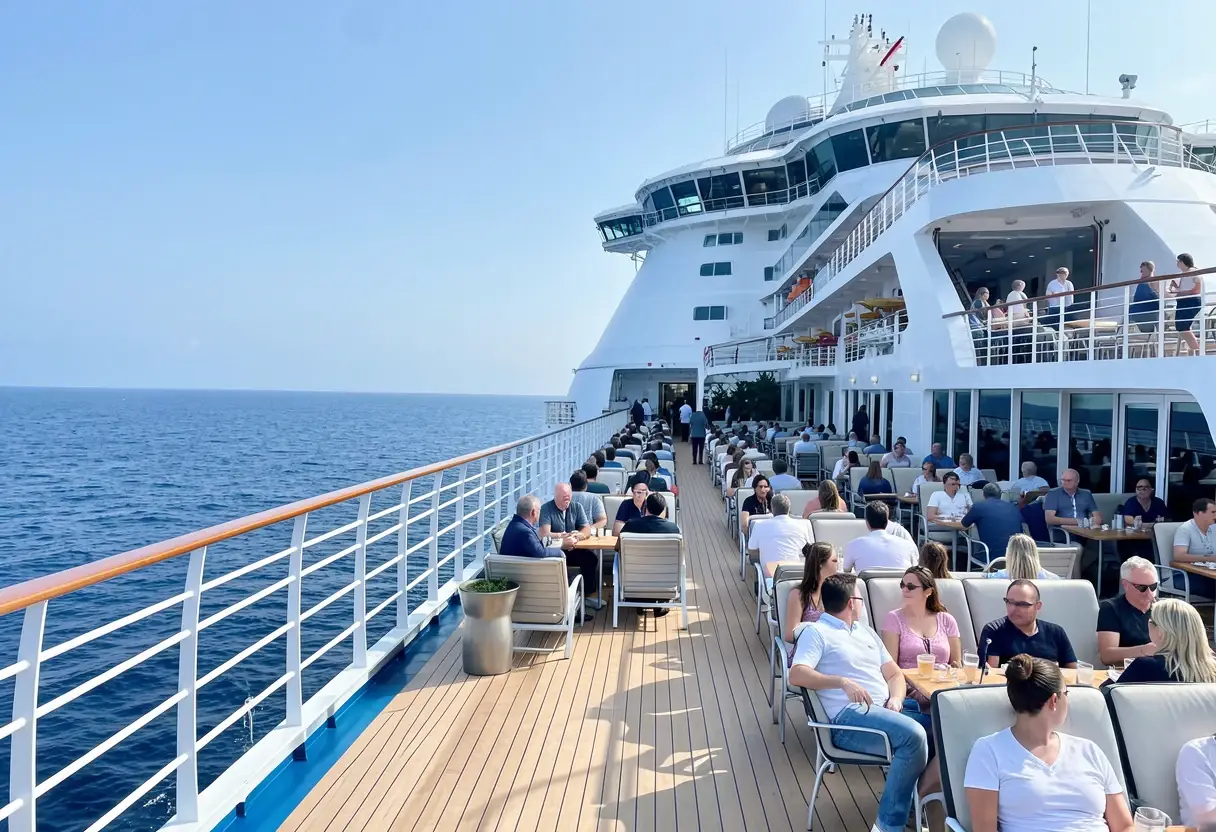
A record 37.2 million people cruised in 2025 despite murders, overboard rescues and virus outbreaks. CLIA data and experts say the incidents are statistical outliers.
By Grace Kim
4 min read
What's News
- 37.2 million people took cruises in 2025, a record, per the Cruise Lines International Association.
- Global cruise passengers more than doubled from 14.8 million in 2010 to 29.7 million in 2019.
- A study counted 439 reported deaths across 78 cruise lines from 2010 to 2019, against 215 million-plus passengers.
- CDC logged 18 acute gastroenteritis outbreaks sickening 2,041 people among 19 million US ocean cruisers in 2024.
- Carnival's Diamond Princess quarantine in 2020 killed 14 and infected 712 of roughly 3,700 aboard.
By Grace Kim
37.2 million people took cruises in 2025, an all-time high, according to the Cruise Lines International Association (CLIA), the industry's largest trade group. That record landed in a month when news coverage ran the other way: a man was arrested in Texas after allegedly killing a woman on a Caribbean voyage, a pianist on a Royal Caribbean cruise from California was rescued by two fishers in the Pacific after going overboard, and Singapore seized the US-operated MV Odyssey — a ship sold to retirees as a "permanent" life at sea — after the operator ran out of money on higher fuel prices and dropped all passengers off in Cambodia.
Bizarre stories circulate constantly. Passenger counts keep climbing anyway.
What do the numbers actually show?
From 2010 to 2019, global cruise passengers more than doubled, CLIA reports: 14.8 million in 2010, 29.7 million in 2019. Over that same decade, a study in the International Journal of Travel Medicine and Global Health counted 439 reported deaths across 78 river and ocean cruise lines — against more than 215 million people who sailed, per the trade group. Fatalities were statistical outliers.
"The confidence that consumers have in cruising is extraordinarily high. They know these one-off situations are meaningless. Accidents are accidents," said Stewart Chiron, an industry expert known as "the Cruise Guy."
His pitch for the product is logistical, not luxurious. "You're not packing and unpacking; you're not checking in and out of hotels; and you're not waking up in the same boring place each day," Chiron said. "You don't like a port? Get back on the ship, and you're off to the next one and waking up in a new place with new adventures."
How bad were the worst outbreaks?
The industry's worst shock was Covid-19. In January 2020, Carnival's Diamond Princess was sailing Asia with roughly 3,700 passengers and crew when the captain learned a passenger who had disembarked in Hong Kong tested positive. Two days later he informed those aboard; they spent two weeks quarantined in their cabins. Fourteen people died and 712 were confirmed infected. Operators openly wondered whether the industry could recover.
Other incidents followed. In April, the MV Hondius left Ushuaia, Argentina — nicknamed "the End of the World" — bound for Antarctica, but hantavirus spread among passengers and three people died. Last year Netflix released "Trainwreck: Poop Cruise," a documentary about the 2013 Carnival Triumph voyage where a fire cut power and sewage flooded the ship.
The money didn't flinch. 2025's 37.2 million passengers set the record anyway.
Is a ship riskier than a bus tour?
No, according to Cindy Prins, an epidemiologist and associate professor in population health sciences at the University of Central Florida. She said cruising is not riskier than taking a bus tour, flying or "just being in crowds."
The CDC's 2024 data backs that up for US travelers. That year, 19 million US guests took ocean cruises, CLIA reported. On voyages including both US and foreign ports, the CDC counted 18 outbreaks of acute gastroenteritis — defined as 3% or more of passengers or crew reporting symptoms like diarrhea or vomiting — sickening 2,041 people in total. A minuscule share of passengers. The CDC also notes crew must immediately report symptoms to medical staff, so outbreaks get detected faster at sea than on land.
What do repeat customers pay?
Brooke Rodriguez, a 39-year-old freelance communications consultant and mother of three outside Denver, has taken two Disney cruises in two years and is planning a third. They averaged $8,500 for her, her husband and three children — cheaper, she argued, than "a week with a hotel and flights and park tickets and passes and all of that for a Disney park experience."
Hygiene protocols sold her. Disney staff hand out sanitizing wipes at restaurant entrances and direct buffet-goers to a sink. "But I know on that ship the number of people that have washed their hands as they walk in," said Rodriguez, who also got her family Covid and flu vaccines before leaving shore.
Joyce Lipkind, owner of A&R Block Travel in St Louis — an agency her mother founded in 1976 — sells 50 to 75 cruise vacations a year, split about half ocean, half river. Most customers are seniors; one woman books two to three Viking river cruises annually. Asked whether customers fear a virus outbreak onboard, Lipkind said no.
"You unpack once, and that is where you stay the whole time," she said. "I think seniors have been there, done that, seen it all."
With passenger counts doubling in a decade and a record 2025 in the books, the industry's growth is outrunning its headlines — and travel agents like Lipkind show no sign of a demand drop.
Source: theguardian.com
More from Grace Kim
Show full bio
Market editor covering people, launches and day-to-day practice in entrepreneurship, startups and venture funding at Business Bearings.
2,178 articles