41% of Gen Z Say Friendsgiving Rivals or Beats Family Thanksgiving
An Ogilvy-Ideally survey of 1,198 U.S. adults finds 41% of Gen Z rate Friendsgiving equal to or above family Thanksgiving, and 31% planned to skip the holiday over costs.
By Daniel Okafor
3 min read
What's News
- 41% of Gen Z consider Friendsgiving equally or more meaningful than family Thanksgiving, per Ogilvy-Ideally survey of 1,198 U.S. adults fielded Nov. 11–12.
- Fewer than 25% of 25- to 34-year-olds reached the four traditional adulthood milestones in 2025, vs nearly half in 1975, per U.S. Census Bureau.
- 31% of Gen Z planned to skip Thanksgiving due to expenses, per Empower research.
- 65% of Gen Z would eat a Thanksgiving dinner of only side dishes, per Campbell's State of the Sides report.
- Gen Z is roughly 1.5x as likely to say humor would make them more interested in buying from a brand.
By Daniel Okafor
Fewer than one-quarter of Americans aged 25 to 34 have reached the four conventional milestones of adulthood—moving out, working, marrying and having children—according to a 2025 U.S. Census Bureau report. In 1975, nearly half had.
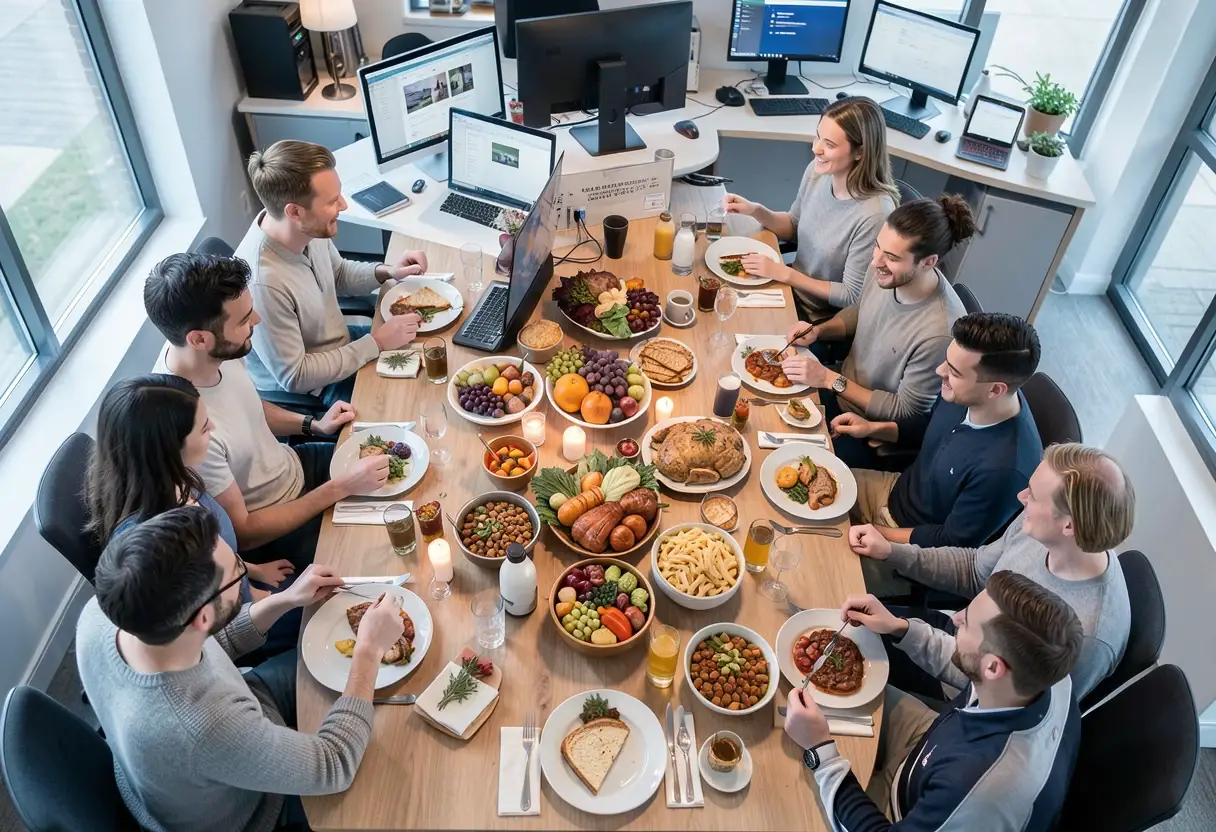
That gap is reshaping the biggest consumption occasions on the calendar, starting with Thanksgiving. New research by Ogilvy and Ideally, a nationally representative survey of 1,198 U.S. adults fielded Nov. 11–12, found that 41% of Gen Z consider Friendsgiving equally or more meaningful than Thanksgiving with family or relatives. Gen Zers are almost twice as likely as the general population to pick Friendsgiving outright as their most meaningful celebration.
Why is the table changing?
The Census data explains the mechanism. Marriage and parenthood happen later. Homeownership is financially challenging. More young people build lives outside the nuclear-family household. A flex wall is now more commonplace than a white picket fence.
Friendsgiving predates Gen Z, but it has become an established part of young adults' holiday calendars. As everyday opportunities for connection decline, the occasion works as a social anchor, turning friendships into lasting traditions. Interest-based communities are making it their own: BTS fans in Texas are organizing a "Bangtan Friendsgiving" this November, complete with photocard trading, games and fan-made merchandise.
Costs shape the format too. Thirty-one percent of Gen Z respondents planned to skip Thanksgiving because of expenses, according to Empower research. Potlucks, smaller gatherings and shared hosting responsibilities spread costs for people on tight budgets or living with roommates.
What's on the menu?
Even the turkey's central place is negotiable. Sixty-five percent of Gen Z would happily eat a Thanksgiving dinner consisting entirely of side dishes, according to Campbell's annual State of the Sides report.
The spread itself is globalizing. At a Friendsgiving potluck, Filipino lumpia can sit alongside Southern mac and cheese, while gochujang-glazed Brussels sprouts, jerk-spiced turkey or chili-crisp green beans join the table. Datassential's food-culture research finds Gen Z treats fusion cuisine as an expression of creativity and an evolution of American food. Recipes now come from family kitchens, friends across cultures and TikTok saves.
What are brands missing?
For decades, marketers have used marriage, homeownership and parenthood as stable predictors of when consumers enter new categories. The Ogilvy-Ideally research found those triggers inadequate. Asked what would feel like a meaningful life milestone today, respondents across all age groups put financial independence first. But Gen Z was more likely to select achieving a major career goal (+9 percentage points) and learning a new skill or hobby (+7 points) than the general population.
The survey also tested what would make Thanksgiving advertising persuasive. Good value for money led among all groups at 38%. Gen Z was more likely to respond to people and situations they relate to, and roughly 1.5 times as likely to say humor would make them more interested in buying from a brand. Even a playful acknowledgment of the holiday's changing reality could help brands connect with younger consumers.
Some already do. DoorDash's 2025 "No One Has to Know" campaign embraced the messy reality of holiday hosting, offering rescue when preparations went wrong. Bilt rewards renters for paying on time and helps them build credit—financial progress recognized outside homeownership. IKEA's 2026 KOMPISHÄNG collection was developed with young renters who move frequently, offering portable furniture that makes temporary living feel more like home.
What's the so-what?
Someone today might spend a decade renting, build a close community of friends from around the world, change careers several times and establish meaningful traditions long before buying a home or starting a family. For a generation navigating uncertainty, creating new traditions is an expression of independence, even when inherited milestones are out of reach or no longer desirable.
The imperative for brands is to recognize and support the new shape of adulthood—not wait for this generation to reach the milestones of yesterday.
Source: fortune.com
More from Daniel Okafor
Show full bio
Correspondent covering money, funding and market shifts around entrepreneurship, startups and venture funding at Business Bearings.
2,604 articles