AI Cuts Mammogram Reading Work by 44% as Payment Barriers Persist
AI-assisted mammogram screening cut radiologists’ reading workload by 44% in a Swedish trial, yet payment incentives keep AI focused more on billing than lower-cost care.
By Olivia Hart
5 min read
What's News
- A Swedish trial of more than 80,000 women found AI-supported mammography cut radiologists’ reading workload by 44% without increasing false alarms.
- Across 46 million exams, the average radiologist read about 49 exams per day from 2018 through 2024.
- AI-consistent billing changes added about 1.7 percentage points to the roughly 9% employer health-cost increase in 2026.
- Garner Health analyzes data on more than 320 million patients to measure doctor performance and reward patients.
- A July 2013 MRI misread led to thoracic-spine surgery, complications and multiple revision surgeries.
A Swedish randomized trial in The Lancet involving more than 80,000 women found that AI-supported mammogram screening cut radiologists’ reading workload by 44%. It also caught more cancers than standard screening, without increasing false alarms.
In 2016, Geoffrey Hinton said it was “just completely obvious” that AI would outperform radiologists within five years. The founder of Garner Health says Hinton was largely right about the technology, although hospitals have not matched that pace in deployment.
Has AI changed radiology staffing?
A Journal of the American College of Radiology study of 46 million exams found that the average radiologist read about 49 exams a day, unchanged from 2018 through 2024. The founder says the popular explanation is that AI made each radiologist more productive.
Yet the commentary says hospitals hired more radiologists because AI is barely being used to perform the work. The United States also has more radiologists than ever, according to the founder.
The trial provides no hospital cost comparison, so it cannot establish whether those productivity gains lowered spending. AI improved the tool without producing a visible staffing shift.
Why do lower-cost AI imaging centers remain rare?
An imaging center built around the latest AI models could work with a smaller team of expert radiologists. According to the founder, it could read scans faster, catch more of what humans miss and charge a tiny fraction of the hospital price. Very few such facilities exist.
Healthcare lacks Tesla’s price mechanism, the founder argues. Tesla cuts the price of its cars because it expects to sell enough more to grow total profit. Hospitals have no comparable reward for lowering imaging prices.
Hospitals already have imaging infrastructure, and patients have no economic reason to use alternatives. Most patients who need an MRI hit their deductible that year, so a cheap scan and an expensive one cost them about the same. They also follow their doctor’s referral to the in-hospital scan.
When buyers cannot see quality and do not feel price differences, they give a better product no reward. The founder’s diagnosis is blunt: new technology drives change when adopters have a financial incentive. Until payment changes, AI will make healthcare more expensive without making it better.
Where has AI delivered its clearest business return?
Healthcare has adopted AI quickly where it touches money. Providers use it to code visits as more complex, while insurers use it to flag and reject claims, according to the founder.
In Garner Health’s research, billing changes consistent with AI coding tools added about 1.7 percentage points to the roughly 9% health-cost increase employers faced in 2026. That contribution equaled nearly one-fifth of the total increase, according to the analysis.
The founder uses this to explain a broader contradiction. Healthcare can be one of the country’s fastest adopters of AI while employer costs rise faster than at any point in over a decade. The same technology can make care more expensive, or make it better and cheaper, depending on the economic model around it.
The commentary describes changes consistent with AI coding; it does not present a controlled estimate of AI’s independent effect. On the evidence presented, the clearest business return is higher billing intensity, not lower delivered cost.
Could AI have prevented the founder’s surgeries?
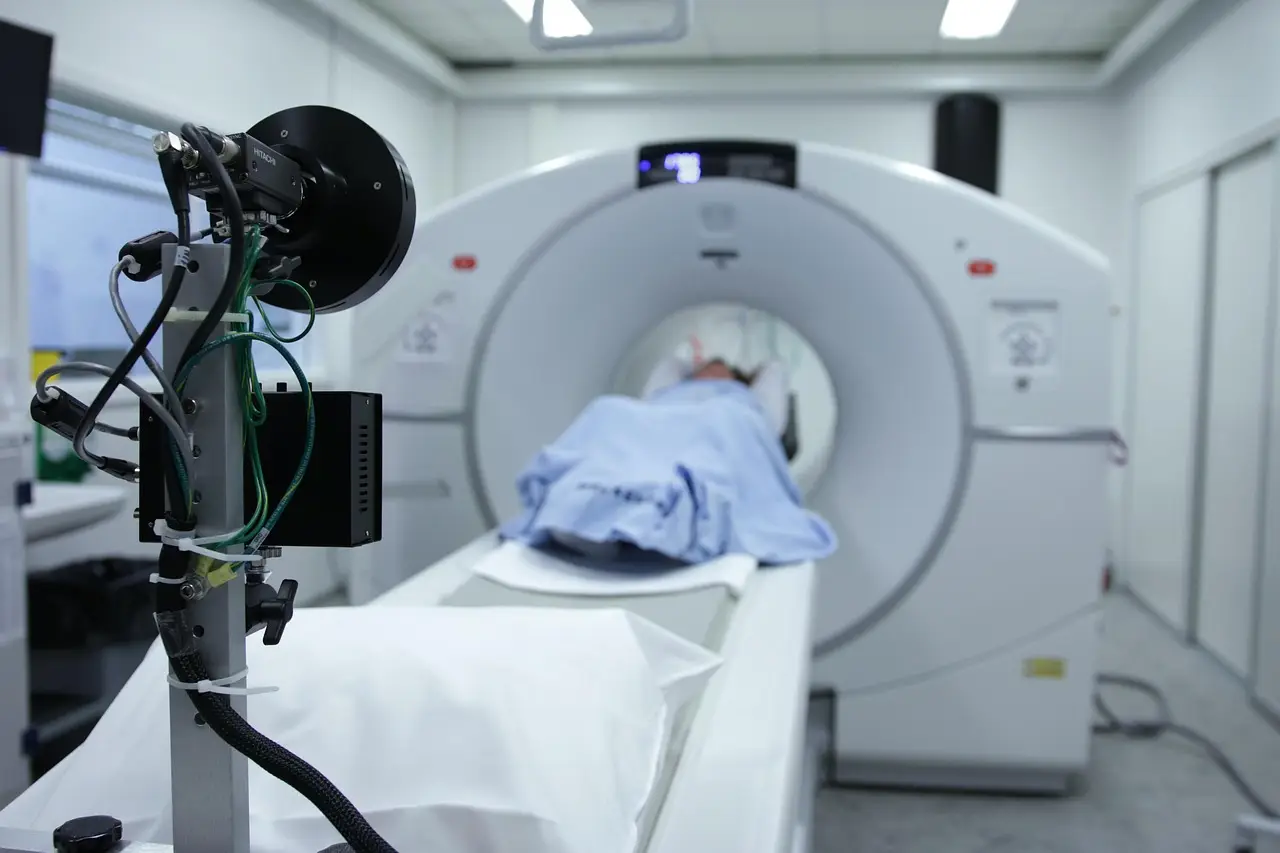
In July 2013, a radiologist misread an MRI of the founder’s back. A surgeon recommended an operation on the thoracic spine; it went poorly, and a complication led to multiple revision surgeries. More than a decade later, the founder says the consequences still affect every day.
That experience inspired the founding of Garner Health, which analyzes data on more than 320 million patients. The company uses the data to measure individual doctors’ performance and reward patients for choosing better doctors, according to the founder.
Back pain shows how incentives can drive treatment. Clinical guidelines generally recommend conservative care, such as physical therapy, before an MRI, but many patients receive a scan first. In Garner Health’s data, patients who receive an early scan are more than twice as likely to undergo surgery.
The doctor who orders a scan usually acts out of caution, the founder says. Providers receive payment at every step that follows: the scan, surgery and follow-up care. Employers and patients bear the cost.
Before ordering a scan or spine surgery, AI could compare a patient’s case with outcomes from millions of similar patients. It could flag imaging unlikely to help and route the patient to an MRI center using AI for faster, affordable and more accurate scans, according to the founder.
That approach would lower provider revenue, making adoption unlikely in the founder’s view. The tool most likely to spare patients unnecessary procedures would also reduce the care steps providers bill for.
The account remains a single case, with no spine-imaging misread rate or specific MRI model named in the commentary. The technology threatens the revenue stream it would most improve, and that conflict sits at the center of adoption.
Can buyers change the incentive?
Employers and government programs spend trillions of dollars a year on care, giving them the purchasing power to reshape the system. They can require clear information about quality and meaningful incentives to choose lower-priced care, according to the founder.
That purchasing power could force providers to compete as companies do elsewhere. It would reward providers that use AI to improve diagnostic accuracy, choose the correct treatment and produce better health outcomes while lowering costs, the founder argues.
The founder wrote: “The technology that might have caught my misread scan exists today. What’s missing is a system that rewards using it.” The argument identifies a payment problem, not a shortage of technical capability.
Until buyers reward lower prices and better outcomes, further AI adoption is more likely to raise healthcare bills than reduce them. Payment reform, rather than another technical advance, is the proposed route to cheaper care.
Source: fortune.com
More from Olivia Hart
Show full bio
Staff writer covering people, launches and day-to-day practice in entrepreneurship, startups and venture funding at Business Bearings.
2,696 articles