AI Takes Half of China's VC Money as K-Shaped Split Hits Dealmaking
Greater China VC deal value doubled to $52.8B in H1 2026 with AI taking half of it, while consumer PE collapsed to $0.7B from $10.8B in 2025, PitchBook data shows.
By Grace Kim
3 min read
Updated
What's News
- Greater China VC deal value more than doubled to $52.8 billion in H1 2026 across 3,764 deals, down 1.8% in count, per PitchBook.
- AI accounted for roughly 50% of 2026 VC deal value, about double its 2025 share; average deal size jumped 91.1% to $51.8 million.
- PE backing for consumer businesses fell to $0.7 billion so far in 2026 from $10.8 billion in all of 2025; ChangXin Memory's $8.6 billion Shanghai IPO generated $76.9 billion in exit value.
Greater China's venture capital deal value more than doubled to $52.8 billion in the first half of 2026, according to PitchBook's 2026 Greater China Private Capital Breakdown. The number of transactions barely moved, edging down 1.8% to 3,764.
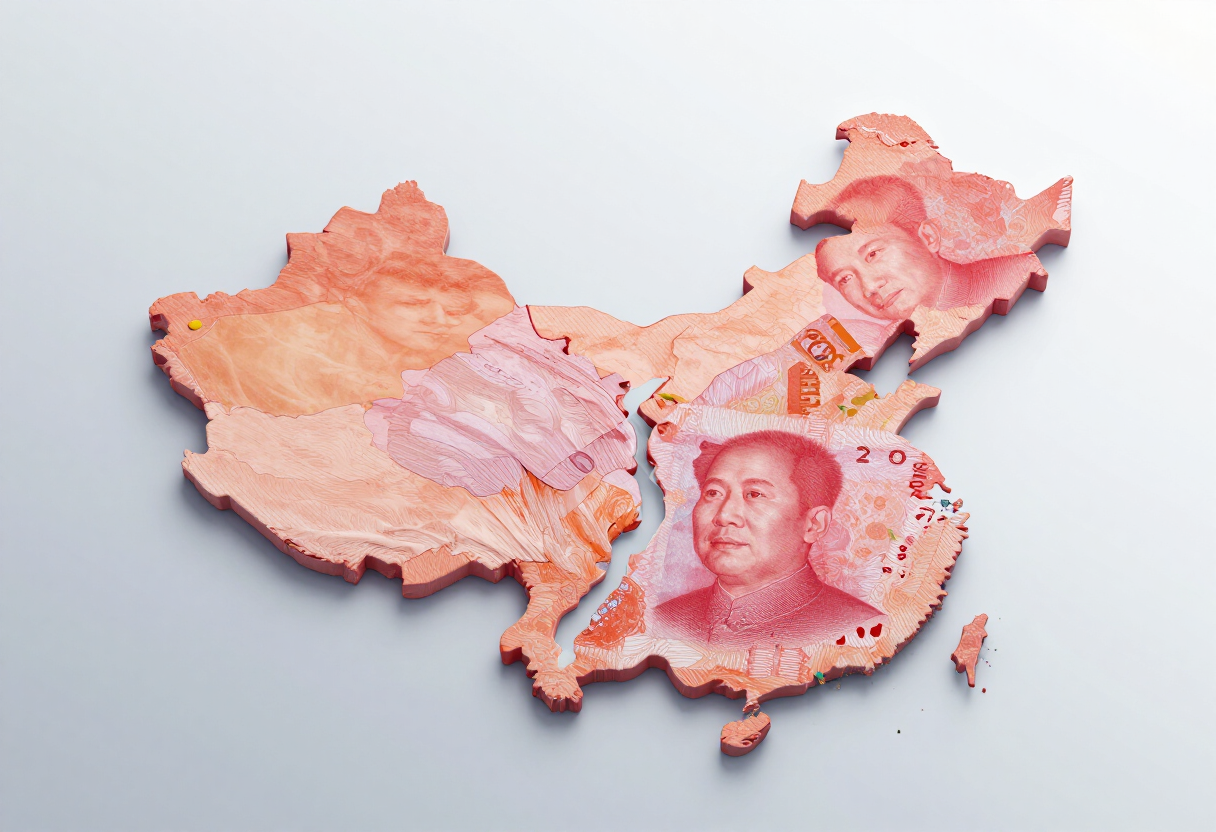
That divergence is the clearest signal yet that China's much-discussed "K-shaped" economy—the widening gap between a booming tech industry and sluggish consumer sectors—has now fed through into private market dealmaking.
The national focus on AI, semiconductors and advanced manufacturing has driven a surge of VC money into Chinese tech startups. At the same time, PE dealmaking has stalled in sectors hit by weaker consumer spending and slower GDP growth.
PE investment did rise, up 62.1% in H1 to $23.4 billion across 172 deals. But the composition tells a different story. Almost two-thirds of that capital went into growth deals rather than buyouts. PE backing for consumer businesses has dropped to $0.7 billion so far this year, down from $10.8 billion across all of 2025.
AI Now Half the Market
Roughly 50% of Greater China's total VC deal value in 2026 came from the AI sector alone, according to PitchBook. That share is roughly double last year's, with large language models and robotics heavily skewing the figures.
The deal count did not keep pace with the surge in value, which points to a growing concentration of AI deals in China's VC market. This year's largest included LLM developer Moonshot AI, Shanghai-based foundational AI startup StepFun, and Kling AI, an AI video-generation platform that spun out of social media company Kuaishou.
All three have reportedly begun planning Hong Kong IPOs, following Zhipu and MiniMax, which both listed on the Hong Kong Exchange in January 2026. Chinese embodied AI and humanoid robotics startups also raised robustly, driven by the likes of X Square Robot, GigaAI and Spirit AI.
The average Greater China VC deal size jumped 91.1% to $51.8 million in 2026. Median deal values rose just 17.8% to $14.5 million year-over-year. The gap between the two measures suggests capital concentration and a widening dispersion of deal sizes—megadeals at the top, thinner rounds below—rather than broad-based growth across the startup ecosystem.
Exits Run Through the Public Markets
Public listings accounted for 96.7% of VC exit value this year. M&A and buyouts represented just 3.3% of aggregate value.
The single biggest exit was domestic chipmaker ChangXin Memory Technologies, which raised $8.6 billion in Shanghai in July. That one listing generated $76.9 billion in exit value—around two-fifths of the $184.5 billion produced across 101 listings in 2026.
Chinese regulators and tech companies have increasingly favored A+H dual listings, a structure that spans mainland exchanges such as the Shanghai Stock Exchange's STAR market and HKEX. These dual listings have driven overall Chinese IPO activity this year.
The pattern leaves private markets with a narrow engine. If AI valiations and IPO appetite hold, capital concentration will likely deepen; if they falter, the consumer-side drought already visible in PE leaves little to fall back on.
Original: pitchbook.com
More from Grace Kim
Show full bio
Market editor covering industry trends and analytics at Business Bearings.
234 articles