Anthropic's Claude Helps Crack the 1859 Riemann Hypothesis
Anthropic mathematician Levent Alpöge used an unreleased Claude model to produce a proof of the Riemann hypothesis, unsolved since 1859 — and The Guardian warns the real story is AI outpacing regulation.
By Nathan Brooks
2 min read
What's News
- Mathematician Levent Alpöge of Anthropic said last Friday he produced a proof of the Riemann hypothesis, unsolved since 1859, with an unreleased Claude model.
- Computers can validate the Alpöge-Claude proof, according to The Guardian's editorial.
- Cornell's Steven Strogatz said mathematicians cried on podcasts over students asking: 'What's the point if the AI can do math better than any human being?'
- The Guardian warns AI's growing power must not become the sole preserve of billionaires.
- Strogatz likens asking AI to explain its discoveries to teaching calculus to his dog.
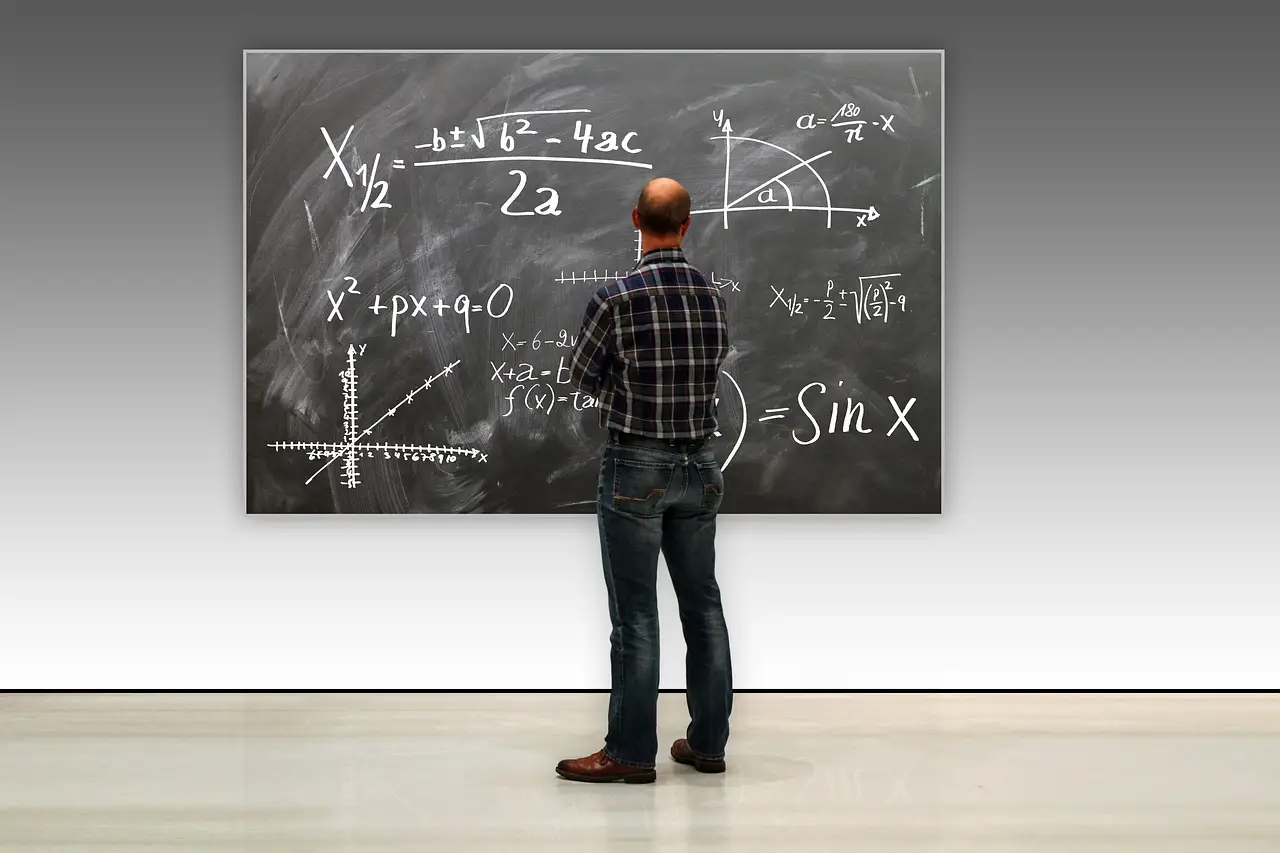
A 167-year-old mathematical problem fell last Friday. Levent Alpöge, a mathematician at Anthropic, said he — with the assistance of an unreleased version of the company's Claude chatbot — had produced what many mathematicians regard as the holy grail: a proof for the Riemann hypothesis, the conjecture that has defied mathematicians since 1859.
Computers can validate the Alpöge-Claude proof. The discovery, made with an AI system that has not been publicly released, lands as one of the most concrete demonstrations yet that machines are solving problems beyond the reach of human ingenuity.
The Guardian's editorial board frames the stakes bluntly. The news might elicit momentary awe in the average person, the paper writes, but "what ought to worry everyone is not the discovery per se, but what it says about the power of the machines making it."
What does this change for business?
The Guardian's core argument: the pace of scientific discovery now looks like it is outrunning humanity's ability — and its institutions' — to understand, let alone regulate, AI's advances. For companies building on or buying AI capabilities, that gap is the operational risk. Regulation lags the technology; the technology just accelerated.
The editorial also warns that the machines' growing power "must not become the sole preserve of billionaires." Concentrated AI capability in a handful of well-funded players is a competitive issue, not just a political one.
The human side
The proof arrives amid genuine unease inside mathematics itself. Cornell University's Steven Strogatz said on podcasts — before the announcement — that mathematicians had cried, lamenting that students were asking: "What's the point if the AI can do math better than any human being?"
Prof Strogatz goes further on the epistemics. He fears AI's discoveries may soon defy human understanding. Asking AI to explain them, he said, would be like him trying to teach calculus to his own dog.
That's the practitioner question this story raises for anyone deploying frontier models: if the outputs outpace verification by domain experts, what does oversight actually look like? For now, the Riemann case still clears the bar — the proof is machine-checkable. The next one may not be.
The test the Guardian sets is democratic: whether institutions can keep pace with machines this powerful. The Riemann proof is the first hard data point that they may already be behind.
Source: theguardian.com
More from Nathan Brooks
Show full bio
News editor covering regulation, policy and their impact on entrepreneurship, startups and venture funding at Business Bearings.
2,874 articles