Argotec Lands €50 Million Round Led by Nuo Space to Scale Satellite Output
Argotec has raised €50 million led by Nuo Space. The Italian small-satellite maker builds 52 satellites a year, targets 80, and plans a much larger raise next.
By Daniel Okafor
4 min read
What's News
- Argotec closed a €50 million funding round led by Nuo Space, announced 30 October 2026.
- Argotec currently produces 52 satellites per year and targets 80 in the near future.
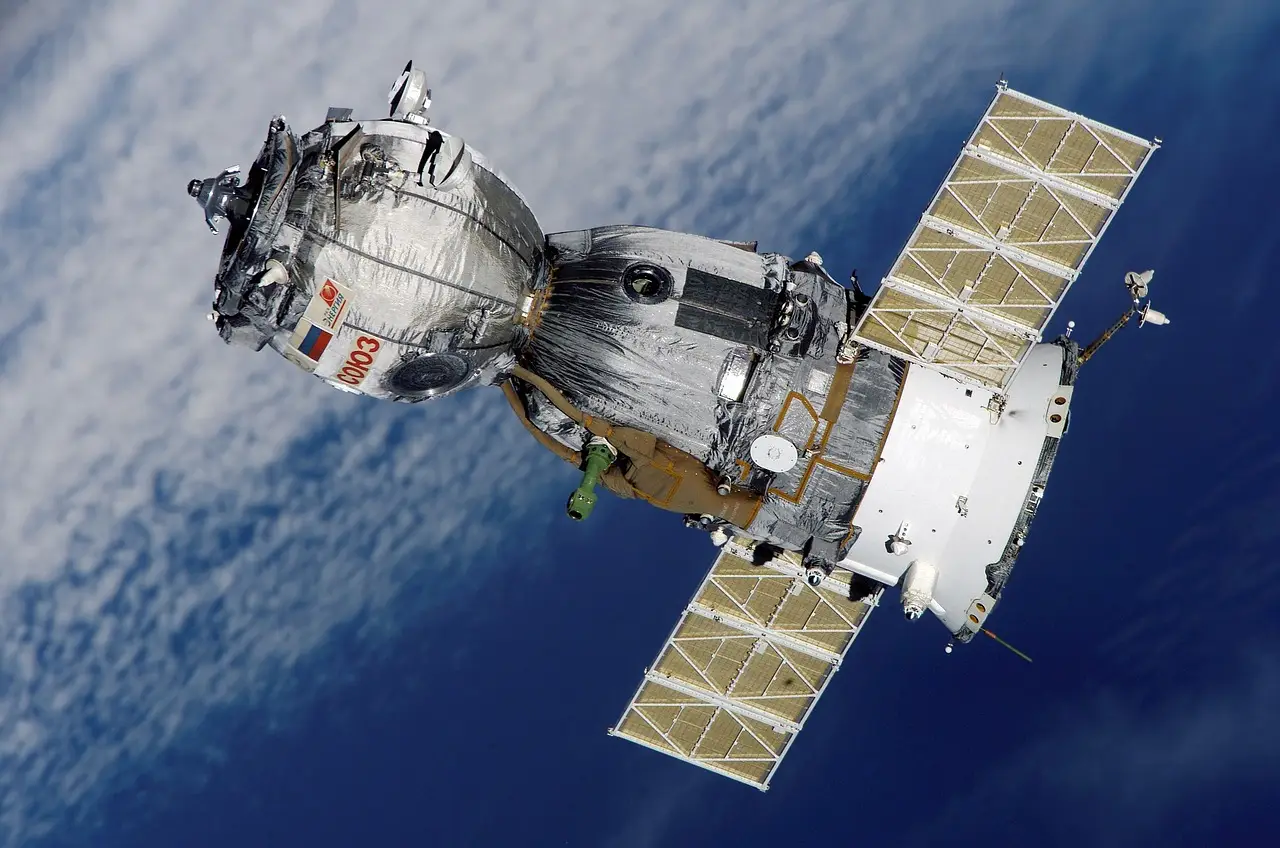
- Argotec builds small satellites weighing up to 350 kg for civil, scientific and security missions.
- Nuo Space, founded in 2016 and led by Tommaso Paoli, was the first investor in Bending Spoons.
- CEO David Avino said the company is already preparing a much larger follow-on capital raise.
Argotec has closed a €50 million funding round led by Nuo Space, the Milan-based holding company run by Tommaso Paoli, to scale satellite production, expand in the United States and push autonomous on-orbit computing.
The company builds small satellites weighing up to 350 kilograms for civil, scientific and security missions. It plans to spend the money across four priority areas, according to the announcement dated 30 October 2026.
Who put up the money?
Nuo Space, founded in 2016, is an investment holding backed by capital from Italian and international entrepreneurial families. It focuses on the global growth of leading Italian companies. That mandate, the firm said, is what led it to Argotec.
Nuo has a track record it points to proudly. It was the first investor in Bending Spoons, the Italian software group that became one of Europe's most valuable technology companies.
"The investment in Argotec represents a further significant step forward for Nuo towards its goal of supporting more and more outstanding Italian companies as they establish themselves as independent global players that will thrive for generations," Tommaso Paoli said. "We met David and his team many years ago and have followed their highly successful entrepreneurial journey. We are delighted to be able to play our part in realising Argotec's ambitions and in creating one of the world's leading companies in the space economy, as we have already seen with Bending Spoons, in which we were the first investors."
How much can Argotec actually build?
Production capacity is the hard number in this deal. Argotec already builds 52 satellites per year, thanks to standardised satellite platforms and parallel production lines. It aims to reach 80 satellites per year in the near future.
The company frames this as preparation for dual-use requirements of next-generation space missions — hardware that serves both commercial and defence customers. Scaling that output is the first of the four priority areas funded by the round.
What will the satellites do?
The second priority is intelligence. Argotec is developing satellites that make decisions autonomously and process data directly in orbit, without waiting for a ground station.
The company says these capabilities will enable advanced constellations serving:
- space weather monitoring
- Earth observation
- space domain awareness (SDA)
- space surveillance and tracking (SST)
Each application targets both commercial buyers and scientific or defence users.
The third priority moves Argotec up the value chain. Instead of selling raw satellite data, the company wants to sell high-value information and insights to end customers. It will consolidate development of artificial intelligence algorithms and tools for on-board data processing — improving data quality, cutting processing times and trimming the volume of data transmitted to Earth so that only what customers actually need gets sent down.
What happens in the United States?
The fourth priority is American. Argotec plans to strengthen operations at its facility in Florida, increasing production capacity to serve the US market. It will also grow its team in California, which specialises in advanced technologies and expertise for the telecommunications sector.
The US push gives Argotec a domestic manufacturing base in the world's largest defence and space market, a position few European small-satellite builders hold.
What did the founder say?
David Avino, founder and CEO of Argotec, framed the round as a starting point rather than a finish line.
"The completion of this first round of funding will enable us to accelerate our business plan, strengthen our international presence and consolidate the technological leadership we have built up over recent years," Avino said in a statement. "This is just the first step: we are already moving towards a new, much larger capital raise to seize even more ambitious business opportunities. This will provide further impetus for innovation, production expansion and the enhancement of technologies that will make our satellites increasingly intelligent and autonomous. We are convinced that the growing global demand for space services opens up extraordinary opportunities, and we are working to create the conditions that will enable us to capitalise on them, including through new strategic partnerships."
Why does the €50 million matter?
The round signals that Italian institutional capital is now willing to write sizeable cheques for hardware-heavy space companies, not just software. Nuo's bet pairs a family-backed holding with a manufacturer that has real, measurable output — 52 satellites a year today, 80 targeted — rather than a pre-revenue concept.
Avino's pledge of a "much larger" follow-on raise, possibly with new strategic partners, sets the next milestone. If Argotec hits its production and US expansion targets, the company will enter that raise with the scale to compete for constellation contracts in the global space economy.
Original: startupbusiness.it
More from Daniel Okafor
Show full bio
Correspondent covering money, funding and market shifts around entrepreneurship, startups and venture funding at Business Bearings.
1,358 articles