Atomic Raises $12.5M Series A to Automate Supply Chain Decisions
Ex-Tesla founders raised a $12.5M Series A led by Klass Capital and Madrona for supply chain software that now automates 90% of DoorDash's purchasing.
By Nathan Brooks
4 min read
Updated
What's News
- Atomic raised a $12.5 million Series A led by Klass Capital and Madrona Venture Group, bringing total funding to just over $15 million.
- Annual recurring revenue has quintupled since the beginning of this year, according to board member Jon McNeill, former Tesla president and DVx Ventures founder.
- DoorDash runs roughly 90% of its purchasing across hundreds of sites on Atomic's platform, per McNeill.
Supply chain startup Atomic has raised a $12.5 million Series A led by Klass Capital and Madrona Venture Group, bringing its total funding to just north of $15 million, after annual recurring revenue quintupled since the beginning of this year.
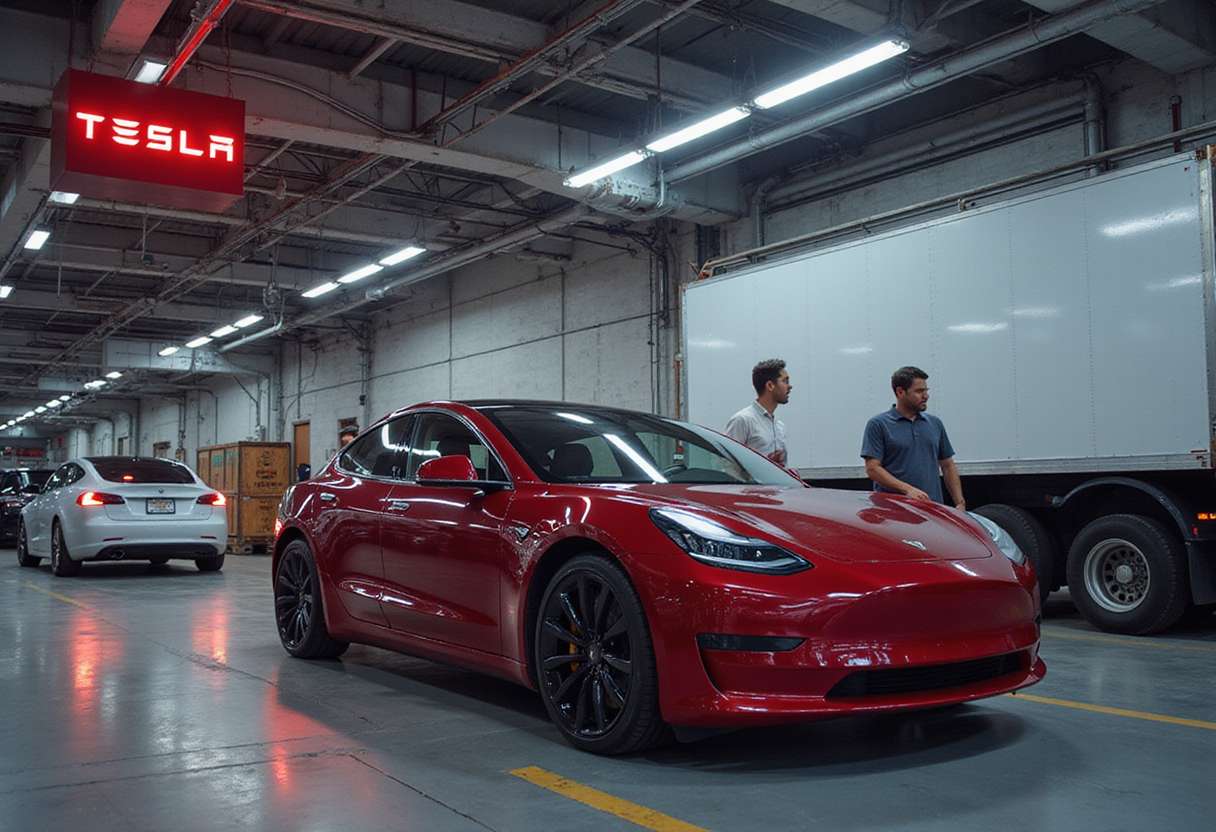
The Boston-based company came out of stealth last year with co-founders Michael Rossiter and Neal Suidan, who built an early version of its system at Tesla during the 2018 Model 3 production ramp. At the time, the automaker's own spreadsheets couldn't keep up with how quickly planning needed to change. Atomic's software now decides how much inventory a company should hold, and where, by simulating scenarios and then recommending — or automatically choosing — a response.
The growth is paying off in customers as well as revenue. DoorDash and HelloFresh now use the platform, according to Jon McNeill, a former Tesla president and founder of DVx Ventures, where Atomic was incubated.
"The company has transitioned from pilot customers into real customers, and by real customers, it's DoorDash-scale customers," said McNeill, who also sits on Atomic's board. "The product has evolved from being an optimization platform that gives recommendations to a platform that not only gives recommendations but it makes decisions, so it's fully autonomous in that sense, and so DoorDash is running, I think, 90% of its purchasing across hundreds of sites."
Alongside the funding, Atomic has brought on Jeff Goodrich, a longtime Tesla planning director, as CTO and third co-founder.
From spreadsheets to autonomous decisions
Rossiter, Atomic's CEO, frames the problem as one of scale. "If you think about running a supply chain, running an operating model, it's like an infinite search space for optimization that you're trying to figure out all of the decisions you could make at any given time — and then it changes all the time too," he said in an exclusive interview with TechCrunch. "AI can play the role of finding all of the best paths through that forest."
For food-focused customers like DoorDash, the software helps cut down on waste and spoilage. Each new industry presents different challenges, Rossiter said.
"The cool thing about Atomic is it's a general model of how you think about supply chains and operating models, and so no matter what that system looks like, our AI can can adapt to it and tailor fit it," he said. "We're working with CPG [consumer packaged goods], we're going deep with mobility and manufacturing clients right now as well, and working that space, kind of going back to our Tesla roots."
Speed as competitive edge
Two factors drew investor interest in the Series A, according to Rossiter: the agentic software's adaptability across industries, and its ability to deploy quickly with new customers.
McNeill said the board set an explicit challenge on onboarding. "We gave them this challenge from a board level of compressing their onboarding time and really making it a non-event for a customer to turn this on," he said. Suidan, who also serves as chief product officer, ran point on that effort. He pushed Atomic's agentic AI to the point where it could infer the "decision rules" a customer's staff used, even when those rules hadn't been written down anywhere.
That capability changed the customer conversation. "Then customers were saying, 'Okay, then you might as well make the decision and free my time up,'" McNeill said. "And where executives, I think, kind of got it was — decision speed is an advantage in any business. And this was one of our first principles at Tesla. When I got to know Elon, he said the thing that will separate us from all of our competitors is decision speed, because decision speed compounds. Like, I make a decision today, I build on that decision tomorrow, et cetera, and it takes one of our competitors, like Ford or Toyota, 30 days to make the first decision."
Rossiter said he wants to pull customers' supply chain work out of spreadsheets and into software that can make planning decisions — an evolution he has seen CFOs lead in finance but rarely in operations.
"Finance data always gets the priority. Operating data doesn't always get that," he said.
With the new capital and Goodrich on board, Atomic is betting that autonomous decision-making — not just recommendation engines — becomes the standard for supply chain operations, starting with the mobility and manufacturing sectors where its founders cut their teeth.
Source: TechCrunch
More from Nathan Brooks
Show full bio
News editor covering marketplaces and e-commerce at Business Bearings.
306 articles