Auburn Lands $6 Million NSF Grant to Turn Lab Research Into Startups
Auburn University won a $6 million, four-year NSF award to commercialize faculty research, with $50,000 proof-of-concept grants and a seed-treatment pilot for U.S. farmers.
By Amara Osei
3 min read
What's News
- Auburn University received a $6 million, four-year award from the NSF's Accelerating Research Translation program.
- The Launch Innovation Fund will provide up to $50,000 per project for proof-of-concept research and prototypes.
- The first funded project is a seed treatment combining beneficial bacteria with a pectin-based coating.
- The Faculty Venture Studio will be led by LaKami Baker of the Harbert College of Business.
- The University of Georgia Research Foundation's Innovation Gateway will serve as a mentor institution.
Auburn University has secured a $6 million, four-year award from the National Science Foundation to help its faculty turn scientific discoveries into startups, industry partnerships, technology licenses and other commercial ventures.
The money flows through the NSF's Accelerating Research Translation (ART) program, which funds universities that want to tighten the link between academic research and real-world applications. Auburn's initiative will establish funding, training and other resources so researchers can spot commercial opportunities in their own labs.
What does the money actually fund?
The centerpiece is the Launch Innovation Fund, which will hand out up to $50,000 per project for proof-of-concept research and prototype development. The goal is to push promising technologies past the initial discovery stage, where academic funding typically runs out.
Auburn will also build a Faculty Venture Studio, led by LaKami Baker, Russell Foundation Associate Professor of Entrepreneurial Studies in the Harbert College of Business. The studio will offer customer discovery, entrepreneurship training, mentoring and business research support. Researchers will learn to identify potential users, understand market requirements and judge whether a discovery fits a startup, a licensing deal or an industry partnership.
Which project goes first?
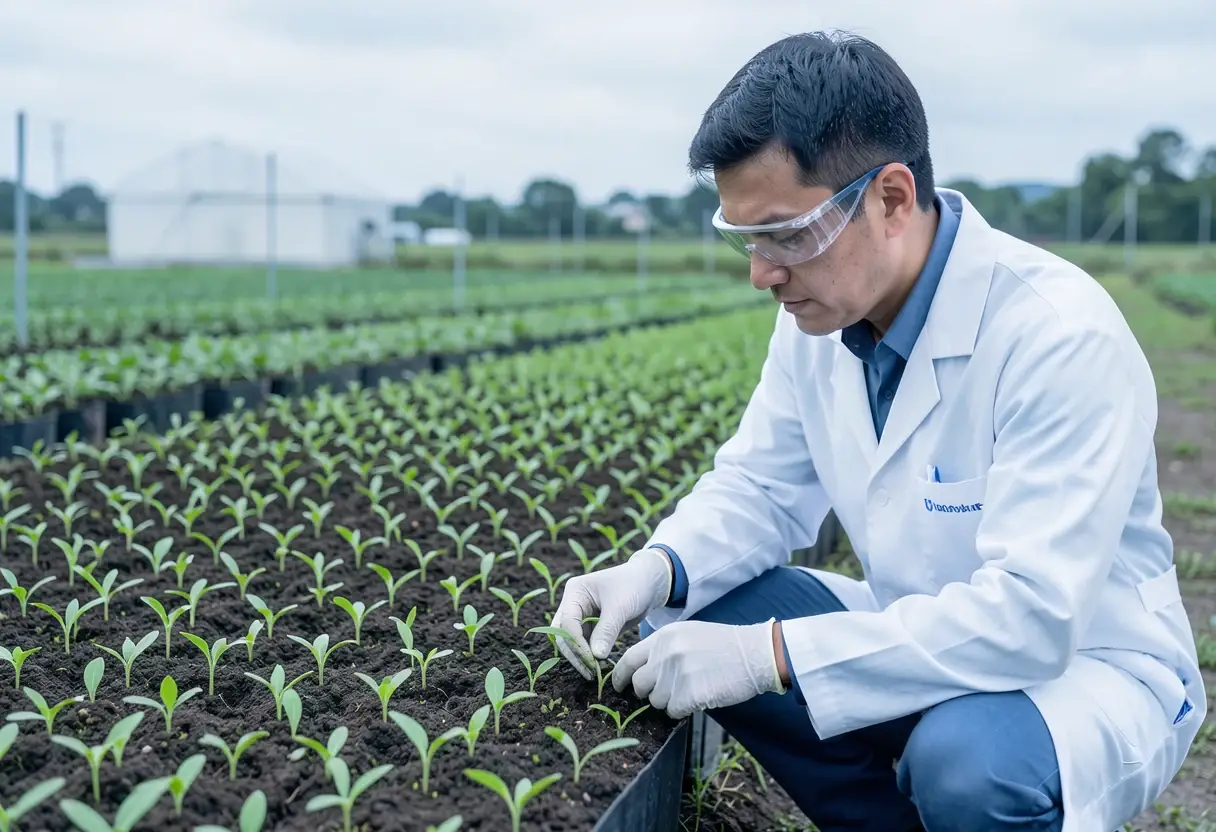
The first funded project targets agricultural technology. A multidisciplinary team will advance a seed treatment that combines beneficial bacteria with a specialized pectin-based coating. The researchers will test whether the treatment can protect plants against fungal diseases while supporting crop growth and resilience.
The team spans agriculture and engineering: Mark Liles, Alvaro Sanz Saez, Eros Francisco, Zachary Noel and Symone Alexander. They plan to develop a scalable seed coating and evaluate its performance in real field conditions. The work builds on decades of Auburn research into plant-associated microbes, including plant growth-promoting rhizobacteria.
Who is building the ecosystem?
The initiative pulls in faculty and administrators from four colleges: Sciences and Mathematics, the Samuel Ginn College of Engineering, Agriculture, and the Raymond J. Harbert College of Business. The University of Georgia Research Foundation and its Innovation Gateway will serve as a mentor institution.
The program's backers frame it as permanent infrastructure, not a one-off grant. Patrick Reed, Auburn's assistant vice president for innovation and partnerships, said: "This is about building a foundation here at Auburn for future research that has an impact beyond our campus and enabling faculty and researchers to do things here that they may have gone elsewhere to do in the past. We want to build a lasting ecosystem that's supportive of translational research activities."
Mark Liles, associate dean for research in the College of Sciences and Mathematics, tied the first project directly to the university's founding mission. "Thanks to this award, we're going to be able to put some things in the field that have a real-world benefit to U.S. farmers. To us, it's all about fulfilling the land-grand mission of Auburn University," Liles said. (The source quotes him as citing the "land-grant mission" of the institution.)
Beyond faculty commercialization, the program aims to give students broader exposure to entrepreneurship and innovation, seeding a talent pipeline alongside the research one.
If the seed-coating pilot delivers measurable results in field trials, Auburn will have its first ART-funded proof point well before the four-year award expires.
Source: pulse2.com
More from Amara Osei
Show full bio
Senior reporter covering companies, deals and strategy in entrepreneurship, startups and venture funding at Business Bearings.
2,129 articles