Braiin Signs $40 Million Term Sheet for Indian Drone Maker Marut
Braiin signed a non-binding US$40 million term sheet to acquire India's Marut Drones, folding eight DGCA-certified platforms into its Raptor300 unit — if audits and Indian regulatory clearances hold.
By Olivia Hart
4 min read
What's News
- Braiin signed a non-binding term sheet on November 23, 2026 to acquire Marut Drones for approximately US$40 million, starting with a majority stake.
- Only confidentiality, exclusivity, costs and governing-law provisions are binding; closing requires due diligence, a US-standard audit and Indian regulatory approvals.
- Marut holds eight DGCA type certificates, more than 100 dealers, seven pilot-training schools and over 500 customers.
- Braiin's Sri Lankan Raptor300 business has US$35.93 million in binding contracts plus about US$112 million in non-binding MOUs.
Braiin Limited has signed a non-binding term sheet to buy Hyderabad-based Marut Drones for roughly US$40 million, in a phased acquisition that starts with a majority stake. The company announced the plan on November 23, 2026. Nothing is certain yet: only confidentiality, exclusivity, costs and governing-law provisions bind at this stage.
The US$40 million headline figure bundles three different things — upfront consideration payable at completion, performance-linked earn-outs, and growth capital. Braiin would fund operations under a mutually agreed annual operating plan and buy the remaining shares in later performance-linked phases. The total therefore covers both the share purchase and investment into Marut's business, not a clean price for the company.
What does Braiin actually get if the deal closes?
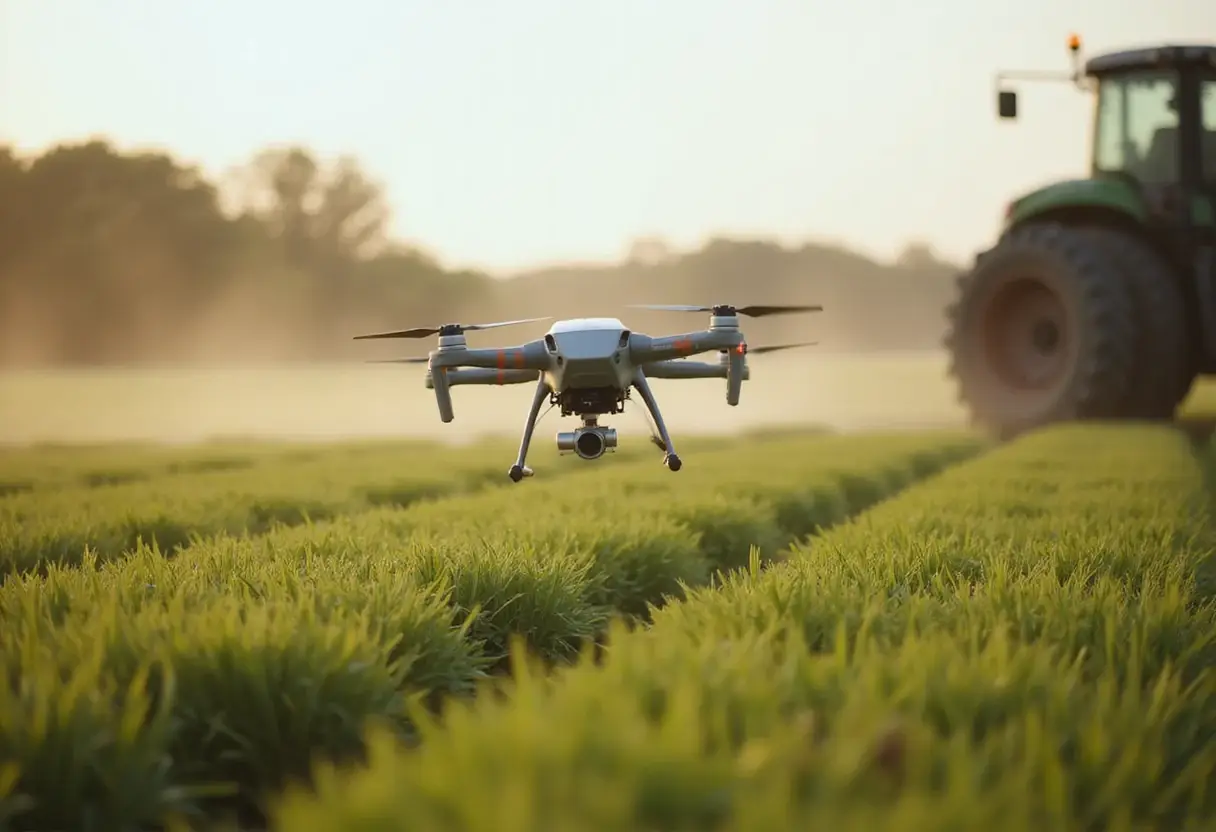
Marut would join Braiin's Robotics and AI division and be integrated with Raptor300, Braiin's autonomous crop-spraying drone platform. Founder and CEO Natraj Balasubramanian framed the ambition plainly: the goal, he said, is to build "a leading AI-led aerial intelligence business," initially in India and then across the company's international markets. That promise carries a standard caveat — the goal depends entirely on closing and then executing.
Founded in 2019 by Indian Institute of Technology Guwahati alumni, Marut designs and manufactures agricultural, surveillance, tethered and multi-utility drones. Its in-house work spans airframes and payloads, plus Swift, its ground-control and fleet-management software. The attraction for Braiin is buying rather than building: certified drone platforms and pilot training it could not quickly construct itself.
Braiin says Marut holds eight type certificates from India's civil aviation regulator, the DGCA. They include the AG365, described as India's first DGCA type-certified multi-utility agricultural drone, and a heavier 30-litre-capacity aircraft aimed at agriculture, aquaculture and industrial use. Certification, not hardware, is the scarce asset here.
The distribution numbers Braiin reports are similarly broad: more than 100 dealers, seven DGCA-approved pilot-training schools and over 500 customers spanning farmers, dealers, cooperatives and institutions. Named customers include Karnataka Police, the Indian Army and Indian Railways. Marut has also supplied drones to Fiji and Myanmar. These are company-reported figures; no third-party verification appears in the announcement.
How binding is a non-binding term sheet?
Not very, by design. Closing requires satisfactory due diligence, definitive agreements, an audit of Marut's financial statements under US auditing standards, and Indian regulatory and third-party approvals — including foreign-investment and DGCA-related clearances. Final terms, timing and completion all remain conditional.
The structure is common in cross-border acquisitions where regulatory risk sits with the target's jurisdiction. It also means the earn-out portion of the US$40 million may never materialize if Marut's performance falls short. Investors should treat the headline valuation as a ceiling, not a commitment.
Why does Sri Lanka matter to an Indian drone deal?
Raptor300 already gives Braiin an operating drone business in Sri Lanka, and that pipeline is the near-term outlet for Marut's manufacturing capacity. Braiin reports binding contracts there valued at US$35.93 million — nearly 90 percent of the acquisition's headline price — plus approximately US$112 million under non-binding memoranda of understanding. The company states plainly that there is no assurance any MOU will become a binding contract.
The technical fit is specific. Raptor300 contributes patented vectorized spraying and autonomous tank-refilling systems; Swift provides ground control and fleet management across Marut's fleet. Joint product development and hybrid Raptor300–Marut deployments are intended to cover seeding, spraying, crop monitoring, analytics and fleet services. Marut's manufacturing capacity, wider aircraft range and trained-pilot pipeline would add fleet depth to the Sri Lankan deployments.
Within India, Marut's operations concentrate in Telangana, Karnataka, Uttar Pradesh, Maharashtra and Odisha. Braiin's post-completion roadmap calls for national expansion, heavier-payload and lower-cost platforms, in-house batteries and flight electronics, and exports to Sri Lanka, Australia, the GCC, Southeast Asia, Africa and North America. That is a long list of intentions, each contingent on the deal completing first.
What is the realistic read?
The strategic logic is coherent: Braiin gets a faster route into India through assets that are difficult to replicate quickly — regulatory certifications, manufacturing, dealers and pilot training. Buying certified capability sidesteps years of DGCA process.
The execution risk is equally clear. The term sheet must survive US-standard audits, Indian foreign-investment approval and DGCA clearances before any money changes hands beyond deal costs. The wider significance of the transaction depends on converting paper into a completed acquisition, then turning the combined aircraft, autonomy software and Sri Lankan pipeline into scaled AI-led services.
Source: unite.ai
More from Olivia Hart
Show full bio
Staff writer covering people, launches and day-to-day practice in entrepreneurship, startups and venture funding at Business Bearings.
2,589 articles