Cerebras releases Tungsten for high-level wafer-scale programming
Cerebras released Tungsten and Aviary on November 16, 2026. The compiler shifts wafer resources from manual setup to software, while an agent-written plasma simulation reached 98% of a wafer.
By Daniel Okafor
4 min read
What's News
- Cerebras released Tungsten and Aviary on November 16, 2026.
- An agent-written plasma simulation ran across 98% of a Cerebras wafer.
- The Wafer-Scale Engine has 900,000 cores, local memory and an on-wafer communications fabric.
- SNAP reached 1.6 PFLOP/s on one CS-4, while HPCG reached 1.04 PFLOP/s.
- The plasma run advanced 60 million particles at 7,200 time steps per second and 430 billion particle updates per second.
By Daniel Okafor
Cerebras Systems released Tungsten on November 16, 2026, and says a coding agent wrote a plasma simulation that ran across 98% of a Cerebras wafer. The company launched Aviary at the same time. Aviary packages scientific applications and tutorials for the new high-level programming system.
What does Tungsten change?
Cerebras says the release targets the programming burden rather than a change to the processor itself. Earlier compilers exposed non-scalar vector, stream and event capabilities through intrinsics. Developers had to configure descriptors, connect tasks to events and route the fabric manually.
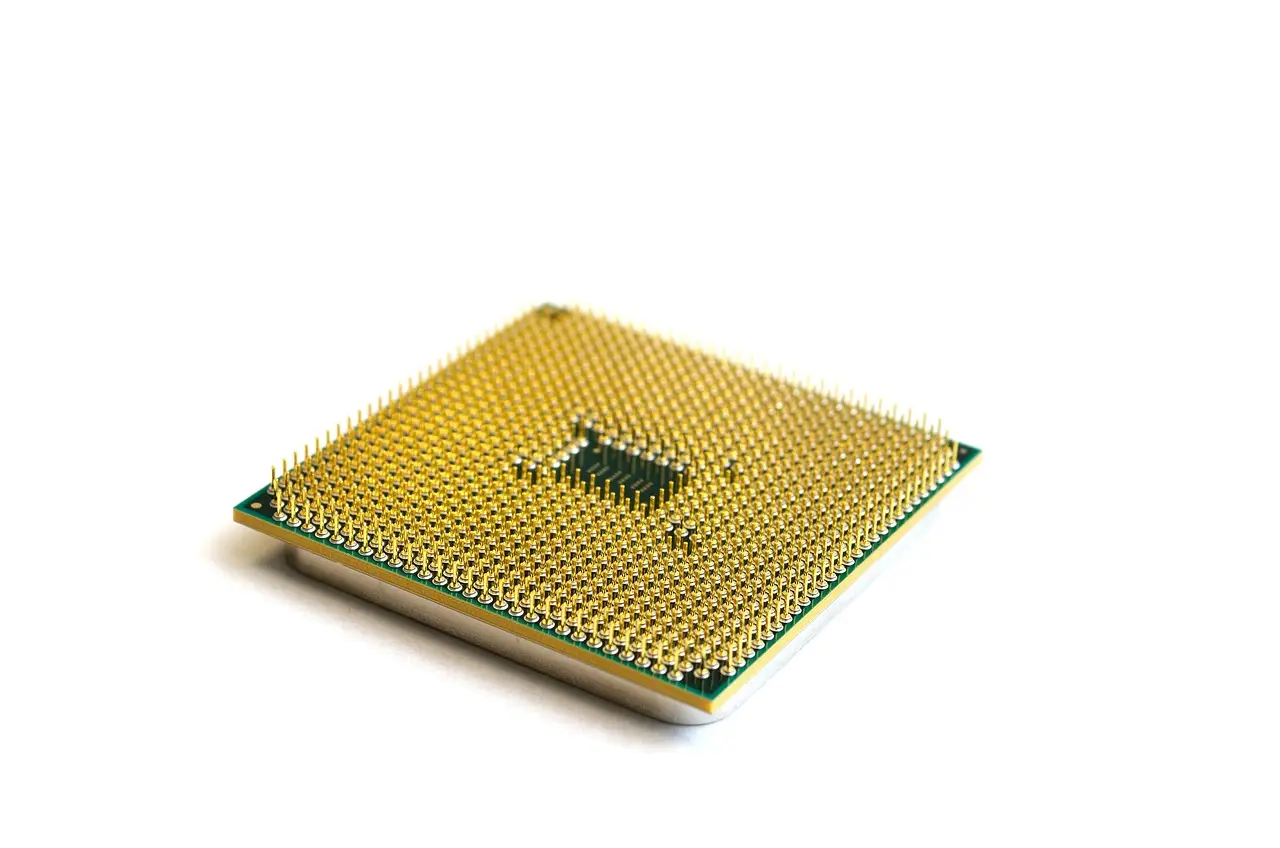
Cerebras describes the Wafer-Scale Engine as a dataflow machine with 900,000 cores, local memory and an on-wafer communications fabric. Arriving data triggers the work that consumes it.
Access-pattern registers walk multidimensional arrays and fabric streams, so address arithmetic consumes no instructions. One instruction can take an entire loop as its operand. Cores can call functions through fabric messages. Event-based control flow replaces polling and branching.
Tungsten maps high-level code onto access-pattern registers, event-driven tasks, fabric calls and loop-bearing instructions. In Cerebras's Jacobi stencil example, each source line represents a loop over an entire block and compiles to one vector instruction. The example needs no descriptor setup or task wiring.
Its <+- notation accumulates into a destination, similar to +=. Cerebras aims to let scientists program the wafer without becoming hardware specialists or giving up performance.
The compiler allocates access patterns, loop definitions, fabric sockets and microthreads across the full program. Cost models and optimization passes swap those resources in and out during execution.
Cerebras compares this process with CPU register allocation and spilling. With the compiler owning those decisions, later restructuring becomes an edit to high-level code rather than a manual rewrite.
What can researchers run?
Tungsten and Aviary are live through Cerebras Labs. Aviary covers a compact starting point and a wider set of scientific workloads.
- Compact stencils include heat-equation and Gray–Scott reaction-diffusion examples.
- Other applications cover particle transport, sparse solves, fast Fourier transforms, molecular dynamics, plasma simulation and high-order hydrodynamics.
- The Gray–Scott tutorial is about 50 lines of Tungsten, giving new users a smaller entry point beside the full scientific codes.
- Molecular-dynamics applications cover short-range Lennard–Jones interactions and tabulated embedded-atom potentials for metal alloys.
Cerebras reports that SNAP, a standard proxy for deterministic nuclear radiation transport, reaches 1.6 PFLOP/s on one CS-4. That result is ahead of 10,800 GPUs on the El Capitan supercomputer. Cerebras also reports 1.04 PFLOP/s for HPCG, a sparse-workload supercomputing benchmark, on a single system.
Where did the applications come from?
Many applications grew from work with Sandia, Lawrence Livermore and Los Alamos national laboratories under NNSA's Advanced Memory Technology program. The molecular-dynamics codes build on the collaboration's 2024 Gordon Bell Prize finalist work. They remain separate codes. That earlier result used an early version of Tungsten.
What did the coding agent build?
Cerebras's particle-in-cell application is the release's central agentic-coding example. One researcher and one coding agent produced it in about two weeks through a chat interface. The agent wrote every line.
The agent worked from published algorithms and completed several engineering tasks:
- It validated its reference implementation against the open-source XOOPIC code.
- It modeled the problem on the EMPIRE plasma code.
- It produced tests, figures and documentation while finding and fixing its own bugs.
Particles in the simulation move under electromagnetic fields and migrate between cores. An implicit solver computes fields on a decomposed mesh from particle positions and velocities. The modeled case sends an electron beam into argon plasma.
Cerebras reports that the full run advanced 60 million particles at 7,200 time steps per second. Throughput reached 430 billion particle updates per second on one system.
Cerebras says the Tungsten reference is complete enough to support this agent-led workflow. Michael James, Cerebras co-founder and chief architect of advanced technologies, still urges users to learn the language. “Someone has to keep the agents on track.”
What comes next?
Cerebras says the same Tungsten code runs on one wafer or across a cluster. Its global tsunami simulation used 64 wafers within an AI deployment. Cerebras says such deployments scale to 2,048 systems.
Cerebras lists a design optimizer as forthcoming, not part of the released portfolio. It would couple an AI model with a physics simulation acting as its world model. Both would run on the wafer, letting the AI model test designs against the simulation.
The next test is whether researchers and agents can extend Aviary's examples to their own codes without reverting to intrinsics and hand-routed fabric. Cerebras says that capability would determine how broadly its specialized hardware can support scientific computing and AI-guided design.
Source: unite.ai
More from Daniel Okafor
Show full bio
Correspondent covering money, funding and market shifts around entrepreneurship, startups and venture funding at Business Bearings.
2,189 articles