Cook Medical Bets on MRI-Guided Procedures Beyond Diagnostics
Cook Medical's new IU Interventional MRI Center of Excellence targets MRI-guided biopsies, drug delivery and cardiac work beyond diagnostics. The 12,000-employee firm sees device demand.
By Grace Kim
2 min read
What's News
- Cook Medical opened the IU Interventional MRI Cardiac Magnetic Resonance Center of Excellence in Indianapolis
- The Bloomington-based company employs more than 12,000 people worldwide
- Founders William and Gayle Cook started the company in a spare bedroom in 1963; son Carl Cook now leads Cook Group
- Initial research areas include pediatric and cardiac interventions, image-guided biopsies, targeted therapy and drug delivery
- Researchers will explore MRI-guided needle biopsies of the prostate, liver, kidneys and lungs
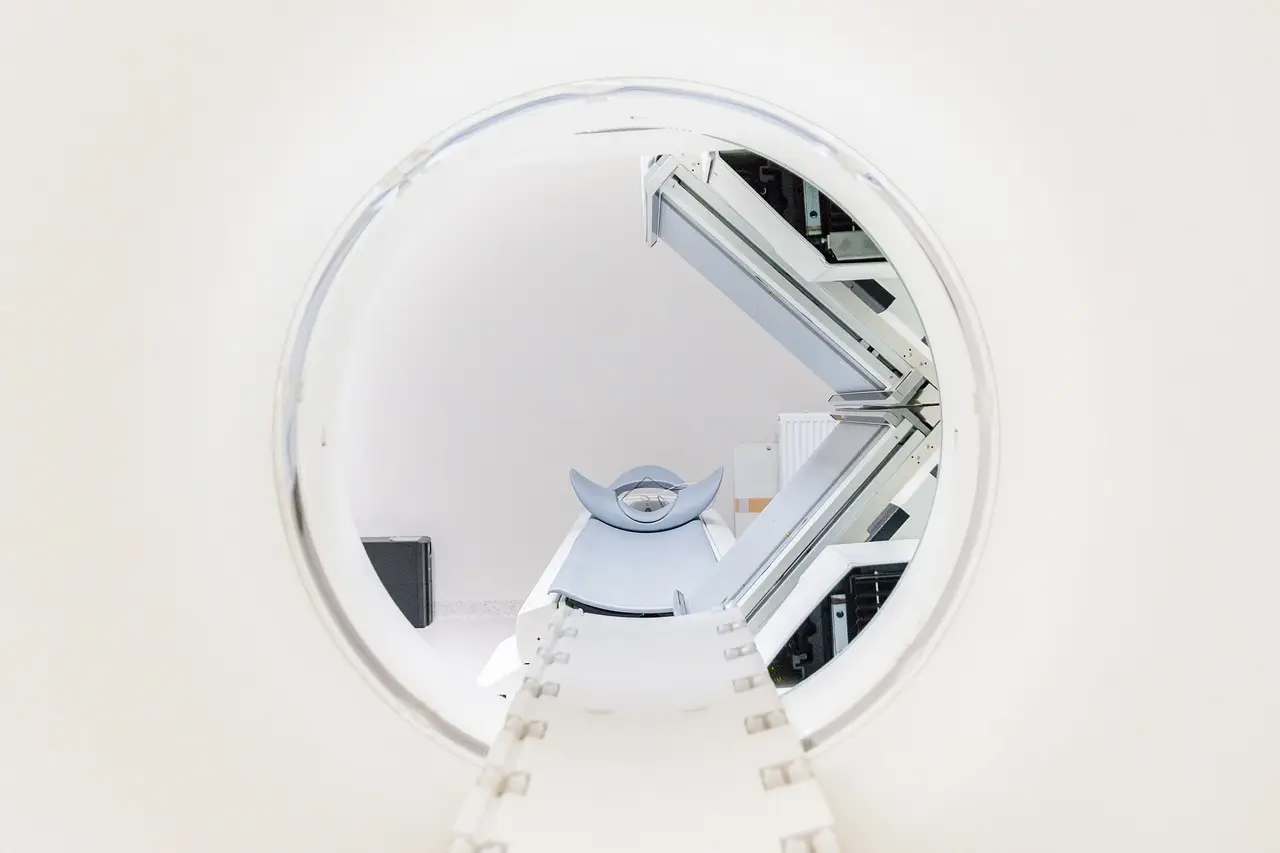
Cook Medical has opened the Indiana University Interventional MRI Cardiac Magnetic Resonance Center of Excellence in Indianapolis, betting that MRI machines can do far more than diagnose patients. The Bloomington-based medical device manufacturer, which employs more than 12,000 people worldwide, wants MRI technology to guide procedures, deliver drugs, and make some treatments less invasive.
The partnership with Indiana University sits inside the Medical Imaging Research Institute at the IU School of Medicine in Indianapolis. Its goal is concrete: develop MRI-guided procedures that could eventually become part of everyday patient care.
Why does this matter for the business?
New applications could drive demand for the Cook Group's minimally invasive medical devices. The company has specialized in those products since founders William and Gayle Cook launched it out of a spare bedroom in 1963. Their son, Carl Cook, now runs Cook Medical's parent company, Cook Group.
Many of the company's devices are currently guided by X-ray. If they could be made safe and clearly visible under MRI, doctors would gain MRI-guided alternatives for procedures such as endovascular care. That's the commercial logic behind the research push.
What will researchers actually work on?
The center's agenda covers several fronts, and Cook Medical has named its priorities directly.
"Initial research areas include pediatric and cardiac interventions, image-guided biopsies, targeted therapy and drug delivery, and the integration of MRI-compatible devices with imaging systems," said Peter Polverini, vice president of Cook Medical's iMRI division.
Researchers will look at improving existing procedures and building new ones. The possibilities include:
- Using MRI to guide needle biopsies of the prostate, liver, kidneys, and lungs
- MRI-guided ablations, which the company says have shown particular promise
- Delivering medication to targeted parts of the body
- Guiding cardiac and pediatric procedures
The biopsy application alone touches a broad clinical footprint. Four organ systems — prostate, liver, kidneys, lungs — are on the research agenda from the start.
Who gets trained at the new center?
The Center of Excellence will also train radiology technologists and MRI technologists in the new interventional procedures. That workforce component matters: new MRI-guided techniques only reach everyday patient care if enough clinicians can operate them.
Researchers will additionally evaluate technologies that help physicians better visualize anatomy and guide instruments during procedures. Better visualization during operations is the connective tissue between imaging research and the company's device business.
The takeaway
Cook Medical is spending its research dollars on a single premise — that MRI can move from the diagnostic suite into the operating room. If MRI-guided ablations, biopsies, and drug delivery prove out in Indianapolis, the 1963 spare-bedroom startup's device catalog gets a new engine for demand.
Source: inc.com
More from Grace Kim
Show full bio
Market editor covering people, launches and day-to-day practice in entrepreneurship, startups and venture funding at Business Bearings.
1,987 articles