Danaher, Microsoft build agentic platform for laboratory instruments
Danaher’s Microsoft partnership links Azure and Foundry to lab instruments for 2026 applications. Internal testing cut novice completion time by up to 83% and steps by up to 68%.
By Nathan Brooks
3 min read
What's News
- Danaher announced the Microsoft partnership on November 20, 2026.
- Danaher expects initial commercial applications in 2026 and more agent-enabled instruments in 2027.
- Danaher reported up to 83% less completion time and 68% fewer steps for assisted novices.
- The shared platform uses Microsoft Azure and Microsoft Foundry.
- Molecular Devices’ MetaXpress Acquire AI Assistant is the first named application.
By Nathan Brooks
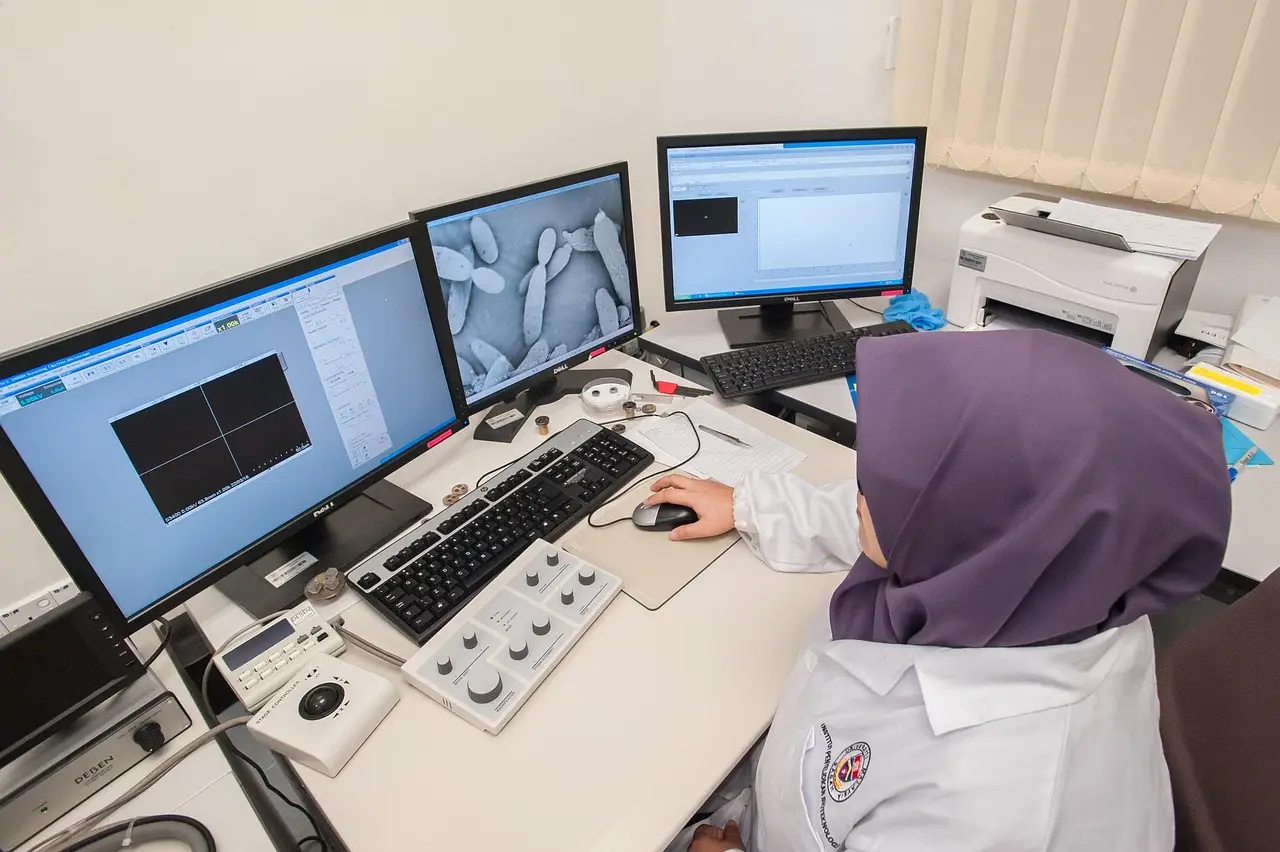
In Danaher’s internal testing, novice scientists completed an AI-assisted experiment on a Leica microscope with up to 83% less time and up to 68% fewer steps than novice peers working without an assistant. Danaher announced the strategic partnership with Microsoft on November 20, 2026.
The companies are developing a shared agentic platform for scientific instrument control and insight generation. Danaher expects initial commercial applications in 2026 and additional agent-enabled instruments in 2027.
Julie Sawyer Montgomery, Danaher’s president and CEO, said: “With Microsoft, we are building a common foundation, so our instruments and laboratories work together consistently, as one connected Danaher. Through context and learning, that foundation can continuously inform the next experiment and the best analysis.”
What changes for laboratory teams?
The first named application is MetaXpress Acquire AI Assistant, Molecular Devices’ software for high-content cellular imaging systems. Danaher places the assistant at the product-support end of a broader roadmap extending into experimental setup, execution and analysis. The companies continue developing the wider platform.
Danaher says the proposed instruments will:
- Translate scientific intent into experimental plans, instrument setup and methods.
- Guide execution and troubleshooting.
- Control hardware within defined safety boundaries and under user oversight.
- Interpret results and identify quality issues in real time.
- Recommend corrective actions and next experiments for scientist review.
Danaher says the design extends software assistance across the experimental cycle. For laboratory teams, the practical change is a move from product support into experimental execution, with hardware operating within set limits and scientists assessing recommended corrections and subsequent experiments.
Danaher says the platform will also target laboratories that combine multiple suppliers. The system uses Microsoft Azure for secure, compliant cloud infrastructure and Microsoft Foundry for AI agents that interpret results and guide instrument control.
Its architecture has two aims: reuse one foundation across Danaher’s specialized products, and remain open to agents and digital solutions in multi-vendor laboratories. Danaher presents those aims as complementary, extending interoperability beyond any single Danaher product or business.
From support assistant to intelligent instruments
The partnership sits within Danaher’s broader AI and autonomous-science strategy. According to Danaher, it connects intelligence at the instrument with data, laboratory workflows and physical experiment execution, with intelligent instruments serving as the first step.
As instruments and laboratory systems become more connected and interoperable, Danaher expects experimental results to help scientists determine what to do next. The company frames that capability as support for increasingly connected and autonomous workflows under scientific oversight.
Reading the internal comparison
Danaher’s preliminary internal test compared novice scientists using an AI assistant with novices working without one on a Leica microscope. The assisted group used up to 83% less time and took up to 68% fewer steps to complete the experiment.
The assisted novices also produced high-quality data. Their completion time was comparable to an expert’s, although Danaher said the 83% time reduction and 68% step reduction came specifically from the novice-versus-novice comparison.
Danaher said the expert comparison concerned completion time. The disclosed 83% and 68% reductions therefore remain novice-versus-novice findings.
Danaher’s figures give the planned rollout a measurable starting point: assisted novices completed the experiment faster and with fewer steps while producing high-quality data. The company describes the evidence as preliminary internal testing of one experiment on a Leica microscope.
The planned instrument rollout will test whether one shared foundation can support reuse within Danaher and openness across multi-vendor laboratories. It will also test whether safety boundaries and scientist review remain intact as AI moves into instrument control.
For laboratory operators, the practical test is whether a common layer can standardize workflows without limiting a laboratory’s choice of suppliers. If Danaher and Microsoft can deliver that combination, the platform could connect instrument intelligence, data and laboratory workflows around physical experiment execution.
Source: unite.ai
More from Nathan Brooks
Show full bio
News editor covering regulation, policy and their impact on entrepreneurship, startups and venture funding at Business Bearings.
2,611 articles