Dangote Breaks Ground on $16 Billion Refinery in Kenya
Aliko Dangote and five African heads of state break ground on a $16-billion, 700,000-barrel-per-day refinery in Lamu, Kenya, amid land disputes and environmental protests.
By Grace Kim
2 min read
Updated
What's News
- Dangote Group will build the $16-billion refinery in Lamu, Kenya, with capacity to process 700,000 barrels of oil per day; construction is slated for 40 months.
- Presidents of Kenya, Uganda, Ethiopia, Togo and Benin, plus Nigeria's former President Olusegun Obasanjo, attended the groundbreaking ceremony on Wednesday.
- The project faces a land-ownership lawsuit from residents, compensation protests in Lamu, and opposition from environmental activists concerned about the marine ecosystem.
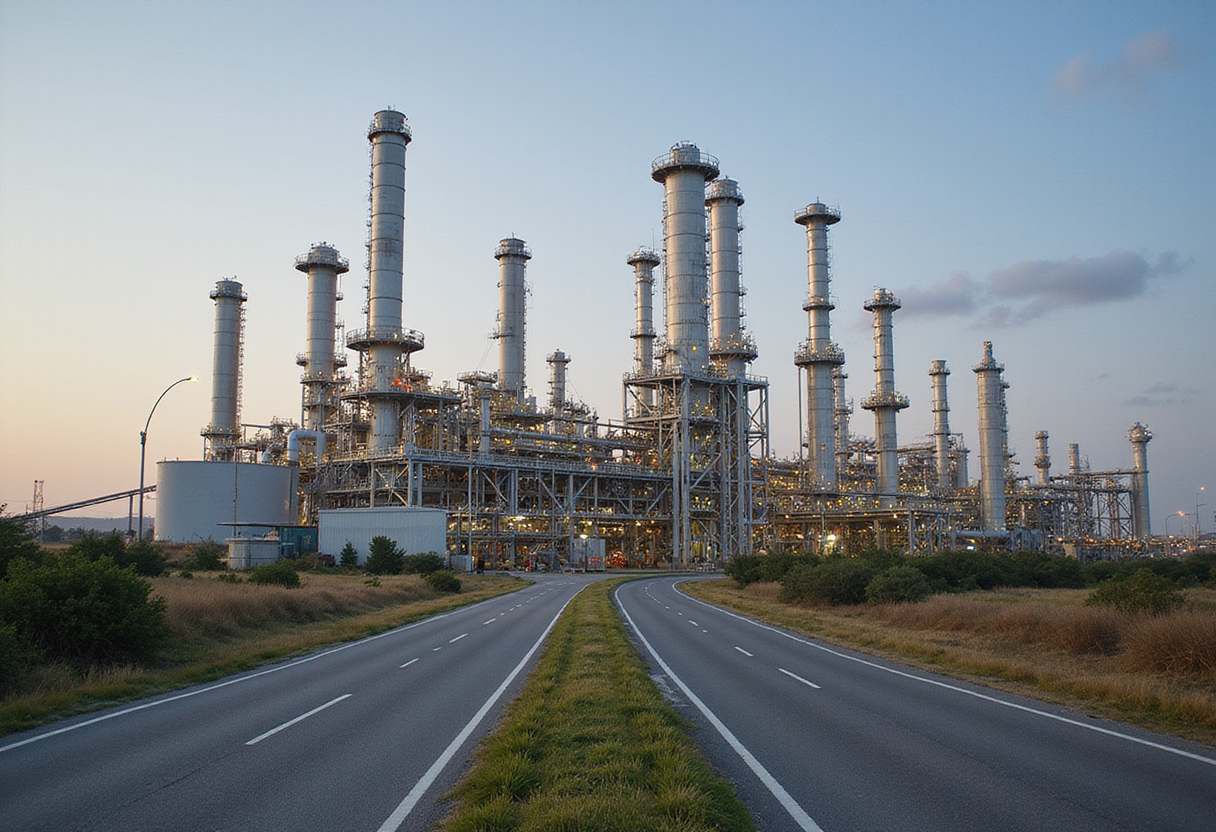
Africa's richest man, Aliko Dangote, will build a $16-billion oil refinery in the Kenyan coastal town of Lamu capable of processing 700,000 barrels per day — a scale that would rival the continent's largest processing facilities and anchor East Africa's push to refine its own raw materials.
Five African heads of state broke ground on the project Wednesday. Kenya's President William Ruto joined his counterparts from Uganda, Ethiopia, Togo and Benin, along with Nigeria's former President Olusegun Obasanjo, at a ceremony where the leaders shoveled soil to mark the start of construction.
Dangote Group, the Nigerian conglomerate founded by billionaire Aliko Dangote, will handle construction and holds stakes in the project. Completion is expected within 40 months.
Dangote framed the project as a step toward continental industrial self-sufficiency. "Africa must industrialize Africa," he said Wednesday, adding that the continent cannot be "exporting what it has and importing what it needs."
A regional bet on refining capacity
The refinery will rely on crude from neighboring countries rather than Kenyan production. Dangote said regional demand easily justifies the scale: East African countries consume well beyond the 700,000 barrels per day the plant will process.
Not every neighbor plans to feed the facility exclusively. Uganda's President Yoweri Museveni said his country still intends to build its own smaller plant. The region needs "more than one or two refineries," he said.
"For Ugandan crude, I didn't want to export any crude, I wanted to refine it locally," Museveni said.
The project also shifted geographies before breaking ground. The refinery was originally planned for Tanzania's coastal town of Tanga, but Dangote said Lamu won out because it offers deeper waters, solid ground capable of supporting heavy equipment, and deep-sea access.
Rwanda, Burundi, South Sudan and Tanzania sent heads of delegation to represent their leaders at the ceremony, underscoring the project's regional significance.
Land disputes and environmental pushback
The launch comes with local friction. Officials are waiting for a lawsuit filed by residents claiming ownership of the land to be resolved. On Tuesday, dozens of protesters took to Lamu's streets demanding more compensation.
Environmental activists also say the project threatens the marine ecosystem along the coast.
Those disputes now sit alongside a 40-month construction clock, meaning Dangote Group and the Kenyan government will have to clear legal and community hurdles while delivering one of the largest industrial projects East Africa has attempted.
Original: apnews.com
More from Grace Kim
Show full bio
Market editor covering industry trends and analytics at Business Bearings.
361 articles