Democrats Flip Congress, and Silicon Valley's Trump Bets Sour
Democrats took Congress and key governors' mansions, and now Nvidia, Amazon, Musk's xAI and hyperscale datacenters are all in the crosshairs of a blue majority.
By Grace Kim
4 min read
What's News
- Musk gave $450 million to Republican candidates in the midterms; his top beneficiary, Ken Paxton, lost by a major margin.
- Record-preservation letters for future investigations have already gone to Nvidia and Amazon.
- Governors-elect in Texas, Ohio and Georgia have pledged moratoriums on hyperscale datacenter construction.
- xAI holds a $200 million contract with the US military that Democrats may target, alongside the SpaceX–xAI merger.
- Musk's net worth had surpassed $1 trillion before Tuesday's Democratic sweep of Congress.
Elon Musk gave $450 million to Republican candidates and watched them lose anyway. Tuesday's midterms handed Democrats decisive control of the US Congress, flipped governors' mansions — including in Texas — and turned the front-row inauguration photo of Musk, Jeff Bezos and Mark Zuckerberg into what looks like a target list for a blue Congress bent on making life difficult for billionaires.
For years, the bet on MAGA paid. Silicon Valley's fortunes ballooned as Trump played kingmaker and AI's expansion looked unstoppable; Musk's net worth passed $1 trillion. On Tuesday, that unhedged wager looked unwise. Voters worried about corruption punished tech oligarchs, anger over the AI boom, datacenters and Flock surveillance cameras pulled independents toward Democrats, and even red states went blue.
What did the winners actually say?
"Voters rejected Republicans in part because they were bought and paid for by AI billionaires. Democrats must hold them accountable instead of cashing their checks," Texas Democratic Representative Greg Casar wrote.
Georgia Democrat Jon Ossoff, who won re-election to the Senate, went further in his victory speech: "The titans of Silicon Valley dig bunkers for themselves and warn that the artificial intelligence they're creating risks human extinction." He pledged to bring "big tech to heel."
Massachusetts Senator Ed Markey was blunter still. "They are going to need to plant new forests for all of the subpoenas we'll be printing," he tweeted late Tuesday.
Which companies face investigations?
Letters demanding preservation of records for future investigations have already gone to Nvidia and Amazon. Democrats have promised congressional probes, and Musk presents the meatiest target: the billionaire most closely allied with the Trump administration and the richest man in the world. His conduct running the "department of government efficiency," which laid waste to USAID and wide swaths of the federal government, looks like a political lay-up for the new majority.
Musk had the worst night of anyone but Trump. His biggest beneficiary, Ken Paxton in Texas, lost by a major margin. Musk stayed silent for roughly eight hours as results poured in, then deleted his Tuesday tweet reading: "Vote red today!"
By Wednesday morning, the SpaceX CEO wanted off the planet. "Datacenters in space are looking pretty good right now," he wrote.
He may not get the chance. Democrats may investigate or attempt to unwind the multibillion-dollar merger of SpaceX and Musk's AI company, xAI — maker of the Nazi-friendly nudification bot Grok — which holds a $200 million contract with the US military. That contract looks like easy leverage for the new majority.
Can Zuckerberg and Altman rebrand fast enough?
Mark Zuckerberg may feel deja vu across the table from an inquisition, as he repeatedly did in the late 2010s. The Meta CEO pivoted nakedly political under Trump 2.0: he showed off Meta's camera-equipped glasses at Mar-a-Lago and axed the company's diversity, equity and inclusion program as the president waged war on DEI. Already America's most disliked man, Zuckerberg may yet return to his former liberal image, like the pro-immigration nonprofit he founded a decade ago.
Sam Altman, spotted at Mar-a-Lago himself, switched to damage control Tuesday night. "People should not cede control of the future to superintelligence, and that requirement should ultimately constrain AI progress," the OpenAI CEO tweeted — an invitation to human-first regulation that reads like a Bernie Sanders talking point and a clear break from Trump's free-for-all stance and his rebranding of AI as "superintelligence."
What happens to the datacenter arms race?
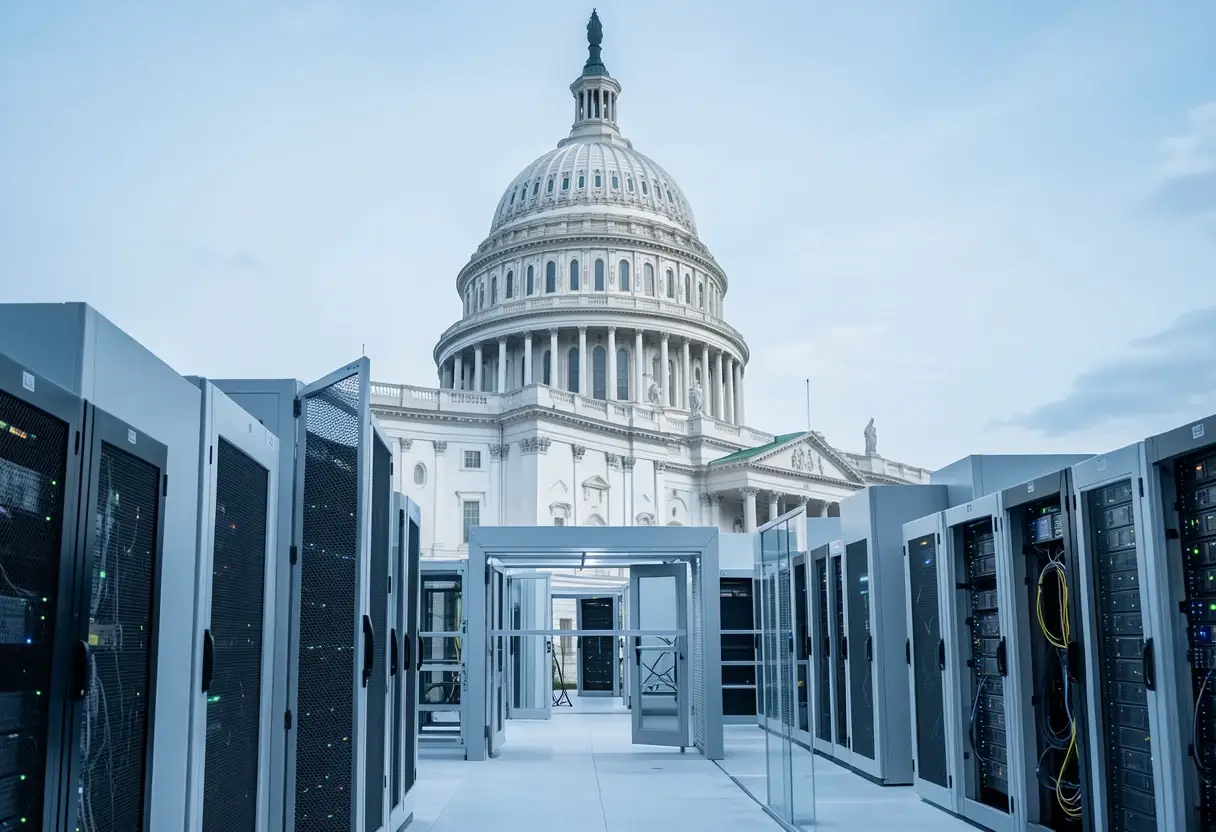
The major AI firms spent the past year racing to buy or build massive, resource-hungry facilities packed with semiconductors. Americans hate them. Governors-elect Gina Hinojosa of Texas, Amy Acton of Ohio and Keisha Lance Bottoms of Georgia all campaigned on pausing hyperscale datacenter construction — moratoriums that could hamstring compute-hungry AI companies.
The deeper problem for tech is reputational. After years of pandering only to power brokers, the billionaires have little to say on the issues voters actually care about: affordability and corruption. Most Americans see them as avatars of extreme wealth inequality and pay-to-play politics. A public angry about prices doesn't leave much room for a billionaire to offer anything — and subpoenas, not speaking slots, may be what 2026 delivers.
Original: thehill.com
More from Grace Kim
Show full bio
Market editor covering people, launches and day-to-day practice in entrepreneurship, startups and venture funding at Business Bearings.
1,519 articles