Diesel at $100,000 a Fill-Up: Trump Policies Squeeze America's Top Port
Diesel fills hitting $100,000, canceled federal grants and tariff-driven shipping workarounds are squeezing Unalaska, America's most productive seafood port by volume for 25 years.
By Nathan Brooks
4 min read
What's News
- Unalaska's power fuel surcharge jumped from $0.22 to $0.36 per kWh amid the Iran war.
- Dutch Harbor moved 780+ million pounds of catch worth nearly $225 million in 2023.
- The NEH canceled a $347,000 museum grant; IMLS cut the library's $6,000 book grant. Both later restored.
- A DOE wind project that could have replaced most diesel generators was killed in June 2025.
- Public radio KUCB lost half its budget when Congress defunded public media.
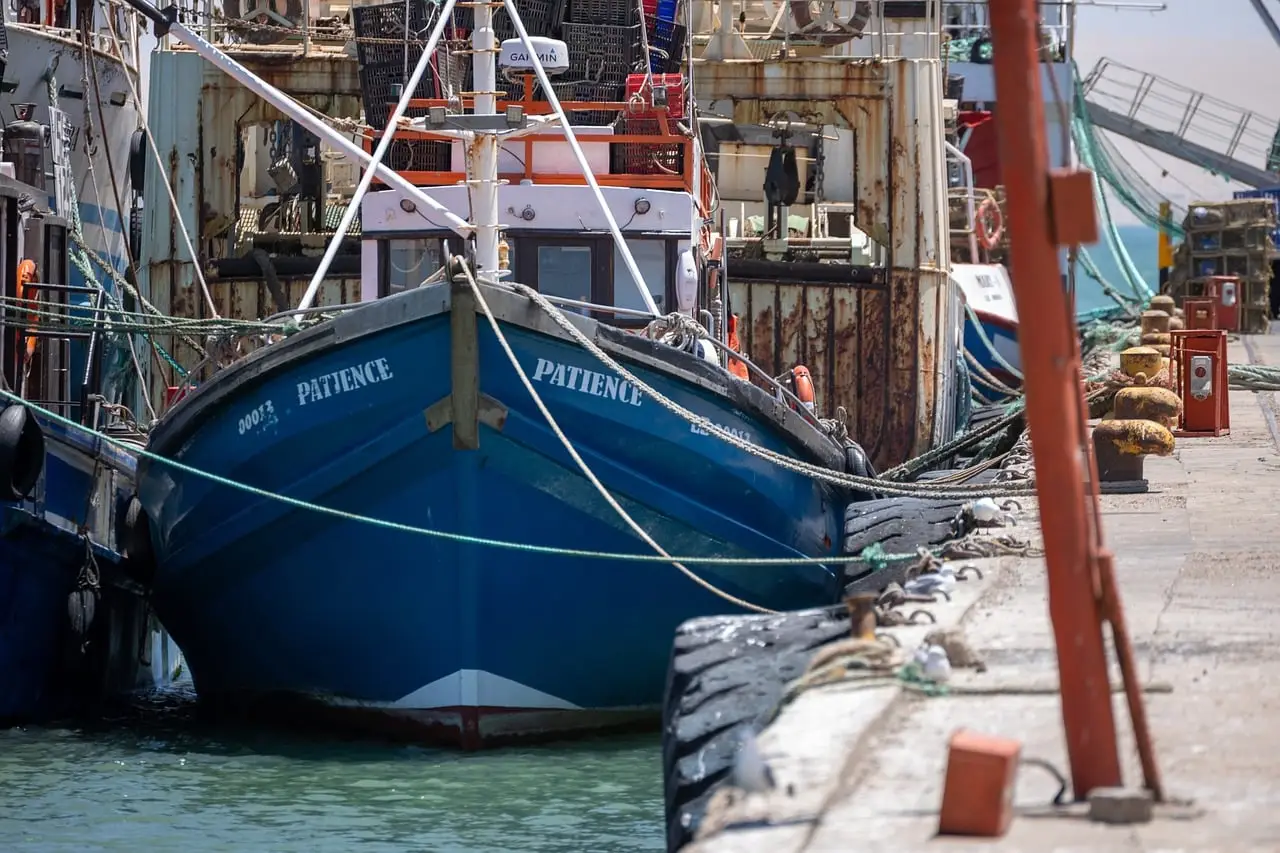
A single refuel now costs Oystein Lone $100,000 — up from $86,000 for 12,000 gallons of diesel just weeks earlier — and that arithmetic is reshaping America's most productive seafood port.
Lone, 58, has fished the Bering Sea since 1989 and was prepping his boats in Unalaska hours before crab season opened. State regulators had actually raised quotas for red king, tanner and snow crab. That didn't matter much when the war with Iran pushed diesel to record highs.
"This is the most challenging time I've seen," Lone said. Crews that can clear six figures a season will earn less, since vessel overhead eats into their pay, and processors and shippers will push their own fuel costs down the chain.
"Unfortunately, we're at the bottom. We take the beating," Lone said. "Everybody else just passes on their cost to us."
What does this change for Unalaska's economy?
Plenty. Dutch Harbor, the city's port, moved more than 780 million pounds of catch worth nearly $225 million in 2023, per NOAA, and has led the US by volume for over 25 years. Its pollock ends up in fish sticks, imitation crab and McDonald's Filet-O-Fish across the US and Asia. The city of roughly 4,300 residents runs almost entirely on diesel for electricity.
The fuel surcharge Unalaska charges power users has climbed almost two-thirds, from $0.22 per kilowatt-hour last year to as much as $0.36 now, utility director Erik Hernandez said. That hits every household in a town where round-trip flights from Anchorage start at $1,600.
City council member Daneen Looby, who owns the Norwegian Rat Saloon, is raising menu prices as distributors add fuel surcharges to food and alcohol shipments. "I didn't want to, but I kind of have to, otherwise I'm going to become a charity," she said.
Federal grants cut, then partly restored
Trump's March 2025 executive order targeting the Institute of Museum and Library Services killed a $6,000 annual grant the public library used to buy books. Librarian Karen Kresh had already counted on the money when she learned it wasn't coming.
The Museum of the Aleutians fared worse. The National Endowment for the Humanities canceled its $347,000-plus grant to catalog Russian-era Unangax̂ artifacts, saying funds would be reallocated "in a new direction in furtherance of the president's agenda." Executive director Virginia Hatfield laid off six people. "It's very heartbreaking, and it kind of truncated important work," she said.
Both grants later returned — the NEH cuts after a lawsuit — but the museum lost its project director, outreach specialist, and the professor who excavated the artifacts, who died. Meanwhile Kresh learned the FCC may end E-Rate, which funds the only free public wifi in town.
Public radio station KUCB lost half its budget when Congress defunded public media. The station aired a tsunami warning the very day the Senate debated the cuts. Donations surged and the Bureau of Indian Affairs provided temporary funding, but general manager Lauren Adams sees no long-term fix. "Eventually, we're going to run out of those reserves," she said.
Tariffs, visas and a lost wind project
At the Matson shipping terminal, longshoremen now load empty containers onto outbound vessels to avoid Trump's tariffs, since empties lingering in the US count as imports. "We got to get these tariff cans out of here," union shop steward Shawn Schomer said his managers tell him. "It can't be good business to bring in empties and then have to sort them and ship them back out empty." Matson declined to comment.
Unisea, a major processor, is rebuilding its workforce after foreign guest-worker visas became unreliable. Its 15 Ukrainian workers on U4U visas all failed to get renewals, operations director Ron Kjorsvik said. USCIS told congressional Democrats it had "many competing priorities" and could not prioritize those applicants.
The biggest structural loss may be energy. Under Biden, the Department of Energy's Office of Clean Energy Demonstrations had Unalaska applying for funds to install five one-megawatt wind turbines and a battery system that could have replaced most of its diesel generators. After Trump took office, the DOE went quiet, and in June 2025 the city learned the money was gone. The GAO found the office lost 85% of its staff in Trump's first six months.
What happens next
With midterms Tuesday, Alaska's Republican Senator Dan Sullivan faces a fierce challenge from Democrat Mary Peltola, and fuel prices are on voters' minds. Trawler captain CJ Peterson, waiting to unload 135 tons of pollock, put the industry's math bluntly: "If the fish price doesn't match the fuel costs, they'll shut us down."
Crab captain Chris Studeman, gassing up the Kevleen K the night before the season, had no better answer. "Don't have much choice," he said. "Can't really change your plan. You just got to go for it."
Original: fisheries.noaa.gov
More from Nathan Brooks
Show full bio
News editor covering regulation, policy and their impact on entrepreneurship, startups and venture funding at Business Bearings.
1,446 articles