Europe's Carmakers Turn Design Heritage Into a Weapon Against China
Renault sold 100,000+ retro R5 EVs in 2025 while Chinese brands hit a record 12.7% share. Europe's answer: iconic design at affordable prices — will nostalgia pay?
By Nathan Brooks
4 min read
What's News
- Chinese brands took 12.7% of the European market in Q3 2026, outselling Japanese brands for the first time over a full quarter.
- Renault sold more than 100,000 retro R5 E-Tech electric cars across Europe in 2025.
- Citroën's 2 CV Concept previews a production EV by 2028 starting near €15,000.
- The EU capped Chinese hybrid imports at 350,000 a year starting December 2026.
- Chinese EVs are 21% cheaper on average than European models, per Transport & Environment.
Chinese carmakers grabbed 12.7% of the European market in the third quarter of 2026, outselling Japanese brands including Toyota over a full quarter for the first time — and Europe's legacy automakers are answering with their archives.
At this month's Paris Motor Show, Citroën unveiled an electric 2 CV Concept alongside a matching delivery van, while Renault showed a reborn R8 Gordini and an E-Space concept to join the retro R5, R4, and Twingo already in showrooms. The strategy is deliberate: only old automakers can wield it.
Adrian Clarke, a car designer turned critic who writes for The Autopian and Hagerty, sees heritage as a weapon newer brands can't touch. "Legacy OEMs now know that heritage and their brands are very powerful in creating emotional appeal for customers—and it's something that newer brands like Tesla or Rivian and especially the Chinese OEMs don't have," he says. "Heritage and brand DNA become a key differentiator."
How big is the retro bet in euros?
Bigger than you'd think. The Renault 5 E-Tech, a battery-powered remake of the 1972 hatchback starting at €24,990 (about $28,000) in France, was Europe's best-selling small electric car in the first half of 2026. Renault sold more than 100,000 of them across Europe in 2025, according to France's Auto Plus. The new Twingo E-Tech, channeling the cheerful 1992 city car, starts at €19,490 (about $21,800). At the top end, the 5 Turbo 3E — an electric "mini supercar" limited to 1,980 units at roughly €135,000 ($180,000) per Autocar — turns the wide-hipped rally hatchbacks of the early 1980s into a collector's item.
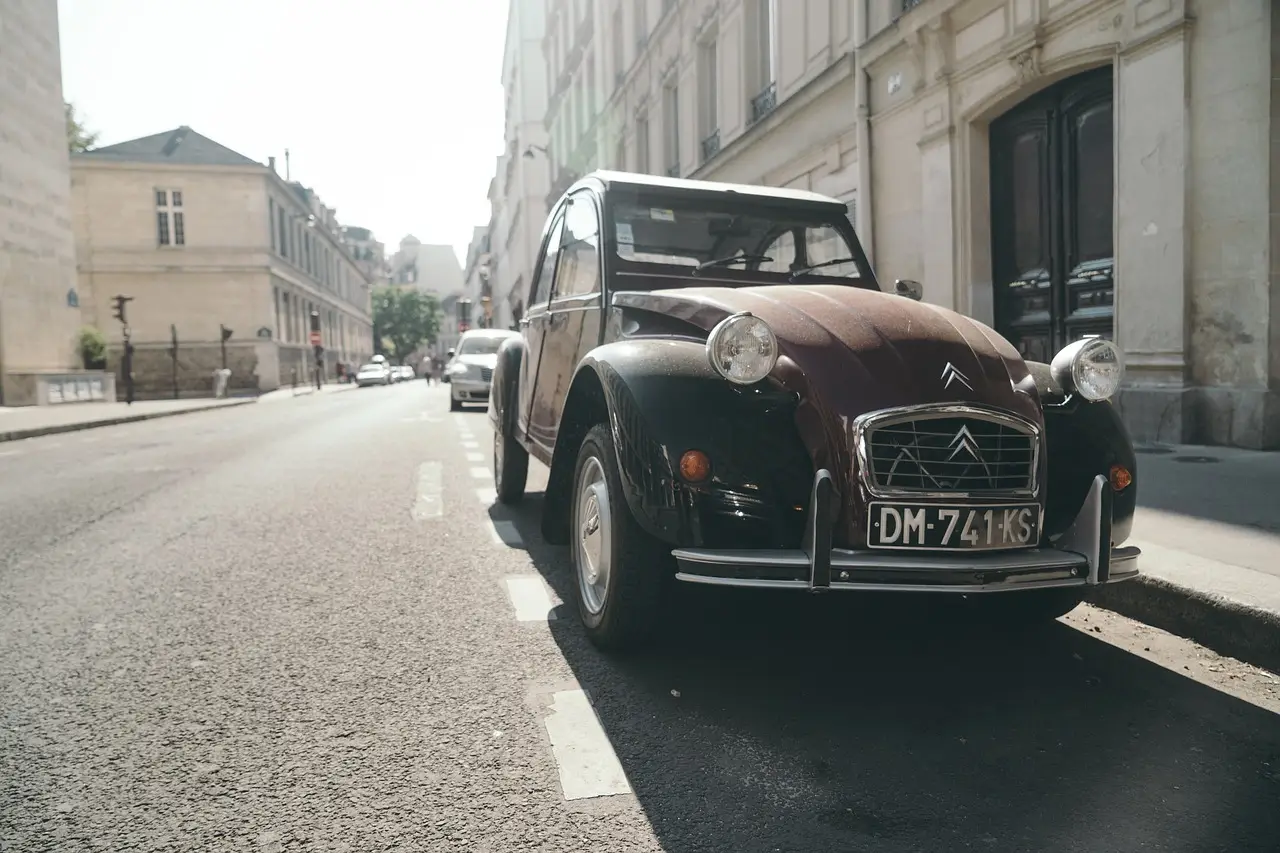
Citroën, now part of Stellantis, went after the biggest icon of all. Its 2 CV Concept previews a production model coming by 2028: built in Europe, targeting about 2,200 pounds, starting near €15,000 ($16,800), and designed to fit a new EU category for small, affordable electric cars.
What does the Chinese threat actually look like in numbers?
Chinese brands sold more cars in Europe in the first half of 2026 than in all of 2025, according to Dataforce. In September alone, their sales doubled from a year earlier. BYD outsold Tesla in the EU over the first nine months, 206,002 cars to 188,035 — although Tesla's sales there are up 69% after two years of decline. Counterpoint Research expects Chinese brands to take more than 20% of Europe's car market by 2030, and 29% of electric sales. Transport & Environment pegs Chinese EVs at 21% cheaper on average than European models.
The EU responded this month, agreeing with Beijing to cap Chinese hybrid imports at 350,000 a year starting in December — a limit it says could cut those shipments by more than half. But cars assembled inside the EU don't count against the quota. Leapmotor already builds its B10 crossover at a Stellantis plant in Zaragoza, Spain; BYD expects to start assembly in Szeged, Hungary, by year-end and plans a second European site, likely in Spain or France.
Can nostalgia close the sale?
The record says: only when the price is right. Honda's charming e, styled after the first Civic, was supposed to sell 10,000 units a year in Europe. It sold 2,110 in 2022, its price past €40,000, and Honda pulled it after three years. In the U.S. last quarter, Volkswagen sold just 989 ID.4s, ID. Buzz sales fell 82.5%, and Fiat moved 52 electric 500e hatchbacks nationwide — fewer than one a day. Even Renault has a dud: in July the R5 led French EV registrations (3,794) and the Twingo placed third, but the R4 finished 17th with 737 units; the French site Avem called it Renault's "only disappointment."
Ferdinand Dudenhöffer, director of the Center Automotive Research in Bochum, thinks the whole bet is misplaced. "The car of tomorrow is made of tech, not little stories from the day before yesterday," he says. Younger buyers, he argues, look to brands like China's Xiaomi and to autonomous driving and smart cockpits.
Renault's own designers sound the same caution. "Icons are not eternal; they have their moment in the sun," Renault Group design boss Laurens van den Acker told Reuters. Design chief Alexandre Malval puts the operational rule plainly: "This heritage is an asset, but it must be handled with care. The goal is not to reproduce cars from the past out of nostalgia, but to reinvent them so they are perfectly suited to our times."
The winning revivals follow that logic. The R5 and Twingo borrow a famous face but arrive at the right size and price. The 2 CV's €15,000 sticker — not its egg holders in the doors — is what will sell it. Heritage buys Europe's carmakers time and attention. Closing the sale against a 21% price gap will take affordable, distinct cars that would work even if nobody remembered the originals.
Original: media.stellantis.com
More from Nathan Brooks
Show full bio
News editor covering regulation, policy and their impact on entrepreneurship, startups and venture funding at Business Bearings.
1,378 articles