Europe to Decide on First Human Space Programme in €10bn Rome Vote
European ministers meet in Rome on 15 December to vote on a €10bn human space-flight programme. ESA chief Josef Aschbacher calls a positive decision 'quite a historic moment' for the continent.
By Nathan Brooks
4 min read
What's News
- EU ministers decide on 15 December in Rome on a €10bn (£8.4bn) human space-flight programme
- ESA's budget rose 33% to a record €22.1–€22.3bn after its mandate expanded to defence missions
- Europe's IRIS² Starlink rival will not be operational until 2029 despite being brought forward a year
- ESA would use €280m freed by NASA project pauses for preparatory work, with full funding due in 2028
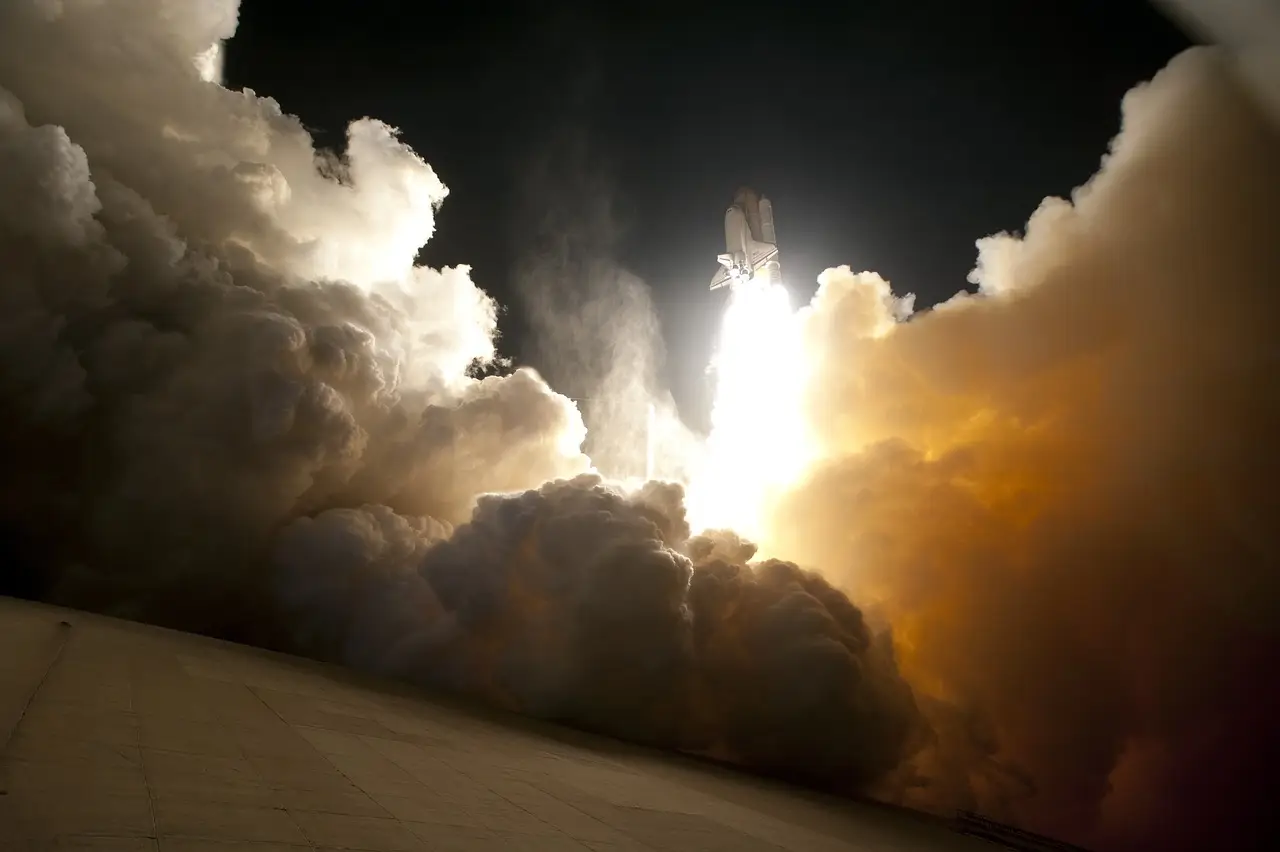
European ministers will decide on 15 December in Rome whether to launch the continent's first human space-flight programme, a project ultimately costing €10bn (£8.4bn) aimed at cutting Europe's dependence on the US for getting astronauts into orbit.
The plan requires a European space shuttle plus launch and landing pads, most likely in French Guiana, home of the Guiana Space Centre. Commercial launch provider Arianespace has been sending satellites into orbit from there for Europe for roughly 45 years.
"If the decision is positive, that would be quite a historic moment for Europe," said Josef Aschbacher, director general of the European Space Agency (ESA).
What's driving the urgency?
Aschbacher said the commercialisation of space by tycoons such as Elon Musk, alongside growing concerns over Russia's military space plans — including a potential nuclear weapon — had exposed vulnerabilities in Europe's space posture. The recent restrictions on Ukraine's use of Musk's Starlink satellite network will add urgency to the Rome talks, as will this week's regulatory approval for SpaceX to launch 1 million satellites to process data in space.
"The desire to have more autonomy certainly has to do also with geopolitical circumstances. There are uncertainties right now [over] how human spaceflight will continue in the United States," Aschbacher said.
He described relations with NASA as "good and strong," but said things "could change" in the US and Europe had to be prepared for every eventuality. Depending on who occupies the White House, he said, the US government could downgrade NASA or even ban foreign access to private and public US spaceflights.
The plan is not to stop using NASA but to supplement it — making Europe a "space power" alongside Russia, China and the US, with sovereignty and industrial spinoffs in hi-tech engineering. Aschbacher has already held talks with Japan and the United Arab Emirates.
What does this change for European taxpayers?
Europe currently has 11 astronauts in space, with four more scheduled to go to the International Space Station next year through NASA. Until 2022, ESA relied on NASA and Russian launchpads to get its astronauts there.
ESA has argued that relying on NASA for human flights is not just risky — it also means large chunks of European taxpayers' money end up in US coffers. "It funds companies in the US instead of our own companies. And stronger US companies would weaken our own companies because they would be pushed out of the market," Aschbacher said.
European countries haven't attempted their own human space programme since the Hermes project in 1992, a space plane meant to rival NASA's shuttle. It was abandoned during development as costs rose after the Challenger tragedy.
The military dimension
Russia may be planning to launch nuclear weapons into space, it was reported this week. In October, a Russian low-earth satellite, Kosmos 2612, came within a mile of a commercial Earth observation satellite that may serve national security needs of countries such as Ukraine.
"We do not know exactly what the intention was, or what they had in mind, but the demonstration that they are not only capable of doing it, but they are doing it … is concerning," said Aschbacher.
He called talk of space wars "raising concerns" and warned that blowing up a section of space would damage everyone, including the aggressor. "Once you kinetically damage other satellites or deploy such weapons, then the whole orbits are being destroyed and made unusable [for everyone]," he said.
Curbs on Ukraine's access to Starshield — the military version of Starlink that Musk's company built for the Pentagon — have fuelled questions about the pace of Europe's space military capabilities and its ability to compete with Starlink, a vital part of Ukraine's drone warfare. Europe's rival constellation, IRIS², won't be operational until 2029, even after being brought forward a year.
Aschbacher conceded SpaceX was "some years ahead" but pointed to OneWeb, the UK-French-backed constellation of 600 satellites in low orbit, and said IRIS² would offer superior technology to Starlink when it launches. On defence and security, he said Europe was "catching up very fast."
A changed mandate and the money behind it
ESA's 1975 founding mandate to operate for "exclusively peaceful purposes" arguably held Europe back. Last November, that mandate changed to support "non-aggressive defence and security missions," and the budget rose to a record €22.1–€22.3bn — a 33% increase. Germany contributed 23%, with France and Italy at 16% each.
"This is a complete change of mandate," said Aschbacher, who can now talk "proactively" to defence ministers and the military. Even with strong NASA ties, Europe had no say in the recent pause of two projects: the lunar gateway and the Mars sample return mission.
If ESA gets the green light from its 23 member states in December, the agency will start preparatory work using €280m freed up by the NASA project pauses, with a full funding call at the next ESA ministerial budget session in 2028.
"Why is it important [to have control of our own space programme]? Because we would become, next to China, Russia and the US, a nation that would be capable of bringing its own astronauts to space," Aschbacher said. "That means this is really a stepping up of European industry in a future domain that is very important, a critical infrastructure."
Source: theguardian.com
More from Nathan Brooks
Show full bio
News editor covering regulation, policy and their impact on entrepreneurship, startups and venture funding at Business Bearings.
2,912 articles