FCC Clears SpaceX for 1 Million Starmind Satellites by 2040
The FCC authorized SpaceX's Starmind constellation of up to 1 million orbital compute satellites, but only for backup telemetry — no hardware, customers, or launch schedules exist yet.
By Olivia Hart
4 min read
What's News
- FCC authorized up to 1,000,000 Starmind satellites on Wednesday, the first U.S. approval of orbital AI compute at this scale
- Deployment milestones: one satellite by November 25, 2033; full 1 million by November 25, 2040
- Ka-band use is authorized only on an unprotected, non-interference basis for backup telemetry, tracking and command
- Amazon's Kuiper, Viasat and the American Astronomical Society filed petitions to deny
- A million satellites would be roughly 50 times the ~19,770 satellites ESA counted in orbit in November 2026
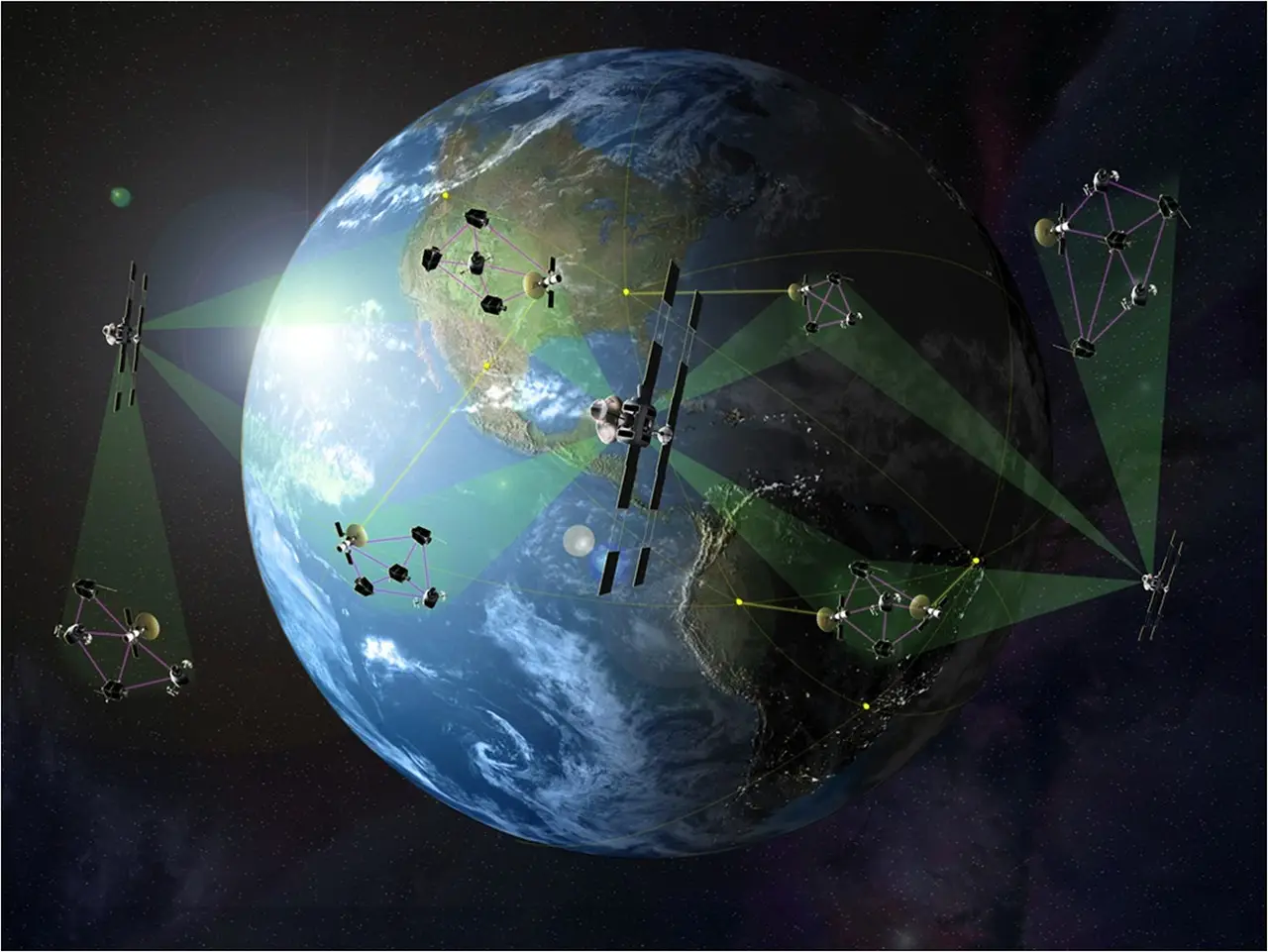
The FCC on Wednesday authorized SpaceX to deploy up to 1 million satellites for its "Starmind" orbital data center constellation — the first U.S. regulatory approval for AI compute infrastructure in space at this scale. The catch: SpaceX has seven years to put a single satellite in orbit, and 14 years to complete the full build.
The authorization covers a non-geostationary constellation of 1,000,000 satellites in orbital shells between 500 and 1,002 km altitude, across multiple inclinations including sun-synchronous orbits. The license term runs 15 years from first-satellite certification.
What does the FCC approval actually cover?
The grant is narrower than the headline number suggests. It covers radiofrequency authority only for backup and emergency telemetry, tracking, and command (TT&C); primary communications will run over optical intersatellite links to SpaceX's existing Starlink network. Ka-band frequencies — 18.8–19.3 GHz space-to-Earth and 28.6–29.1 GHz Earth-to-space — are authorized only on an unprotected, non-interference basis for backup TT&C, and SpaceX must coordinate with federal operators before using the 18.8–19.3 GHz band.
The FCC granted waivers for processing round procedures, surety bonds, and milestone rules, but imposed new deployment milestones from its recent Space Modernization order:
- One satellite operational by November 25, 2033
- 10% of the constellation, or 100,000 satellites, by November 25, 2035
- 50%, or 500,000 satellites, by November 25, 2038
- The full 1 million by November 25, 2040
The milestone structure gives SpaceX flexibility on the front end and hard deadlines later. In plain words: the regulator bought itself fourteen years of checkpoints, and SpaceX bought itself permission to try.
What was deferred or dismissed?
The FCC deferred SpaceX's request to dispose of satellites above 600 km via "Earth disposal orbits or heliocentric orbits" instead of atmospheric re-entry. The agency found SpaceX "has not provided sufficient information for the Commission to determine whether its alternative disposal methods are compliant" and required a modification application before any such satellites deploy.
The commission also dismissed environmental review obligations under NEPA, citing its October 2026 NEPA Order, which concluded that space-based operations are "extraterritorial activities" outside U.S. jurisdiction and do not constitute major federal actions. Optical astronomy concerns met the same fate: the FCC dismissed them, accepting SpaceX's commitment to coordinate with the National Science Foundation. The American Astronomical Society had argued Starmind's waste heat would raise the infrared sky background; the FCC ruled this "outside the scope of the ODC's radiofrequency operations."
The takeaway: the two most contested risks — how satellites get removed from orbit, and whether a million spacecraft change the night sky — were both pushed aside rather than resolved.
Who opposed the deal?
Petitions to deny came from Amazon's Kuiper Systems, Viasat, and the American Astronomical Society. Comments raised collision risk, disposal failures, orbital congestion, and infrared astronomy impacts. The FCC found SpaceX's debris mitigation plan compliant for satellites below 600 km but conditioned the grant on a full debris plan for higher altitudes before deployment.
For scale: ESA's November 2026 census lists roughly 19,770 satellites in orbit. A million-satellite constellation would be roughly 50 times that population — a fiftyfold increase in tracked orbital objects from a single operator.
Do SpaceX's technology claims hold up?
SpaceX's public Starmind page claims "proven technology" more streamlined than Starlink, a chip-vendor-agnostic architecture, cooling overhead reduced "by an order of magnitude" via radiative cooling in vacuum, and a "Gigasat Factory" in Bastrop targeting production starting late 2027. It also describes a joint AI chip fab project with Tesla.
None of this hardware exists yet. No satellite specifications, chip designs, launch schedules, pricing, or customers have been disclosed. The authorization is a ceiling, not a build plan. FCC Chairman Brendan Carr described the hardware as "orbital compute modules" and said Starmind and competitor constellations would use solar power. Carr also said SpaceX and "the many competitors working on their own orbital data centers are meeting the moment." Every production claim — the Bastrop factory, the Tesla fab, the order-of-magnitude cooling gain — remains unverified until a single unit flies.
What happens next?
Competition is moving. Google launched a "Project Suncatcher" AI server satellite last month, with Blue Origin contracted for a dedicated heavy-lift launch in 2029. The FCC said it is reviewing other orbital data center proposals and intends to rule quickly.
Four signals will indicate whether Starmind moves from paper to product: technical filings with satellite dimensions and power budgets; a first compute-module launch, even a single test unit; a named customer or cloud partner; and responses from other regulators and rival operators. The disposal waiver deferral means SpaceX must resolve the graveyard-orbit question before populating shells above 600 km. The 2033 first-satellite milestone is seven years away; the full constellation target is 14 years out. Until a test unit reaches orbit, the million-satellite figure remains a regulatory maximum with no engineering behind it.
Source: epyhia.com
More from Olivia Hart
Show full bio
Staff writer covering people, launches and day-to-day practice in entrepreneurship, startups and venture funding at Business Bearings.
2,710 articles