Fender's Stratocaster copyright crackdown hits retailers and guitar makers
Fender won German copyright on the Stratocaster shape in December and has sent cease-and-desist letters across the industry. Retailer Thomann, which sold 112,000 Strat-style guitars in 2025, is suing back.
By Amara Osei
4 min read
What's News
- Düsseldorf court granted Fender copyright on the Stratocaster shape in December 2024; Fender began enforcement in March 2025.
- Thomann sold over 112,000 Strat-style guitars in 2025, including more than 16,000 by Fender and Squier.
- Thomann filed an action of non-infringement in June; Fender sued Thomann for copyright infringement in July.
- Fender never trademarked the Stratocaster body shape when the guitar debuted in the early 1950s.
- Fender is majority-owned by Hawaii-based Servco Pacific.
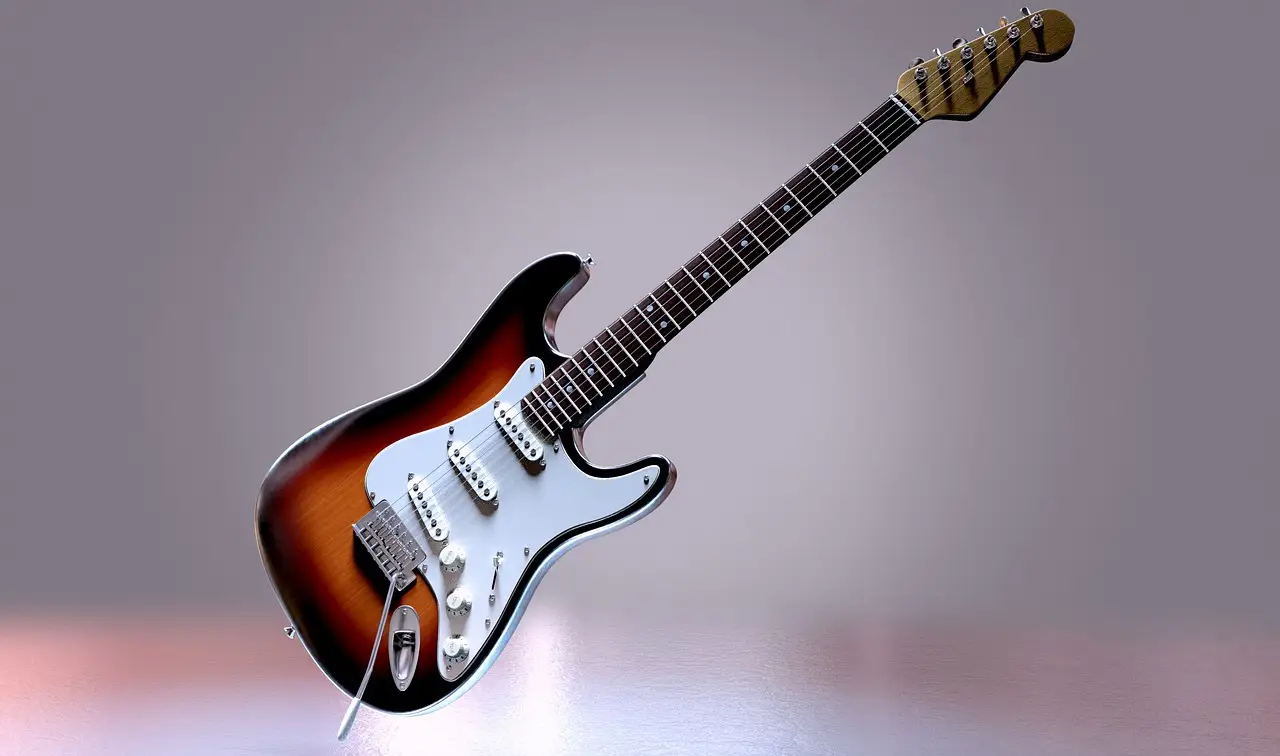
A court in Düsseldorf granted Fender copyright protection over the Stratocaster body shape in December, and the company has been weaponising that ruling ever since — sending cease-and-desist letters to dozens of retailers and manufacturers demanding they recall and destroy Strat-style guitars heading into Europe.
The December ruling came against Chinese seller Yiwu Philharmonic Musical Instruments, which did not appear in court. Under German law, the Düsseldorf court ruled on the facts Fender presented because the defendant raised no objections. Fender's design, the court said, was "an outstanding, free creative achievement" that "clearly reflects the personality of its author." It described the guitar as "a body without edges" with "soft curves that evoke associations with the female torso consisting of hips, waist and arms."
What does the ruling cover?
The Stratocaster's sinuous shape has never been trademarked. Fender, based in California, did not protect the body shape when the guitar was first made in the early 1950s. Since the 1960s, Strat-shaped guitars have been made and sold worldwide by countless manufacturers, to the point many musicians consider the design generic.
In March, Fender announced on its website that the Düsseldorf decision created "enforceable rights" against any guitars using the Strat body shape manufactured, sold or distributed into Germany or other EU countries, "regardless of where those guitars are produced." The company then sent letters to retailers and manufacturers large and small. One letter, seen by the BBC, said Fender "insists that you immediately stop manufacturing, marketing, selling and producing the infringing products" — and demanded companies recall and destroy the guitars.
Who is pushing back?
The crackdown caused an outcry in the guitar world. "Time to boycott Fender," one person wrote on the Facebook page of US boutique guitar maker LSL Instruments.
The fiercest counterpunch comes from Treppendorf, a tiny village in rural Upper Franconia in Bavaria. That's the headquarters of Thomann, a family-run company founded by Hans Thomann Senior in 1954 and now one of the world's largest online retailers of musical instruments. Hans Thomann, who leads the business, received a cease-and-desist letter shortly after a March visit to Treppendorf by Fender chief executive Bud Cole.
"We remember the meeting as a very positive and constructive exchange," Thomann says. "At the time we had no indication that Fender was considering legal action."
The letter came as a shock, he says. "For more than 70 years, we have carried Fender instruments with great appreciation for the brand and many of us are Fender players ourselves. We were therefore surprised and disappointed by Fender's recent actions."
The stakes are measurable. In 2025, Thomann sold over 112,000 Strat-style guitars, including more than 16,000 made by Fender and Fender subsidiary brand Squier.
"As a retailer, we want to continue offering our customers everything that is available in the world of guitars," Thomann adds. "We would have welcomed to the opportunity to discuss the matter openly before receiving a formal legal demand for such extreme action."
Where do the lawsuits stand?
In June, Thomann filed an "action of non-infringement" in Germany, arguing Fender holds no valid copyright claim to the Strat shape. Thomann says the Düsseldorf ruling was simply a default judgement based on missed deadlines, not a "comprehensive review of the legal claims."
In July, Fender — majority-owned by Hawaii-based Servco Pacific — sued Thomann in a German court for copyright infringement. In a statement, Fender said it remained "confident" in the original Düsseldorf judgement and that its "preference has always been to keep lines of communication open and resolve these matters through constructive dialogue rather than litigation."
Thomann says he wants "legal clarity – not only for us but for the wider guitar industry," and frames the fight as protection for smaller players. "We used to be a small music shop ourselves," he says. "Many of the smaller manufacturers, guitar makers and dealers affected simply don't have the financial and legal resources to conduct a legal dispute like this."
LSL Instruments, a family-owned boutique maker in California, is one of them. "They were asking us to retrieve guitars from dealers out there and destroy them and send them proof," says Johny Miller, the company's director of sales, describing the initial reaction as "pretty terrified and blown away." "So when we heard Hans Thomann got the same letter and responded by suing them… so that everybody in the guitar community could understand exactly what's going on… we were so thankful and grateful," he says.
Fender now says it agrees "legal clarity was important" and is focusing more on targeting larger manufacturers. It also concedes that "our outreach has caused concern and frustration, particularly among smaller, independent guitar builders." "To them we say: we continue to hear you, and we're listening."
With duelling lawsuits pending in German courts, the outcome will determine whether the Stratocaster — the instrument of Jimi Hendrix, Eric Clapton and Buddy Holly, and one Hendrix famously set on fire at Monterey in 1967 — remains a shape anyone can build.
Original: bardehle.com
More from Amara Osei
Show full bio
Senior reporter covering companies, deals and strategy in entrepreneurship, startups and venture funding at Business Bearings.
2,705 articles