Floating Solar Costs Fall 48% as Florida Turns Ponds to Power
Floating solar costs fell 48% since 2015, and Florida's 76,000 stormwater ponds are becoming power plants — Orlando just launched the state's largest array at 2 megawatts.
By Amara Osei
4 min read
What's News
- Median floating solar cost fell from $2.41/watt in 2015 to $1.25/watt in 2024, down about 48%.
- Orlando Utilities Commission launched the 2 MW, 3,400-panel Conway Road array in November 2025, Florida's largest.
- Florida has an estimated 76,000 stormwater ponds covering about 2.7% of its urban land area.
- Global floating solar capacity passed 9.6 GW across 66 countries by end of 2024; China holds about half of Asia's ~90% share.
- D3Energy estimates Florida DOT pond rights-of-way could host more than 1 GW of floating solar.
The median cost of floating solar projects dropped from $2.41 per watt in 2015 to $1.25 per watt in 2024 — a decline of about 48%, according to Oktoviano Gandhi, a scientist at the Qatar Environment and Energy Research Institute. That price slide is now powering an unlikely build-out in Florida, where tens of thousands of stormwater retention ponds are doubling as sites for solar generation.
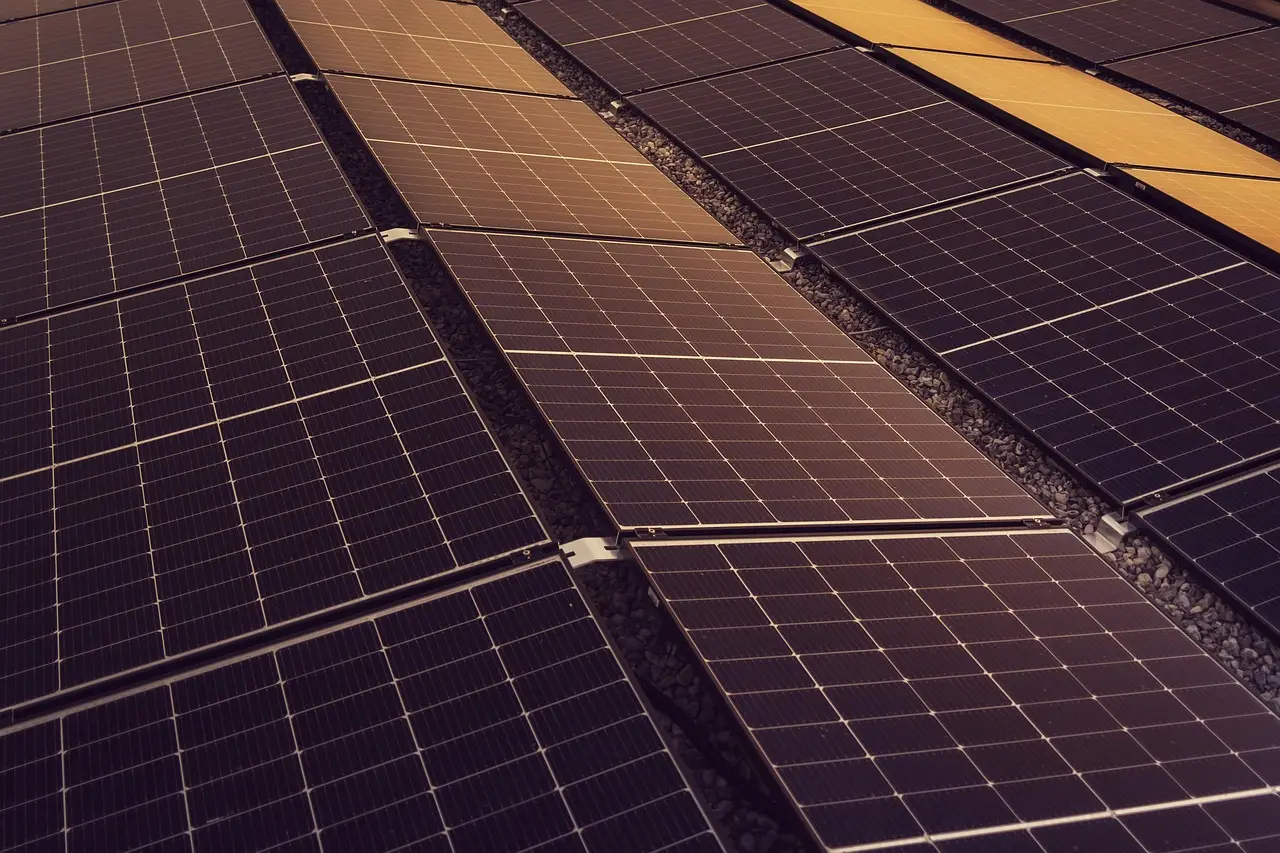
Floating photovoltaics — panels mounted on buoyant structures anchored in reservoirs and ponds — have become cheaper since the technology emerged two decades ago. They generate electricity without competing for scarce land, and the cooling effect of the water may boost output. Researchers caution the cost of water-based solar remains high and its environmental impact isn't fully understood.
After about 20 years, "people have started to believe, have started to see that it works, that it's fairly reliable, and that lenders and investors have also gained confidence in the technology," Gandhi said.
How Big Is the Floating Solar Market?
Floating solar still accounts for less than 1% of global solar capacity, Gandhi said. By the end of 2024, more than 9.6 gigawatts had been installed across 66 countries and regions.
About 90% of that capacity sits in Asia, and roughly half of the Asian share is in mainland China, according to Gandhi. The technology is well established in China, Japan, Taiwan and South Korea, where land is at a premium. The United States lags mainly because it has more land available for energy development, said Rafael Almeida, a freshwater ecosystem scientist and assistant professor at Indiana University Bloomington.
"It's not like only floating solar is increasing," Almeida said. "All kinds of solar energy, ground-mounted, in particular, has been accelerating over the past decade."
His research group found about 95% of floating solar sites sit on managed waters, including reservoirs in Japan, quarry lakes in Europe and aquaculture systems in China. In the U.S., systems have been installed on water treatment ponds and sewer facilities, and even on a winery irrigation pond in Napa Valley, Gandhi said.
Why Is Florida a Natural Fit?
Florida's towns and cities hold an estimated 76,000 stormwater ponds, covering about 2.7% of the state's urban land area, according to University of Florida researchers working from 2012 land-use data. The state has so many ponds because of heavy rainfall, flat terrain, sandy soil and its development history, said AJ Reisinger, an associate professor at the university specializing in urban soil and water quality.
A state law enacted in 2022 explicitly supports floating solar. Justin Kramer, director of emerging technologies and data analytics at the Orlando Utilities Commission, said available land is limited and expensive.
"Floating solar provides locations that are within the city limits, but they're not being used for anything else," Kramer said.
The commission started with a 32-kilowatt system, expanded it, then built a separate 120-kilowatt project. In November 2025 it launched the 2-megawatt Conway Road array — more than 3,400 panels on floats, which the commission calls the state's largest floating solar installation.
Developer D3Energy says it holds exclusive rights to develop floating solar on eligible Florida Department of Transportation stormwater ponds within state highway rights-of-way. It estimates those systems could generate more than 1 gigawatt of energy.
Can These Arrays Survive Hurricanes?
Kramer said the floating systems produce about 5% to 8% more power than a typical rooftop array thanks to the water's cooling effect. Gandhi cautioned the benefit is sometimes overstated and varies with wind and ambient temperatures. The panels can also reduce evaporation, useful on irrigation reservoirs in dry regions.
Orlando's arrays are engineered for Florida conditions and have operated through multiple hurricanes. They are "designed to go up and down as the stormwater pond levels increase or decrease," Kramer said. "And they're designed for the wind speeds that we have to deal with."
D3Energy, with more than 15 floating solar projects in Florida, said none of its systems suffered structural damage when Hurricane Milton slammed the Gulf Coast in 2024.
What About the Ecology Underneath?
Stormwater ponds are engineered infrastructure, but they support algae, plants, bacteria, insects, fish and birds, and help manage nutrients, pollutants and sediments.
"They definitely do conduct and perform a lot of the same natural ecological processes and ecosystem functions that we would expect from a natural pond or a natural wetland," Reisinger said.
Shading from the arrays can alter photosynthesis and primary production, potentially changing algae, submerged plants, nutrient removal, habitat and aquatic food webs, he noted. Covering water can also change the oxygen available to the ecosystem, Almeida said. The Orlando commission caps coverage at 70% to 80% of a pond's surface, depending on maintenance needs and the pond's ecosystem.
Scientists don't yet know how much coverage is too much. "Are there tipping points after which you start changing the system in ways that the nature of the system is dramatically changed?" Almeida asked. "At what levels should we stop covering?"
With costs still falling and a gigawatt-scale pipeline on state transportation ponds, Florida's next constraint may be ecological rather than economic.
Source: insurancejournal.com
More from Amara Osei
Show full bio
Senior reporter covering companies, deals and strategy in entrepreneurship, startups and venture funding at Business Bearings.
2,336 articles