From Denny's Dishwasher to $5tn Chip Empire: How Jensen Huang Fell
Jensen Huang resigned as Nvidia CEO on Thursday after affair allegations. His $145bn fortune and a $5tn company legacy now meet an abrupt, very human fall.
By Olivia Hart
4 min read
What's News
- Jensen Huang resigned as Nvidia CEO on Thursday after allegations of affairs with a Chinese spy and an Nvidia executive
- Nvidia hit $5 trillion in valuation in October, a first for any company; it stands near $4 trillion this week
- Huang co-founded Nvidia in 1993 at a Denny's booth; his fortune is $145bn per Bloomberg
- Nvidia's GeForce 256 (1999) is widely regarded as the first GPU; its chips powered the 2012 AlexNet breakthrough
- Nvidia reached $1 trillion valuation in May 2023, six months after ChatGPT's launch
Jensen Huang resigned as Nvidia's chief executive on Thursday, days after allegations surfaced that he conducted affairs with a Chinese spy and an Nvidia executive — a fall from grace that came with the company's valuation already sliding from a record $5 trillion to roughly $4 trillion this week.
Nvidia became the first company in history to hit the $5 trillion mark last October. The decline since then erases about a fifth of that value in a matter of months, though the stock had already been retreating before the allegations broke.
Huang's personal fortune stands at $145 billion, according to Bloomberg, the 13th largest in the world, built largely on his 3.6% stake in the chipmaker he co-founded in 1993.
How a dishwasher became AI's shovels salesman
Huang, 63, was born in Taiwan to a chemical engineer father and a schoolteacher mother. After a spell in Thailand, he moved to the US at age 10 — a joint US-Taiwan citizen who has said he is "always an immigrant." An accidental enrollment by his uncle into a juvenile reform school in Kentucky followed, where he anglicised his name.
His first job, as a teenager, was waiting tables and washing dishes at Denny's. "It teaches you humility, it teaches you hard work, it teaches you hospitality," he said in 2023. Decades later, as a multibillionaire, he put on a Denny's apron in tribute at an Nvidia event in 2025.
He graduated in electrical engineering from Oregon State University in 1984, met his future wife Lori there, and completed a master's at Stanford in 1992. A year later he founded Nvidia with fellow engineers Chris Malachowsky and Curtis Priem — during a meeting in a booth at a Denny's. The name riffs on the Latin word for envy, invidia, an emotion the founders wanted rivals to feel.
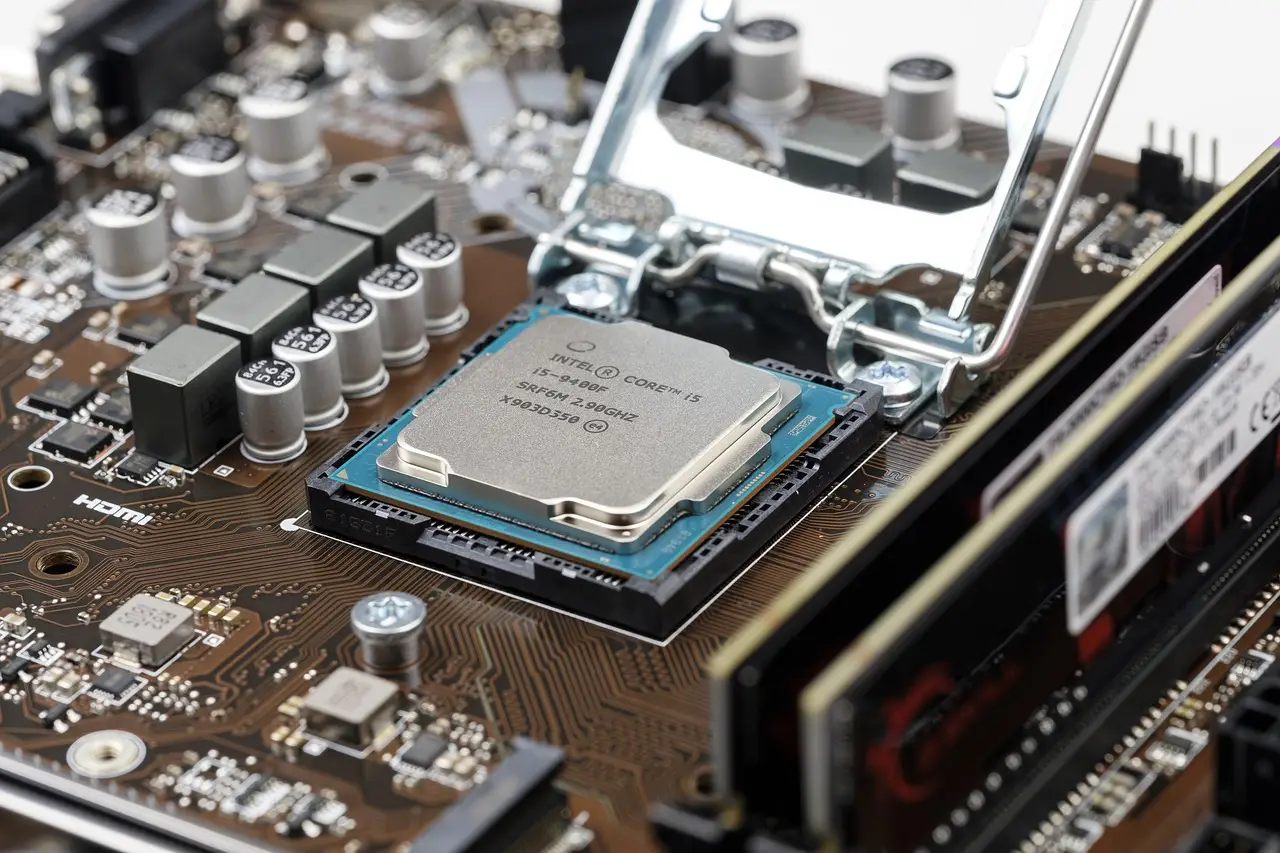
Nvidia's graphics processor units, or GPUs, were originally built for video game graphics. Their ability to run masses of calculations simultaneously proved ideal for AI systems with a voracious appetite for data crunching. Nvidia also builds networks of its chips and provides the CUDA software that keeps its GPUs ahead for AI customers.
What role did Nvidia chips play in the AI boom?
The company released what is widely regarded as the world's first GPU, the GeForce 256, in 1999. Academic researchers then realised the technology could accelerate AI. Nvidia GPUs powered AlexNet, the 2012 neural network built by Alex Krizhevsky, OpenAI co-founder Ilya Sutskever and Nobel laureate Geoffrey Hinton at the University of Toronto — a key moment in modern AI history.
Six months after ChatGPT's launch, Nvidia's valuation reached $1 trillion in May 2023. Hundreds of billions of dollars have since poured into AI, with Nvidia as the main purveyor of shovels in the gold rush.
Tench Coxe, an Nvidia board member and early investor, said Huang stood out among dozens of graphics-company founders. "When you meet Jensen Huang, even with dozens of other graphics companies, you realise this is a guy you want to do business with," Coxe said, quoted in Tae Kim's biography The Nvidia Way. "What made him great is he is an engineer and he is a computer scientist."
Why did his charisma have a flipside?
Meta's Mark Zuckerberg once described Huang as "Taylor Swift, but for tech." A UK tech industry insider who met Huang at tech and government events called him "a good politician" and said "everyone wanted to meet him," with easy access to the upper echelons of governments — including a rapport with Donald Trump.
But journalist Stephen Witt, who interviewed Huang for his book The Thinking Games, described a "visibly exhausted" executive in 2024 whose voice was "crescendoing with anger" when asked what jobs AI would create. "We make the marginal cost of things zero, generation after generation after generation, and this exact conversation happens every single time!" Huang said, according to Witt, who wrote: "His anger seemed uncontained, omnidirectional and wildly inappropriate."
Witt balanced the portrait, writing that Huang "possessed magnetic charisma, could be funny as hell, and, when he wasn't losing his shit, was capable of warmth and great empathetic understanding." After the outburst passed, Huang told Witt: "I am super normal."
It was, in the end, a very normal failing — extramarital infidelity — that brought Huang down. The humility he learned washing dishes at Denny's returned decades later, in a form neither Nvidia nor its investors expected.
Original: blogs.nvidia.com
More from Olivia Hart
Show full bio
Staff writer covering people, launches and day-to-day practice in entrepreneurship, startups and venture funding at Business Bearings.
2,006 articles