Iran Ramps Up Hormuz Tanker Attacks as Oil Prices Sink a Fifth
Brent has fallen about 20% this month on Middle East supply, yet tanker attacks in the Strait of Hormuz now average roughly one a day, with seafarers missing and vessels ablaze.
By Olivia Hart
5 min read
What's News
- UK Maritime Trade Operations reported roughly one attack a day in November, about 14 incidents in Hormuz so far this month.
- Hormuz oil transits and Gulf of Oman transfers eased to about 10 million barrels a day by Nov. 10 from roughly 13.4 million at the start of the month, per Kpler.
- Brent crude futures slid about a fifth this month as Middle East exports approached pre-war levels.
- Abu Dhabi National Oil Co. said one of its ships was hit crossing Hormuz, with one seafarer missing and 11 injured.
- Kuwait wrote to the IMO about attacks on eight of its tankers in recent weeks.
By Olivia Hart
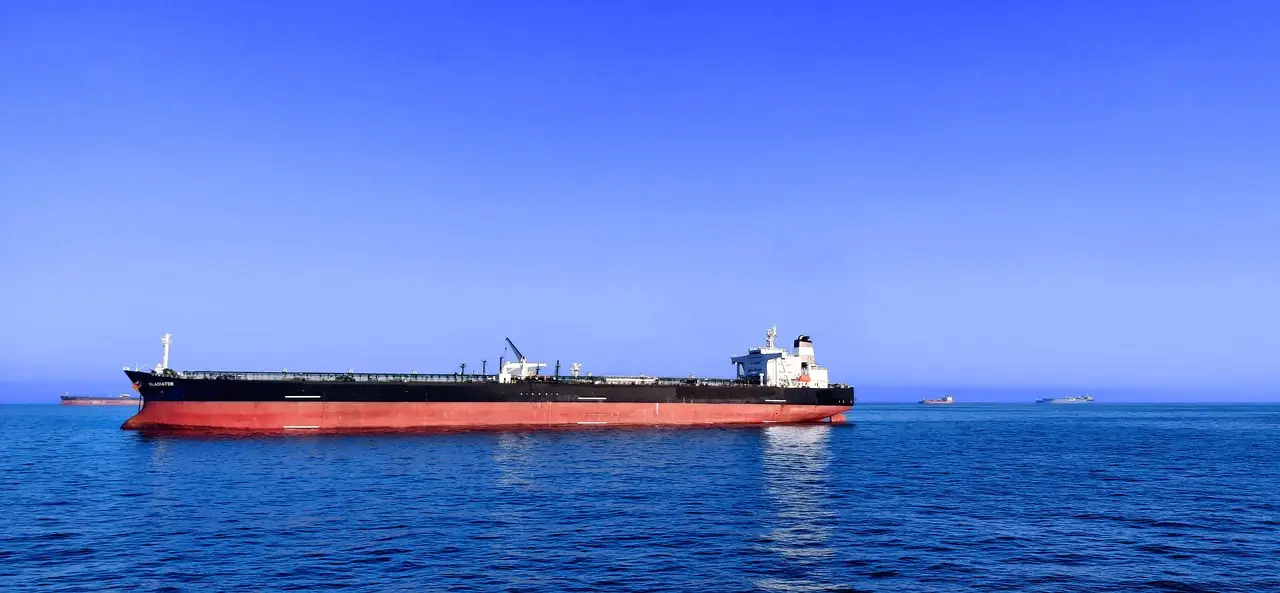
Tanker attacks in the Strait of Hormuz are running at roughly one a day this month, even as Brent crude futures have slid about a fifth on a flood of Middle Eastern supply. UK Maritime Trade Operations has logged about 14 incidents in the strait since the start of November, according to data compiled by Bloomberg. At least two seafarers are missing after attacks this week.
The gap between a hot war and a soft oil market is the story. Supply is outpacing demand for the first time since the war began, the International Energy Agency said last week, with Middle East exports approaching pre-war levels. Attacks, meanwhile, have escalated since October and kept that tempo through November.
Traders and shipowners circulated videos this week of a vessel engulfed in flames. Bloomberg said it could not immediately verify the footage. That caveat matters: in this conflict, unverified imagery circulates faster than confirmed facts.
How bad is the damage?
Harder to answer than it should be. Producers stay tight-lipped about hits to vessels, citing security concerns, and Gulf producers rarely release public information on attacks at all. Traders, analysts and shipping officials rely on UKMTO reports and the International Maritime Organization to gauge severity — imperfect instruments, since UKMTO said last month it was struggling to accurately count attacks because many companies were not reporting incidents to authorities.
The result is uncertainty about the true number of attacks, plus rampant rumor and speculation about specific vessels within commodity trading circles.
Still, the signs point toward escalation. Several maritime security officials said Iran has tried to hit the same ship on multiple occasions to deter salvors, and there have been sightings of limpet mines attached to vessels. One Gulf oil official said the situation in and around Hormuz has deteriorated since the US midterms.
"It seems like the new normal: Something like a war, but not exactly a war, with attacks on ships virtually every day," said Georgios Sakellariou, an analyst at shipping-analytics platform Signal Ocean. "Oil is going out, but being certain about the volumes is complicated by the attacks and the secrecy."
Takeaway: the region has a daily-attack problem, and nobody can say with confidence how much oil is actually getting through.
Are flows through Hormuz falling?
Probably, with caveats. Data from intelligence firms Kpler and Vortexa show Hormuz transits have eased from elevated levels this month. The seven-day moving average of oil transits through the strait plus net ship-to-ship transfers in the Gulf of Oman fell to about 10 million barrels a day by Nov. 10, from around 13.4 million at the start of the month, Kpler data show. For scale, 10 million barrels a day is roughly a tenth of global oil consumption.
Kpler cautions that recent figures remain provisional as additional vessel crossings continue to be identified and validated. Shipments are also volatile week to week and month to month, so nobody can say whether the pullback reflects the attacks or ordinary noise.
There is one quieter signal. Saudi Arabia told OPEC that the amount it actually supplied to the market last month was below its production, as the kingdom boosted output. In the past, that kind of discrepancy has indicated Saudi Arabia was filling storage tanks or moving extra barrels out of Hormuz ahead of an escalation in the war.
Takeaway: volumes are drifting down, but the data is too provisional to call it an attack-driven squeeze.
What are producers and the US doing?
Shipping anyway, because they have no choice. Gulf producers rely on energy exports to fund their economies. One senior Saudi shipping official said at a conference last week that the kingdom has no choice but to continue shipping oil through Hormuz despite the attacks. Sakellariou adds a structural cost: as vessels are lost to attacks, more ships will be needed to move the same volume of oil.
Abu Dhabi National Oil Co. said this week that one of its ships was hit crossing Hormuz, leaving one seafarer unaccounted for and 11 injured. Kuwait wrote to the IMO about attacks on eight of its tankers in recent weeks.
"Such actions undermine the security and stability of the region and constitute a clear breach of international law," Kuwait said in the letter. "Kuwait reiterates its demands that the Islamic Republic of Iran immediately cease its unlawful attacks."
The tit-for-tat is climbing. US warplanes struck an Iranian missile launch site on Qeshm Island in the Persian Gulf this week, a response to Iran targeting US personnel and assets earlier. The US also issued a fresh warning this week to vessels breaching its blockade of Iranian ports. Western officials say the chances of another round of US mass strikes against Iran have grown in recent days.
Takeaway: producer patience is wearing thin in public, and the military exchange rate is rising.
Does the market care yet?
Not much — so far. The oil market has largely taken the recent flareups in its stride, with Brent down about 20% this month. That complacency rests on two fragile assumptions: that flows keep moving, and that attacks stay short of a supply-disrupting threshold. Both assumptions are being tested daily.
The unanswered question is whether the attacks will be enough to meaningfully impact oil supply. If the tempo worsens — or a verified loss of a loaded tanker forces the market to price the risk properly — the calm in Brent could end quickly, even against a well-supplied market.
Source: insurancejournal.com
More from Olivia Hart
Show full bio
Staff writer covering people, launches and day-to-day practice in entrepreneurship, startups and venture funding at Business Bearings.
2,434 articles