Mastercard Launches Virtual C-Suite AI for Small Business
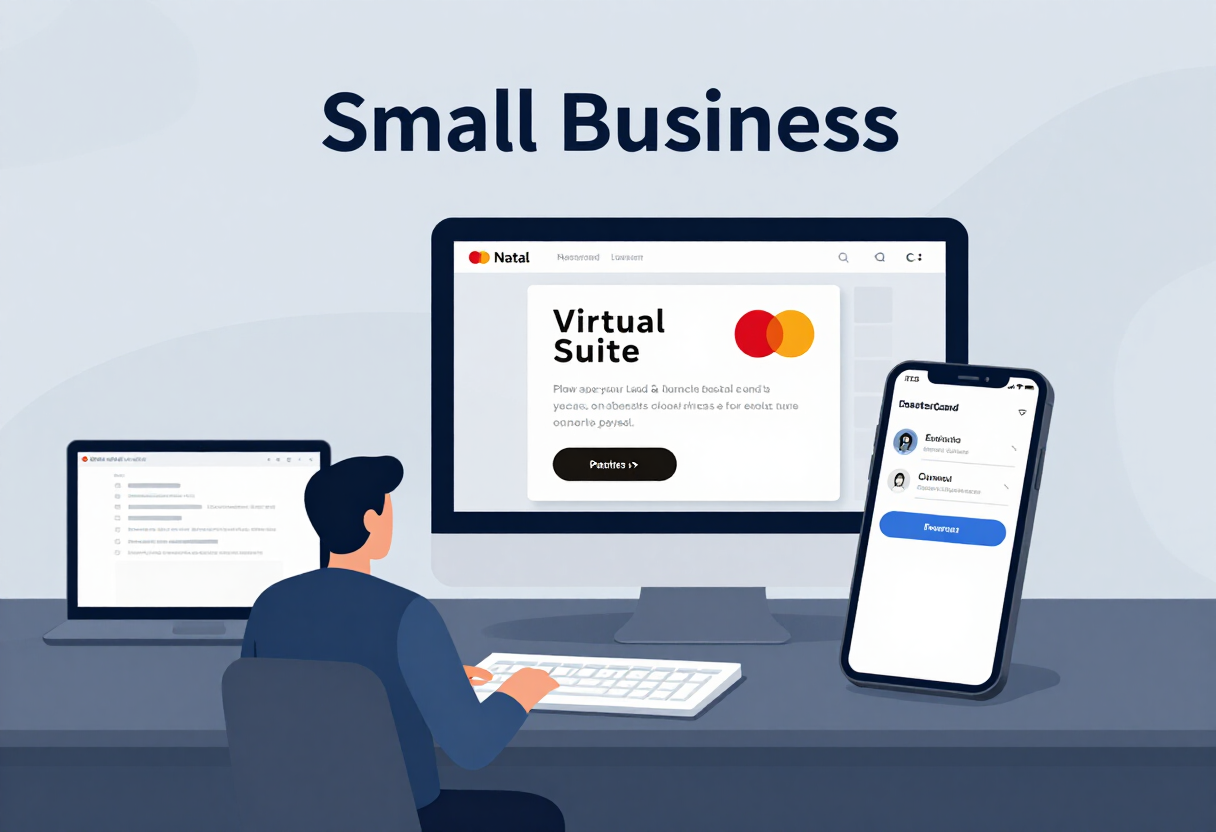
Mastercard unveils Virtual C-Suite, an agentic AI product built to give small businesses executive-level intelligence, advancing the network's AI strategy.
By Nathan Brooks
2 min read
Updated
What's News
- Mastercard has announced Virtual C-Suite, an agentic AI offering for small businesses.
- The company positions the product as bringing 'executive level intelligence' to firms without leadership teams.
- The launch is an explicit step in Mastercard's agentic AI strategy.
Mastercard has announced Virtual C-Suite, an agentic AI offering designed to give small businesses what the company calls "executive level intelligence" without the cost of an actual leadership team.
The launch advances Mastercard's stated agentic AI strategy, a direction the payments network has made explicit in the announcement's own framing. Virtual C-Suite is positioned as the vehicle for that strategy's next step: moving AI from a supporting tool to a set of agents that behave like functional executives.
The target customer is the small business. Mastercard's pitch rests on a structural gap: companies too small to employ a chief financial officer, chief marketing officer or operations lead now get software that performs comparable analysis and decision support. The company frames this as democratizing capabilities once reserved for enterprises with deep management benches.
Agentic AI, the technology category behind the product, refers to systems that do not merely answer questions but take multi-step actions toward a goal — researching, deciding and executing with limited supervision. That distinction matters for Mastercard's positioning. A chatbot summarizes. An agent, in the vendor's framing, operates.
For Mastercard, the move fits a broader pattern among payments networks. Card networks sit on transaction data across millions of merchants and cardholders. Products like Virtual C-Suite represent an attempt to convert that data position into higher-margin software and services revenue, layered on top of the core payments rails.
The announcement does not spell out pricing tiers, availability dates or the specific executive functions covered in initial release, so those details await fuller disclosure from the company.
What the launch does establish is strategic intent. Mastercard is betting that the next competitive frontier in payments is not a better card or a faster rail, but intelligence embedded in the commercial relationship itself. If small businesses come to rely on an AI "C-suite" that Mastercard provides, the network deepens its hold on those customers' financial operations.
The competitive context is crowded. Fintechs, banks and enterprise software vendors are all racing to package agentic AI for smaller firms. Mastercard's advantage, should it execute, is distribution and data: relationships with financial institutions and merchants that few software startups can match.
The risk runs the other way as well. Small business owners have shown limited tolerance for tools that overpromise. An agent that gives confident but flawed "executive" advice carries reputational stakes higher than a clunky dashboard ever did.
Mastercard has made its direction clear. The question the industry will now watch is whether agentic AI can deliver executive-grade judgment at small-business scale — and whether Mastercard can monetize that judgment before rivals do.
Source: GN: Small Business Strategy
More from Nathan Brooks
Show full bio
News editor covering marketplaces and e-commerce at Business Bearings.
242 articles