MegaRobo Raises Nearly $200M to Link AI With Labs Globally
MegaRobo raised nearly $200M to connect AI with automated labs, scale Megalaxy Lab and test more than 10,000 protein designs in wet-lab experiments globally.
By Nathan Brooks
4 min read
What's News
- MegaRobo announced nearly $200 million in new funding on November 19, 2026.
- MegaRobo reports approximately $600 million raised across multiple financing rounds.
- MegaRobo says its products and technologies have reached more than 500 customers, while Megalaxy Lab has served more than 200.
- Poreva Open will validate more than 10,000 protein-design sequences in wet-lab experiments.
- A nearly $300 million Series C was co-led by Goldman Sachs Alternatives, Asia Investment Capital and Granite Asia.
By Nathan Brooks
MegaRobo Technologies raised nearly $200 million in new funding, the company announced on November 19, 2026. The money will expand its AI for Science business internationally and build infrastructure connecting AI with laboratory instruments, robotics and other physical systems.
MegaRobo said proceeds will also support continued investment in its core technology. It identified the following investors:
- The Oman Investment Authority, the sovereign wealth fund of the Sultanate of Oman, joined the round.
- CMB International participated as a new investor.
- Asia Investment Capital, Granite Asia and Sinovation Ventures continued their support.
MegaRobo reports raising approximately $600 million across multiple financing rounds to date. A nearly $300 million Series C was co-led by Goldman Sachs Alternatives, Asia Investment Capital and Granite Asia, with participation from Pavilion Capital, part of Temasek’s Seviora Group. Earlier industry investors include WuXi AppTec and Bosch Ventures.
How the lab joins the AI loop
MegaRobo is targeting a basic gap in AI-driven science. Its models can read papers, predict structures or generate molecules, the company says, but scientific discovery also requires experiments and observations from physical systems.
According to MegaRobo, the stack lets AI design experiments, execute them in real laboratories and use the results to determine the next step. The One Intelligence Stack combines models and agents, data, workflows, software, scientific instruments, robotics, automation and real-world feedback in a reusable foundation. MegaRobo describes its operating loop as think, design, execute, observe and learn.
MegaRobo said it starts with scientific discovery because that loop often must run before the answer is known. Initial scientific and pharmaceutical applications include early research, target and mechanism discovery, drug screening and candidate optimization. Founder and CEO Daniel Huang said the approach changes AI “from a system that interprets the world into one that can help create new knowledge, materials, processes and products.”
Adoption and a protein-design test
MegaRobo reports delivering products and technologies to more than 500 customers, including pharmaceutical companies, drug-discovery organizations, biotechnology companies and research institutions. Its Megalaxy Lab, a programmable laboratory platform, has served more than 200 customers.
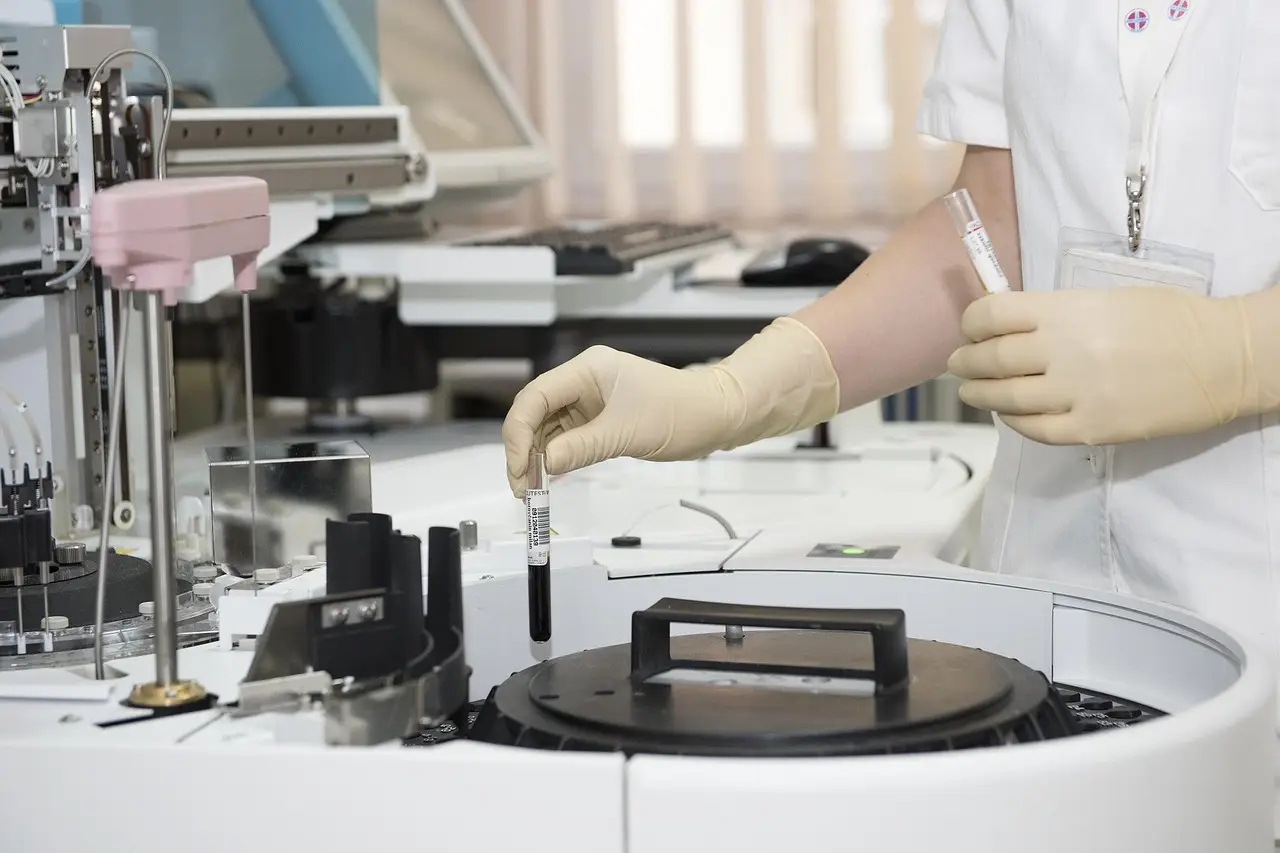
Through Megalaxy Lab, researchers and AI agents can configure experiments, route them to automated laboratory systems, track execution and receive structured, machine-readable results, according to MegaRobo. The company says those results can feed directly into the next cycle of scientific reasoning, making experimental capacity programmable instead of organizing each laboratory exercise as a standalone project.
MegaRobo launched Poreva Open with partners including Tencent Cloud and Twist Bioscience. The global protein-design challenge is open to all models and technical approaches, the company said.
MegaRobo says Megalaxy Lab will validate more than 10,000 protein-design sequences in wet-lab experiments. The initiative aims to establish a common benchmark based on experimental results, connecting model assessment with physical evidence. A design can be tested in the laboratory, and the resulting observations can inform subsequent development, according to the company.
What does this change for research teams?
For research teams, MegaRobo says the practical change is laboratory execution inside the AI workflow. Researchers can configure experiments, send them to automated systems and receive structured results without treating every laboratory exercise as a separate project. MegaRobo says that makes the laboratory part of a repeatable reasoning cycle rather than a task at the end of analysis.
For AI developers, Poreva Open creates a larger test of the same loop. MegaRobo says more than 10,000 protein-design sequences will move into wet-lab validation, giving the challenge a shared empirical benchmark rather than relying only on model outputs.
MegaRobo’s wider proposition is to turn experimental capacity into a standardized, on-demand resource for scientists, software and AI agents. The company cites its reported customer adoption as the current base for that model, while Poreva Open applies the reasoning-to-experiment loop at greater scale.
MegaRobo plans further expansion across North America, Europe, the Middle East and Asia. The company also intends to extend the architecture into other settings where AI must interact with instruments, machines, materials, processes and real-world feedback.
MegaRobo says international expansion will test how broadly the company can deliver the model. For research teams and AI developers, Poreva’s 10,000-sequence validation and the four-region rollout will test whether connected experimental capacity can become a standardized, on-demand service.
Source: unite.ai
More from Nathan Brooks
Show full bio
News editor covering regulation, policy and their impact on entrepreneurship, startups and venture funding at Business Bearings.
2,492 articles