Musk Puts $15 Billion Into Chips He Admits He Can't Make
Musk will spend over $15 billion on a Texas Terafab with Tesla, SpaceX and Intel, despite admitting he has "no idea how to make microchips." He pledges to beat TSMC and Samsung.
By Olivia Hart
3 min read
Updated
What's News
- Musk announced a $15 billion-plus semiconductor plant called Terafab in Texas.
- The project involves Tesla and SpaceX, with Intel participating.
- Musk said at the X Takeover event Saturday: "I have no idea how to make microchips."
- The factory is expected to create 3,000 jobs.
- Musk claims his companies will eventually outperform TSMC, Samsung and Intel.
By Olivia Hart
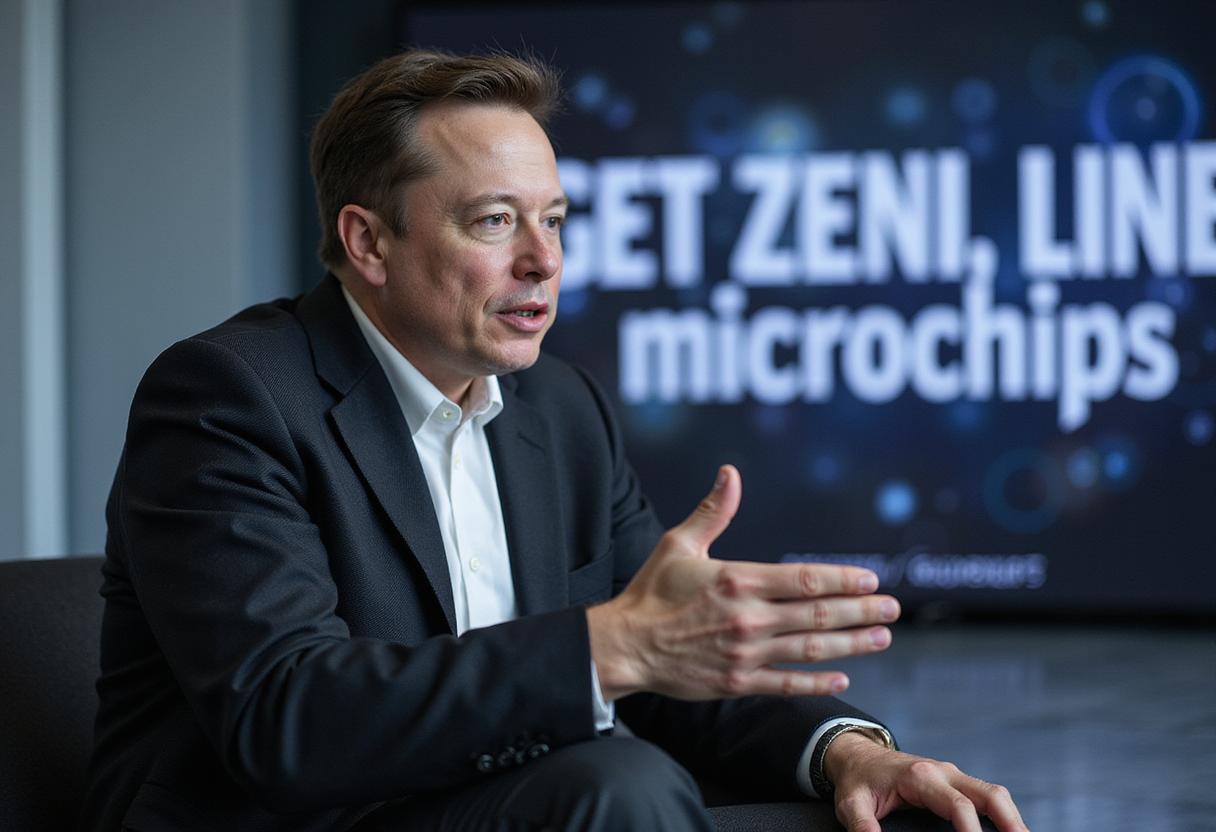
Elon Musk plans to spend more than $15 billion on a Texas semiconductor plant despite conceding, on the record, that he lacks the core expertise to run it. "I have no idea how to make microchips," Musk told customers and investors Saturday at the X Takeover event, according to Business Standard. He added: "we'll figure it out."
That admission now sits at the center of one of the most ambitious manufacturing bets in recent corporate memory. The facility, named Terafab, involves Tesla and SpaceX, with Intel participating in the project. The initial investment exceeds $15 billion — roughly five times what Tesla spent on capital expenditures in a typical recent year — and the venture is expected to create 3,000 jobs.
Three thousand jobs against a $15 billion outlay works out to $5 million of investment per position. That figure alone signals the capital intensity of leading-edge chipmaking, an industry where a single fab routinely costs more than an entire automaker's annual capital budget.
What is Musk actually promising?
Plenty, and he said it without hedging. "We'll figure out how to make chips better than anyone," Musk said, according to his remarks reported by Business Standard. He believes his companies can eventually outperform TSMC, Samsung and Intel — the three firms that currently dominate advanced semiconductor production.
He acknowledged the process could take several years. He did not specify how many, which matters: TSMC spent decades and hundreds of billions of dollars refining its process technology before reaching its current lead.
The claim also contains a structural oddity. Intel is participating in the Terafab project, yet Musk frames TSMC, Samsung and Intel as rivals he intends to beat. He offered no details on how those two positions reconcile — whether Intel's role is technical partner, investor, or something looser.
How does he intend to close the knowledge gap?
Musk's strategy starts with buying conventional chipmaking equipment and then modifying it to improve production speed. He argues that Tesla's and SpaceX's experience developing customized manufacturing machinery gives him an edge that incumbent chipmakers lack.
There is precedent for the approach, at least in principle. Tesla rebuilt its automotive production lines around custom automation, and SpaceX manufactures most of its rocket hardware in-house. Both bets worked — after costly early stumbles that Musk himself has publicly acknowledged in the past.
But even Musk is not selling this as an easy transfer. He called semiconductor manufacturing "one of the hardest things to do in the world." That is a rare note of restraint from an executive not known for understatement, and it may be the most reliable statement in the entire presentation.
What is not being said?
Several material facts are missing from Musk's account. He gave no timeline for when Terafab would produce its first wafer, no target process node, and no named customers beyond his own companies. He did not say how the $15 billion will be split among Tesla, SpaceX and Intel, or whether additional investors will be brought in.
The jobs figure also deserves scrutiny. Advanced fabs typically employ far more people than 3,000 once support staff, contractors and expansion phases are counted — or the number reflects heavy automation, consistent with Musk's stated obsession with production speed.
Nor did Musk address the regulatory and talent constraints that have slowed other U.S. chip projects. Building fabs has proved easier than staffing and supplying them, a lesson rivals have learned the expensive way.
What happens next?
The promise: chips better than TSMC's, Samsung's or Intel's, built in Texas. The caveat, in Musk's own words: he has "no idea how to make microchips" and the process could take several years. Investors now have both statements on the record, and only one of them can age well.
If Terafab breaks ground and hits early milestones, Musk's manufacturing playbook gets its hardest test yet. If it stalls, the $15 billion question will be who besides Musk is willing to keep paying for the education.
Original: business-standard.com
More from Olivia Hart
Show full bio
Staff writer covering people, launches and day-to-day practice in entrepreneurship, startups and venture funding at Business Bearings.
686 articles