Nasdaq 100 Slides as Record $107.3 Billion Anthropic IPO Fails to Lift Tech
Anthropic's $107.3 billion Nasdaq debut, the largest IPO in history, coincided with a 2.25% Nasdaq drop as AI revenue growth slowed from 75% to 48% and the Nasdaq 100 tests key lows.
By Nathan Brooks
3 min read
What's News
- Anthropic raised $107.3 billion at $83 per share, listing on Nasdaq on 19 November with a near-$2.01 trillion market cap.
- The Nasdaq Composite fell 2.25% and the S&P 500 dropped 2% to 7,175 points on the stock's first trading day.
- Combined revenue growth of the sector's two largest AI labs slowed from 75% in Q2 to 48% in Q3 amid a price war.
- Nasdaq 100 trades near 26,131, close to its latest low of 26,079.42, with 28,593.85 as the last lower high.
- SoftBank posted its worst Tokyo session since August 2024, falling 14.48%.
Anthropic raised $107.3 billion in the largest initial public offering ever recorded, and the Nasdaq Composite still closed down 2.25% on the day the stock began trading. The company listed on the Nasdaq on 19 November under the ticker ANT, opening with a market capitalisation of nearly $2.01 trillion, according to the analysis published on TradingView.
The offering was structured as the sale of 956.4 million company shares and 23.6 million founder shares at $83 per share. The stock opened at $111.50 — a 34% premium to the offering price — before pulling back to close at $97.17, a gain of 17.07% on the day. It then declined a further 4.70% in extended trading.
Why did a record IPO sink the index?
The paradox, the analysis notes, is that the historic listing did not translate into gains for the index — quite the opposite. The Nasdaq Composite closed down 2.25% and the S&P 500 fell 2% to 7,175 points, with markets dropping to their session lows the moment the stock began trading.
The explanation lies in concerns that have been building for months around the scale of capital spending on AI infrastructure and whether it can generate sufficient returns. One number sharpens the worry: combined revenue growth at the sector's two largest labs slowed from 75% quarter-on-quarter in Q2 to 48% in Q3, amid a price war between them. To put that in plain terms, growth hasn't stalled — but it nearly halved in a single quarter.
Selling pressure carried into the next session. Anthropic shares fell around 6% in premarket trading, alongside declines of 2.67% in Nvidia and 5.43% in AMD. In Tokyo, SoftBank shares recorded their worst session since August 2024, dropping 14.48%. The conclusion, per the analysis: the market is approaching the sector through the lens of repricing rather than momentum.
What does the chart say?
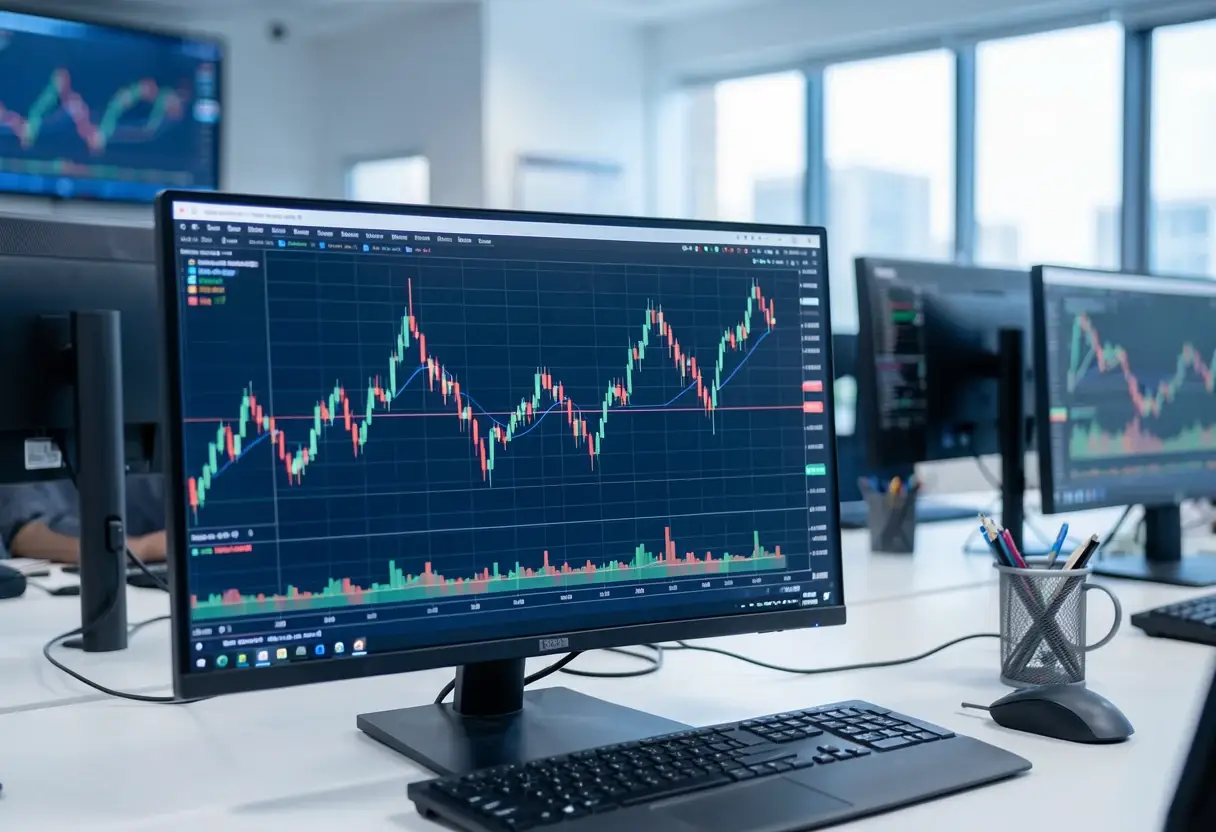
The technical picture confirms the shift. The Nasdaq 100 is trading within a clear downtrend on the four-hour timeframe, building a series of lower highs and lower lows. The highs have stepped down from the 30,750 area to 29,750 and then to 28,593.85, which the analysis reads as confirmation that sellers control the broader structure of the move.
Price currently sits near 26,131 points, in immediate proximity to the latest recorded low at 26,079.42, after a sharp downward wave that broke through all intermediate support levels.
Applying Fibonacci retracement to the latest down leg from 28,593.85 to 26,079.42, the zone between 28,055.76 and 28,292.12 stands out as the key supply area. A corrective rebound into that zone followed by a clear rejection, the analysis argues, would remain the higher-probability scenario for a resumption of the downward move.
Two levels now frame the trade for practitioners:
- Upside trigger: 28,593.85, the last recorded lower high. Any H4 close above it would break the series of lower highs and bring the bullish scenario back into play.
- Downside trigger: 26,079.42. A break and a new low beneath it would extend the bearish wave toward lower levels.
For traders and AI-sector investors, the message from the debut week is blunt: even the biggest liquidity event in market history can't paper over decelerating revenue growth and heavy infrastructure spend. Watch the 28,600 level — the series of lower highs stays intact until it breaks.
Source: tradingview.com
More from Nathan Brooks
Show full bio
News editor covering regulation, policy and their impact on entrepreneurship, startups and venture funding at Business Bearings.
2,524 articles