National Grid Buys 73 Acres on Teesside for Britain's Biggest Substation
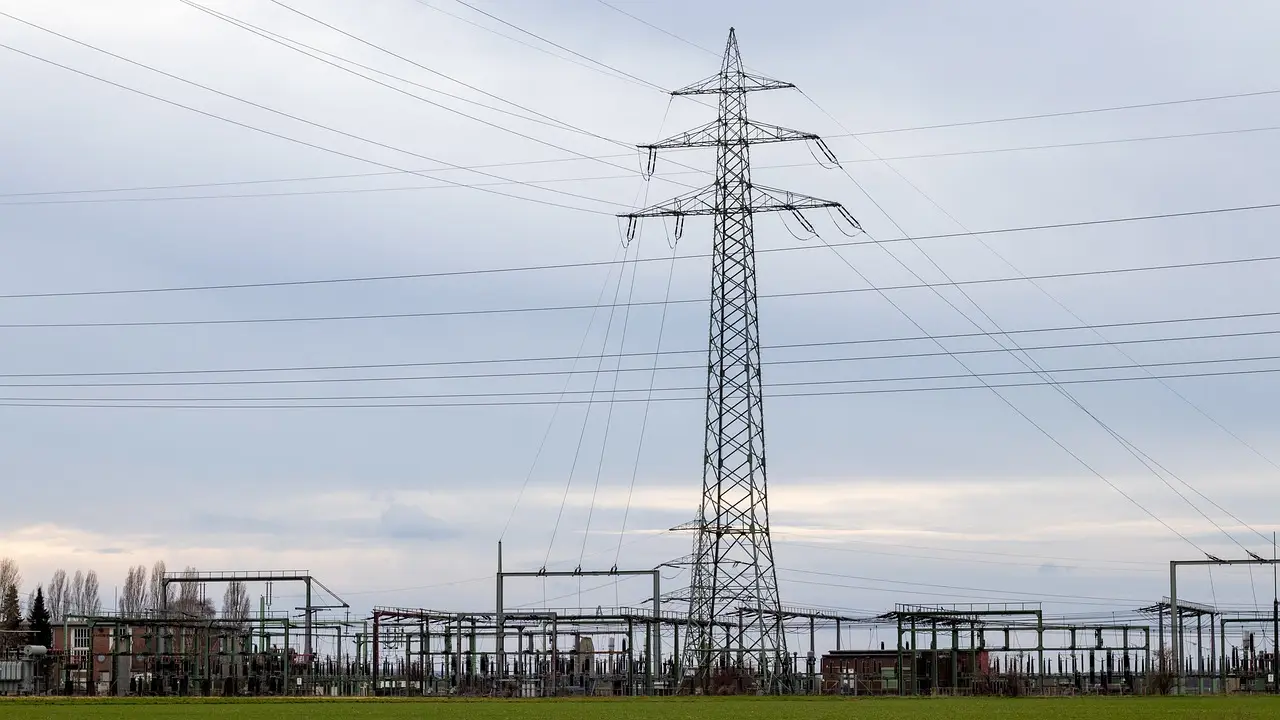
National Grid has bought 73 acres at Teesside's Dorman Point to build Britain's biggest substation, targeting up to 3.2GW of capacity for a planned AI datacentre.
By Olivia Hart
3 min read
What's News
- National Grid agreed last week to buy 73 acres at Dorman Point, Teesside, from Teesworks.
- The planned substation would be Britain's biggest, with up to 3.2GW of capacity cited by mayor Ben Houchen.
- Planning applications for a nearly 500,000 sq metre AI datacentre at Teesworks were submitted after the site's government selection last year.
- Balfour Beatty is reported to be in line to deliver the substation, with Steel River Power heavily involved.
- The government published a draft national policy statement on datacentres last week, calling them fundamental to the economy.
National Grid has agreed to buy 73 acres of land at Dorman Point on Teesside, a decisive step towards building Britain's biggest electricity substation — one that could power a vast neighbouring AI datacentre.
The seller is Teesworks, a local public-private partnership. Sky News first reported the transaction, which was signed last week. National Grid has not disclosed the purchase price, and that omission matters: land costs near strategic power sites are a rising political question as datacentre competition intensifies.
Why Teesside, and why now?
The purchase follows reports last year that the UK government selected Teesworks as the site for a new artificial intelligence datacentre. Planning applications were submitted for a project of nearly 500,000 square metres — roughly the footprint of 70 football pitches.
The substation is the enabling piece. Without a grid connection of that scale, a datacentre of this size is a planning drawing, not an asset.
Matt Pearce, National Grid's head of land, said the deal "reflects the constructive work between all those involved to enable this vital infrastructure … and will support the growth of AI and digital technologies, and enable the region's next phase of industrial and economic development."
"We are committed to working closely with our partners to progress the development as quickly as possible," Pearce said. A timetable for construction, notably, is absent from his statement.
How much power is at stake?
Ben Houchen, the Tees Valley combined authority mayor, put the scale in blunt terms. "Everyone who has tried to build a datacentre in this country knows the biggest problem is getting enough power to the site quickly," he told Sky News.
"While we've been stuck in the queue, the US, the Gulf and parts of Europe have been getting on with it and hoovering up the investment. Having up to 3.2GW of capacity here means we can finally compete for those projects," Houchen said.
To translate: 3.2 gigawatts is roughly the output of two large nuclear reactors — enough capacity, in principle, to supply millions of homes, or a cluster of hyperscale computing facilities.
Houchen framed the project as a sovereignty issue as much as an economic one. "If Britain is serious about having its own AI capability, with sensitive data stored safely on British soil, it needs somewhere to physically put it, and I'd much rather that was Teesside than Texas or Abu Dhabi," he said.
What is the government's position?
Last week the government published a draft national policy statement on datacentres. It described them as "as fundamental to our economy as the railways and electricity networks on which we have long depended."
"We must take control over the development of datacentres in this country and ensure that the country and host communities benefit from them," the statement said.
That language signals a push to streamline approvals. What it does not address is who pays for the grid upgrades those approvals require — the question National Grid's land deal quietly begins to answer.
Who is building it?
Balfour Beatty, the London-listed infrastructure services group, is reported to be in line to deliver the Teesworks substation for National Grid. Steel River Power (SRP) is also heavily involved in the project, according to the reports.
Both companies were approached for comment. Neither has yet confirmed its role publicly, so the delivery structure remains unverified beyond the initial reports.
Is there opposition?
Rapid datacentre construction has already triggered resistance across the UK. Campaign groups have protested planned developments from Auchtertool, a village north of Edinburgh, to Brick Lane in east London.
The industry itself sees a closing window. In October, the Guardian reported that AI companies told ministers they had 12 months to head off public opposition to datacentres in the UK, or risk US-style protests that could threaten construction.
By that clock, the countdown began last autumn — and Teesside, with its land secured and a mayor actively championing the project, is the government's most concrete test of whether Britain can actually deliver. The next hard evidence will be a grid connection date; everything else so far is land and language.
Source: The Guardian Business
More from Olivia Hart
Show full bio
Staff writer covering people, launches and day-to-day practice in entrepreneurship, startups and venture funding at Business Bearings.
1,378 articles