Neko Health Opens First US Clinic With $499 AI-Powered Exam
Spotify's Daniel Ek and CEO Hjalmar Nilsonne bring $499 AI-powered preventive exams to Manhattan as U.S. health spending nears $6 trillion and employers brace for 9.2% cost hikes.
By Grace Kim
3 min read
Updated
What's News
- Neko Health, founded by Daniel Ek and Hjalmar Nilsonne, opened its first U.S. clinic in Manhattan offering a $499 AI-powered exam covering skin, body composition, heart, blood, and metabolic health.
- Large U.S. employers expect a median 9.2% health care cost increase next year, per the Business Group on Health; U.S. health care spending is expected to reach $6 trillion this year.
- Mark Cuban's Cost Plus Drugs, launched in 2022, has expanded into manufacturing and lowered prices on 190 medications; the 2026 Philips Future Health Index found AI saves at least 132 hours annually for half of surveyed health professionals.
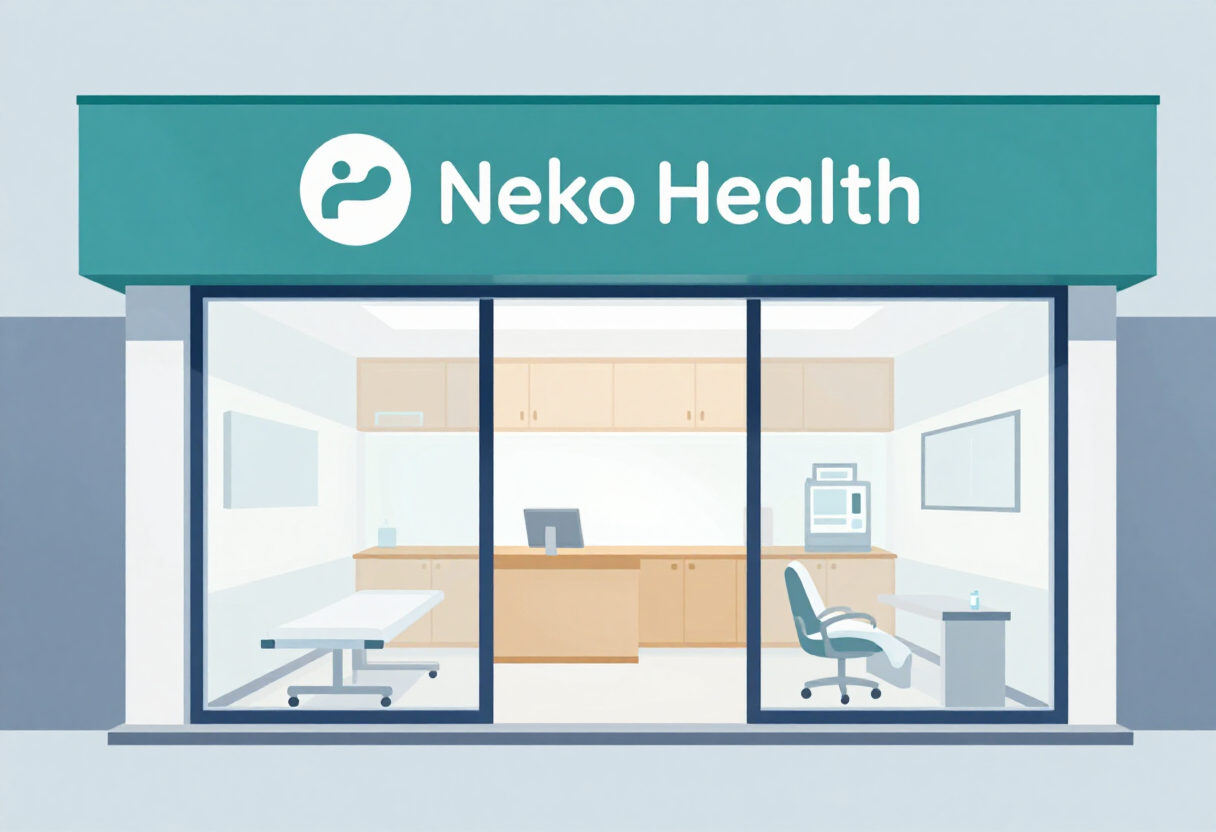
Neko Health, the Swedish health care technology company founded by Spotify's Daniel Ek and CEO Hjalmar Nilsonne, opened its first U.S. clinic in Manhattan yesterday, selling a $499 AI-powered exam that spans skin and body composition mapping, heart, blood, and metabolic tests. A Fortune editor who took the exam this week described a physician walking through the results minutes later in front of a 3D image of the patient's body, in a room that felt closer to "2001: A Space Odyssey" than a doctor's office.
The pitch is speed and prevention. "We want to create this almost magical consumer experience around health care," Nilsonne told Fortune. "We want to democratize high-quality preventive health care and make it available to millions or hundreds of millions of people."
The launch lands in a strained market. The Trump administration announced plans this week to remove 760,000 Affordable Care Act enrollees from public exchanges as part of a crackdown on fraud, projected to save $2.2 billion. Health care spending is expected to hit $6 trillion this year. And large U.S. employers expect a median 9.2% increase in health care costs next year, according to the nonprofit Business Group on Health, with about half planning to push those costs onto workers.
AI is already inside the system. Thousands of AI-powered health startups now compete with disruption inside established providers. The 2026 Philips Future Health Index found AI saves at least 132 hours annually for half of the health care professionals surveyed, who report seeing more patients and making fewer mistakes.
Cost is the disruption most Americans care about. Mark Cuban's Cost Plus Drugs, a direct-to-patient pharmacy launched in early 2022, has expanded into manufacturing, where Cuban says volume has grown enough to lower the price of 190 medications. He said the company is profitable, helped in part by demand from TrumpRx. But profit is not the point. "My mission is just to fuck up health care," Cuban said at the Digital Health New York Summit last week. "Trying to optimize a broken system doesn't really change anything."
Employers are rethinking the health of workers, not just budgets. Whole Foods CEO Jason Buechel, who also oversees all of Amazon grocery, said the company is investing in organic foods and in workers through higher pay, apprenticeship programs, and cheap health care. Amazon has drawn attention for raising hourly pay to $21 for 100,000 Whole Foods workers, part of a $230 million investment in pay and benefits. Buechel hopes low-cost health care and apprenticeships can convert a high-turnover job into a durable career — a play that coincides with Amazon building its own AI-powered consumer health offerings.
The health picture itself is mixed. America is making progress on obesity and cancer deaths, but not on managing stress or affordability. Walmart is pushing nutrition through initiatives including its Health Ambassador pilot to widen access to care. Frederick Lowery, who became CEO of Henry Schein in March, is exploring links between oral health and chronic disease from the top of the world's largest distributor of dental equipment, supplies, and services. The systemic view of health — how jobs, food, and dental care connect to chronic illness — is gaining ground in corporate boardrooms.
For Neko Health, the U.S. clinic is the first test of whether a $499 bundle of scans and same-day physician review can scale beyond Manhattan. Nilsonne frames the target in the hundreds of millions of customers. If AI-driven prevention keeps people out of expensive treatment, the market for cheaper and better solutions may grow faster than the $6 trillion being spent on care itself.
Original: nekohealth.com
More from Grace Kim
Show full bio
Market editor covering industry trends and analytics at Business Bearings.
237 articles