New Glenn to Launch Google’s Suncatcher AI Mission in 2029
Google’s first dedicated Project Suncatcher launch is set for Blue Origin’s New Glenn in the first quarter of 2029, deploying solar-powered TPU satellites in sun-synchronous orbit.
By Amara Osei
3 min read
What's News
- New Glenn is targeted to conduct Project Suncatcher’s first dedicated heavy-lift launch in the first quarter of 2029.
- Each Suncatcher satellite is designed to provide computing capacity roughly at the scale of a data center rack.
- Google says low Earth orbit satellites can generate up to eight times more solar power than on Earth.
- New Glenn is rated for 45 metric tons to low Earth orbit and more than 13 metric tons to geostationary transfer orbit.
- A planned 2027 milestone follows thermal-stress and radiation testing and centers on two interconnected satellites.
By Amara Osei
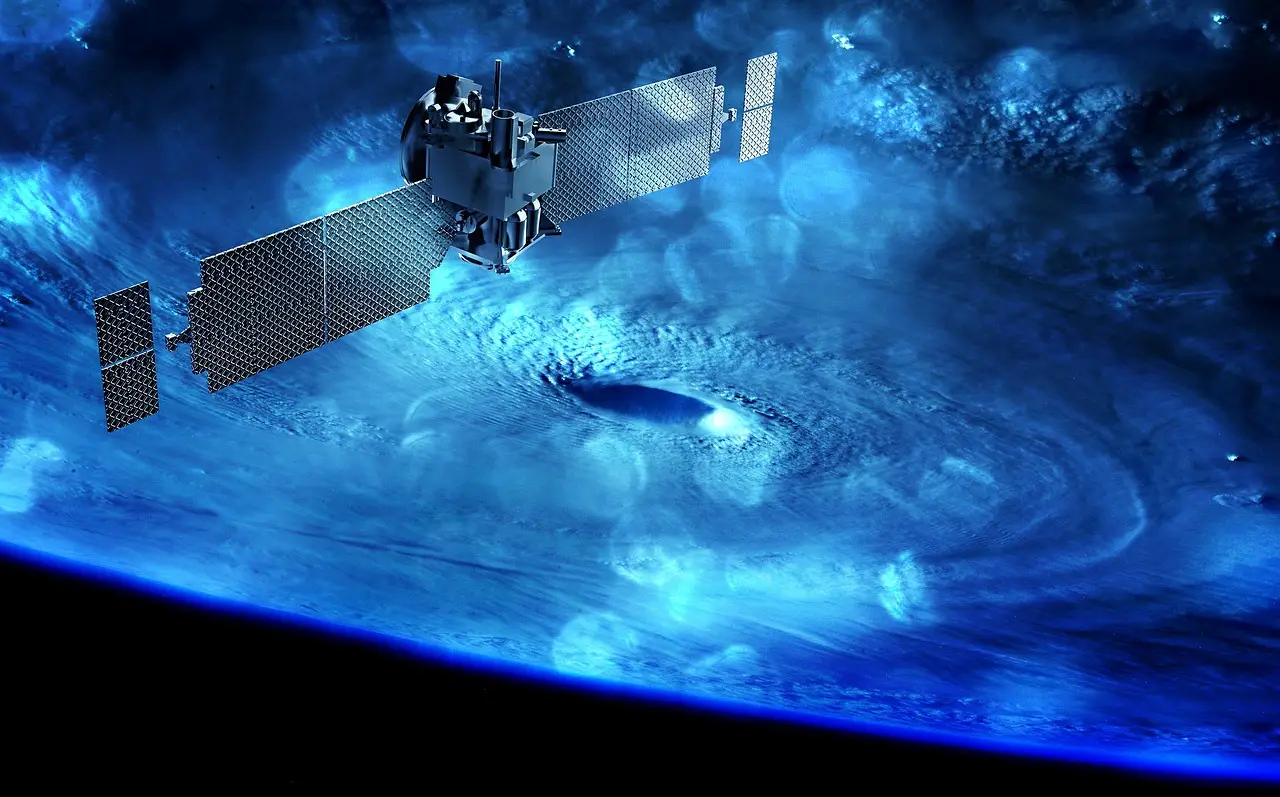
Blue Origin’s New Glenn will conduct Google’s first dedicated Project Suncatcher heavy-lift launch in the first quarter of 2029, Google said on November 19, 2026. The launch services agreement covers deploying solar-powered satellites carrying Google Tensor Processing Units, or TPUs, into sun-synchronous orbit.
What will the 2029 mission deploy?
Google says each satellite is designed to provide computing capacity roughly at the scale of a data center rack. The mission will test whether an interconnected network of solar-powered satellites can scale machine-learning compute in space. The dedicated flight also builds on Google’s continuing work with other satellite and launch partners.
Google’s program follows a staged sequence: a prototype launch in October 2026, a two-satellite connectivity milestone in 2027 and a larger research deployment in 2029. The announced sequence places the network test before the heavy-lift mission, even though Blue Origin has already secured the role as Suncatcher’s dedicated launcher.
Why New Glenn?
Blue Origin’s general lift ratings for New Glenn are 45 metric tons to low Earth orbit and more than 13 metric tons to geostationary transfer orbit. The seven-meter payload fairing offers twice the volume of smaller five-meter-class fairings, according to Blue Origin. Its reusable first stage is designed for a minimum of 25 flights.
Jordan Charles, senior vice president of New Glenn at Blue Origin, said the rocket’s “heavy-lift capacity and large payload volume give customers the flexibility to bring new capabilities to orbit.” For Suncatcher, that combination is intended to support a multi-satellite deployment and move the research beyond its single-prototype stage.
Blue Origin’s New Glenn therefore pairs mass capacity with payload volume for Google’s rack-scale spacecraft. Google and Blue Origin’s launch agreement sets a path to orbit, while the engineering work still has to prove that several such satellites can operate as one system.
What has the prototype shown?
Google previewed Project Suncatcher in September 2026 before reporting a subsequent in-orbit response from a TPU. A prototype satellite launched on October 1, 2026. By October 30, 2026, Google had powered the host and TPU trays and run early machine-learning tests during commissioning.
Its onboard Gemma 4 model generated a haiku, which Google described as “the first AI response from a data-center-class TPU in orbit.” Google’s disclosed schedule now calls for thermal-stress and radiation testing. A planned 2027 milestone centers on two interconnected satellites.
The 2027 milestone will test a core premise before the 2029 deployment. Google must show that two interconnected satellites can maintain precise laser links while their TPU systems operate under orbital thermal and radiation conditions.
Can the orbital cluster scale?
Google says satellites in low Earth orbit can access near-constant sunlight and generate up to eight times more solar power than on Earth. Proposed future designs place dozens of TPUs on each satellite and use lasers for high-bandwidth communication over short distances between spacecraft orbiting in clusters.
Google’s power rationale does not resolve the cluster’s separate engineering problems. In a vacuum, chips cannot rely on airflow, and Google’s engineers have tested heat pipes and radiators in a thermal vacuum chamber. The laser links must maintain high bandwidth over short distances between moving spacecraft, requiring precise knowledge of each satellite’s position relative to its neighbors.
Google identifies reliable chips, effective cooling and precise intersatellite communication as the central tests for the proposed cluster. The Blue Origin agreement supplies a heavy-lift path for a larger research deployment, but Google’s prototype and twin-satellite work must still establish those essentials.
Google’s 2029 New Glenn launch will carry the research into a larger deployment, but success still depends on those three engineering results.
Source: unite.ai
More from Amara Osei
Show full bio
Senior reporter covering companies, deals and strategy in entrepreneurship, startups and venture funding at Business Bearings.
2,358 articles