No Billionaire, No ATM: How Fan-Owned Packers Lose the PE Boom
Rivals sell 8–10% stakes at $9–10.6 billion valuations. Fan-owned Green Bay, valued at $8.59 billion, posted its first operating loss since 1990 and can't tap private equity.
By Amara Osei
6 min read
Updated
What's News
- The Giants sold 10% at a $10.3 billion valuation in October 2025; the Patriots sold 8% at $9 billion.
- The Packers, valued at $8.59 billion, are owned by more than 539,000 fans whose shares pay no dividends.
- Green Bay posted a $1.1 million operating loss last fiscal year — its first in a non-pandemic year since 1990.
- NFL owners voted 31–1 in 2024 to allow private equity funds to buy up to 10% of a team.
- The Packers hold $945.7 million in cash and investments but have pledged $1.5 billion for Lambeau Field.
The Seattle Seahawks sold for $9.6 billion in late August, and that deal is only the loudest signal of what franchise equity has become: a cash machine for owners who no longer need to sell their teams to monetize them.
In October 2025, the New York Giants sold a 10% stake at a $10.3 billion valuation. The New England Patriots sold 8% at $9 billion. This summer, the Steinbrenner family agreed to sell at least 4% of the New York Yankees' parent company in a $2.6 billion deal valuing the club above $10 billion. Days later, the Atlanta Falcons agreed to sell 10% at a $10.6 billion valuation.
Selling minority stakes has become the new playbook for raising billions without giving up control. The Green Bay Packers can't play it. Their ownership structure forbids it.
Who actually owns the Packers?
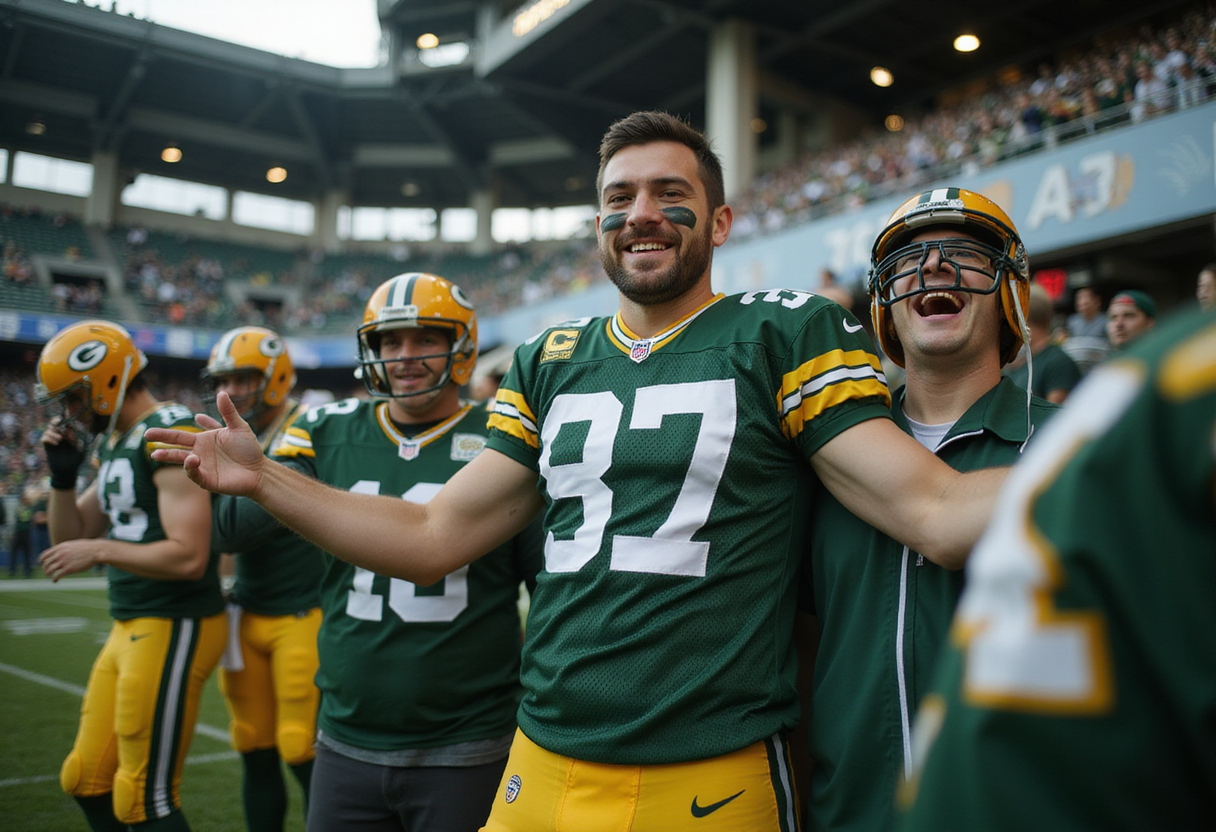
The Packers are the only major North American sports franchise owned by fans — more than 539,000 of them. The shares pay no dividends, can't appreciate, and can't be sold for a profit. All profits flow back into the franchise: facilities, team operations, reserves.
"Because of no owner, there were no resources allocated to other things," says Andrew Brandt, former Packers vice president of player finance. "Where an owner may reallocate money to his yacht or his family business or some other part of his portfolio, we were all football."
Depending on whom you ask, that makes the Packers — valued at $8.59 billion by Sportico — either an enviable anomaly or a franchise facing a growing financial disadvantage, one that could hit hardest as Lambeau Field, one of the league's oldest stadiums, needs its next overhaul.
How did fan ownership survive?
In 1923, the team was broke and behind on paying players. Local businessmen covered its debts, incorporated the franchise as a nonprofit, and sold $5 shares to Green Bay residents, raising $5,545 — nearly $110,000 in today's dollars. Stock sales again rescued the club after a 1933 receivership and a threatened sale in 1950.
"Through the '50s, the fan ownership kept the team alive," says Mark Beech, author of The People's Team. "There would be no Packers if there hadn't been fan ownership."
In 1960, the NFL barred nonprofit teams, except those "now a member of the league." The Packers were grandfathered in. Not every owner welcomed the exception. After the Packers won Super Bowl XXXI in 1997, Denver Broncos owner Pat Bowlen objected to another stock sale: "Let's get those farmers and their frozen tundra out of this league." The sale went ahead anyway.
Kennesaw State economist J.C. Bradbury calls the Packers "a historical accident that would never be allowed to happen again today."
How much new money are leagues letting in?
In 2024, NFL owners voted 31–1 to let private equity funds buy up to 10% of a team, provided the funds stay passive and hold for at least six years. Other leagues have gone further:
- MLB raised its per-firm cap from 15% to 20%; at least 18 of its 30 teams now carry private equity money.
- The NBA, also at 20%, loosened its rules in September so Joshua Kushner and his investment firm could both invest in the Los Angeles Lakers, which Kushner and Bob Iger agreed to buy for $12.5 billion.
- The NFL still caps private equity at 10%, and owners show no appetite to raise it.
The average NFL team is worth $9.34 billion, up 31% year over year, according to Sportico. "Heck, just being able to say 'I'm an owner' is something that very wealthy people value," Bradbury says.
What do the numbers say about Green Bay's finances?
The Packers' 2021–22 stock sale raised $65.8 million for Lambeau Field upgrades — across more than 198,000 shares. The Micah Parsons trade alone brought a four-year, $188 million contract, pushing player costs from $318 million to $447 million and total expenses to $754.1 million last fiscal year. Despite record revenue of $753 million, the team posted a $1.1 million operating loss — its first in a non-pandemic year since 1990. Net income still hit $132.5 million, helped by investment gains and a onetime payout from ESPN's purchase of NFL Network.
The team's safety valve is $945.7 million in cash and investments. "A lot of the annual distributions from the league, a lot of the profits are just housed," Brandt says.
Meanwhile, rivals are monetizing equity. In May, Arctos Partners bought 3.2% of the Cleveland Browns, giving owners a nine-figure cash infusion as they begin a $2.6 billion stadium project. Green Bay has pledged $1.5 billion over coming decades to keep Lambeau Field competitive — more than its entire cash cushion, with no taxpayer money and no private equity to lean on.
Dallas shows the other model. Arlington backed AT&T Stadium with $325 million in bonds and in April agreed to another $273 million toward a roughly $1 billion renovation.
"It's like other teams have access to this ATM machine that we just don't have right now," Packers president Ed Policy said in July, noting rivals could raise more than Green Bay's entire capital reserve by selling 5% to 10% of their equity "in just a matter of months."
Could the structure ever change?
NBC Sports' Mike Florio has floated a radical hypothetical: dissolve Green Bay Packers Inc., send the proceeds to charity as the articles require, and let a billionaire buy the team as a new franchise. "I'm not saying it should happen. I'm not saying it will happen. All I'm saying is it could happen," Florio said.
Winning keeps the question theoretical. Since 1992, the Packers have had only five losing seasons and won two Super Bowls. This season they sit 2-2 and last in the NFC North, with Parsons recovering from a torn ACL.
Policy told shareholders in July that quarterbacks on championship-caliber teams "develop best in an environment of continuity — not chaos." At the same meeting, one of the loudest cheers came when he said Lambeau Field's naming rights aren't for sale — walking away from deals averaging nearly $10 million a year across the league.
As franchise values climb toward hypothetical $50 billion marks, the structural trade-off sharpens: the same rules that block Green Bay from capital are what have kept the team in a market of 107,000 people for more than a century. "The roots go all the way down, and all the way back," Beech says. "There's no separating. And that town needs that team."
Original: cnbc.com
More from Amara Osei
Show full bio
Senior reporter covering consumer brands and retail at Business Bearings.
612 articles