NRC Clears Four Small Nuclear Reactors at Dow's Texas Complex
The NRC approved four 80-MW X-energy reactors at Dow's Texas complex after an 18-month expedited review. Dow says a final go decision is still pending.
By Olivia Hart
4 min read
What's News
- The NRC issued a construction permit for four 80-megawatt X-energy reactors at Dow's Seadrift, Texas complex in November 2026.
- The review was completed on an 18-month expedited schedule under Trump executive orders.
- Dow has not made a final decision to proceed; construction could begin before 2030.
- The U.S. has built just one new nuclear power plant in three decades.
- The Xe-100 uses helium cooling and TRISO pebble fuel, eliminating conventional containment structures.
By Olivia Hart, Business Bearings
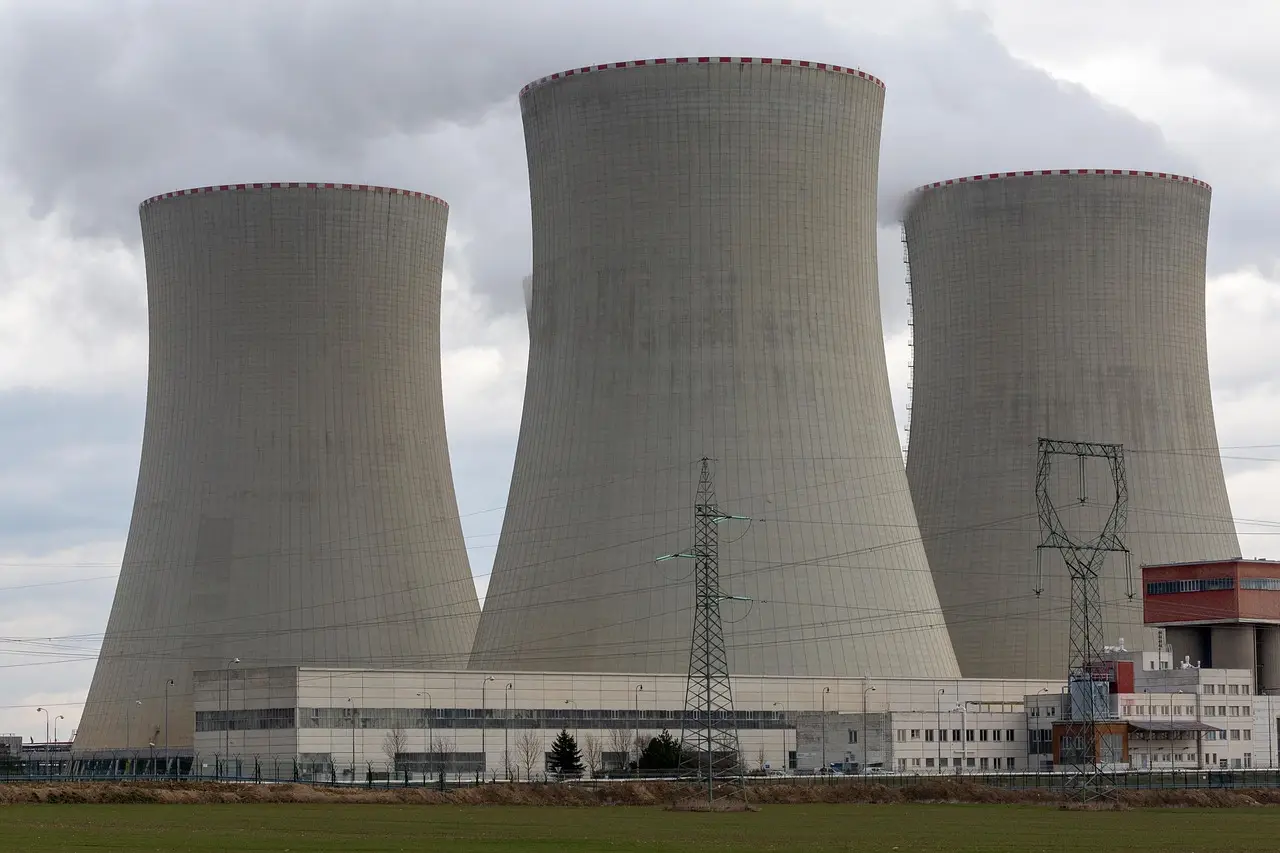
The Nuclear Regulatory Commission has issued a construction permit for four 80-megawatt next-generation reactors at Dow's Seadrift petrochemical complex on the rural Gulf Coast of Texas. The Long Mott Generating Station, developed with nuclear startup X-energy, cleared an expedited 18-month review under executive orders from President Donald Trump aimed at accelerating the energy sector.
The project is one of two flagships the U.S. Energy Department picked in 2020 for its Advanced Reactor Demonstration Program, designed to kickstart a new era for the nation's nuclear sector. That program now has a visible trophy: a federal permit.
"This milestone marks a significant step forward," Mike Goff, principal deputy assistant secretary for nuclear energy, said in a press release Monday. "The NRC's approval demonstrates meaningful progress toward deploying advanced reactors."
What does the permit actually change?
It allows construction, not operation, and Dow has not yet committed. The company said in its own release that a final decision to proceed is still pending. If Dow greenlights the project, construction could begin before 2030.
The four Xe-100 units would replace the gargantuan construction model of conventional nuclear plants with small, factory-built modules shipped and assembled on site at industrial installations, from data centers to petrochemical plants. That is the pitch. The business case remains unproven at commercial scale.
"We understand that owning a nuclear facility is a different kind of responsibility," Kreshka Young, North American business director for energy and climate at Dow, told a public meeting in Port Lavaca in September. "We do not take that lightly."
The units will not require the towering concrete containment structures of existing reactors, nor a 10-mile emergency planning zone. That is the commercial heart of the design: skip the most expensive safety hardware.
NRC Chairman Ho K. Nieh framed the review speed as proof of rigor on a clock. "We delivered on the 18-month schedule, proving we can do rigorous safety reviews on predictable timelines that move advanced nuclear technology from design to construction," he said in a press release.
Why skeptics call the safety claims overstated
The Xe-100 uses helium gas rather than water for cooling, and pelletized TRISO fuel in a moving bed of pebbles rather than traditional fuel rods. TRISO fuel was developed in Energy Department labs over decades. A DOE webpage states flatly: "Simply put, TRISO particles cannot melt in a commercial high-temperature reactor."
X-energy CEO J. Clay Sell, a former deputy energy secretary, has described the Xe-100 as "physically impossible to melt down."
Edwin Lyman, director of nuclear power safety at the Union of Concerned Scientists, rejects that framing. "It's just a myth that this fuel is indestructible or meltdown-proof," he said in an interview earlier this year. "This fuel has vulnerabilities."
Lyman noted the cost logic behind the design choice. "The argument these developers are using is that they don't need a physical containment because the reactor is so safe," he said. "Nuclear designers have been trying to reduce the costs of containment, and one way to do that would be to eliminate it entirely."
The NRC's own staff acknowledged the novelty. "These are new technologies," Mehdi Reisi Fard, deputy director of advanced reactors at the NRC, said at the Port Lavaca meeting. He explained that the "functional containment" approach is "less reliant on pumps or human intervention to mitigate anomalies" than current control systems.
Who is fighting it, and on what grounds?
Diane Wilson, a retired fourth-generation shrimper from Seadrift and director of San Antonio Bay Waterkeeper, opposes the project. "Frankly, it's outrageous," she said. "This is outrageous."
Her concern is waste, not meltdown. Spent fuel will sit indefinitely on-site because the U.S. still lacks a permanent national disposal site. Her organization filed legal challenges to the permit application in 2025 over safety concerns; the NRC ultimately dismissed them.
How big a deal is this for U.S. nuclear?
Context matters here. The U.S. has built just one new nuclear power plant in the last three decades. The NRC issued its first advanced test reactor permit in 2023 and its first advanced commercial reactor permit in March 2026.
If Long Mott succeeds, it would "provide a pathway other industries can emulate" for dedicated on-site power, Martin O'Neal, general counsel for the Nuclear Energy Institute, said at the September meeting. "The nuclear industry is watching this project very closely," he added.
The permit is a regulatory win, not a financial one. The industry will be watching whether Dow actually writes the check.
Source: gilmermirror.com
More from Olivia Hart
Show full bio
Staff writer covering people, launches and day-to-day practice in entrepreneurship, startups and venture funding at Business Bearings.
2,006 articles