Nvidia Loses $1 Trillion in Market Value as Jensen Huang Quits
Jensen Huang quit Nvidia on November 12 after two affairs surfaced, wiping $1 trillion off its market cap and leaving the AI chip giant without a succession plan.
By Olivia Hart
5 min read
What's News
- Nvidia's market cap fell from about $5 trillion to $4 trillion between November 3 and November 12, as the stock sank 11% at the open on Huang's resignation day.
- Huang resigned November 12 after admitting an affair with a woman U.S. intelligence suspects of being a Chinese spy, followed by reports of a second affair with VP of healthcare Kimberly Powell.
- Alice Huang reportedly helped move $7.5 billion in banned Nvidia chips (about 240,000, mostly H100s and H200s) into China.
- Nvidia committed $30 billion to OpenAI's financing round and guaranteed up to $105 billion for an Ohio data center, while considering up to $10 billion in Anthropic's IPO.
- CFO Colette Kress was named interim CEO; Huang had up to 60 direct reports and left no succession plan.
By Olivia Hart
Nvidia's market capitalization fell from roughly $5 trillion to $4 trillion in nine days, and CEO Jensen Huang resigned on November 12. The stock dropped 11% at the open on the day of his exit, pushing Nvidia's value below Microsoft's. Huang's personal net worth had already fallen $7.4 billion by that morning, according to Forbes. The collapse erased value equal to several major tech companies combined — in under two weeks.
The trigger was not a product failure or a earnings miss. It was a personal scandal with national-security implications, and it leaves the world's dominant AI chip supplier without the founder who ran almost every part of it.
What does Nvidia actually control?
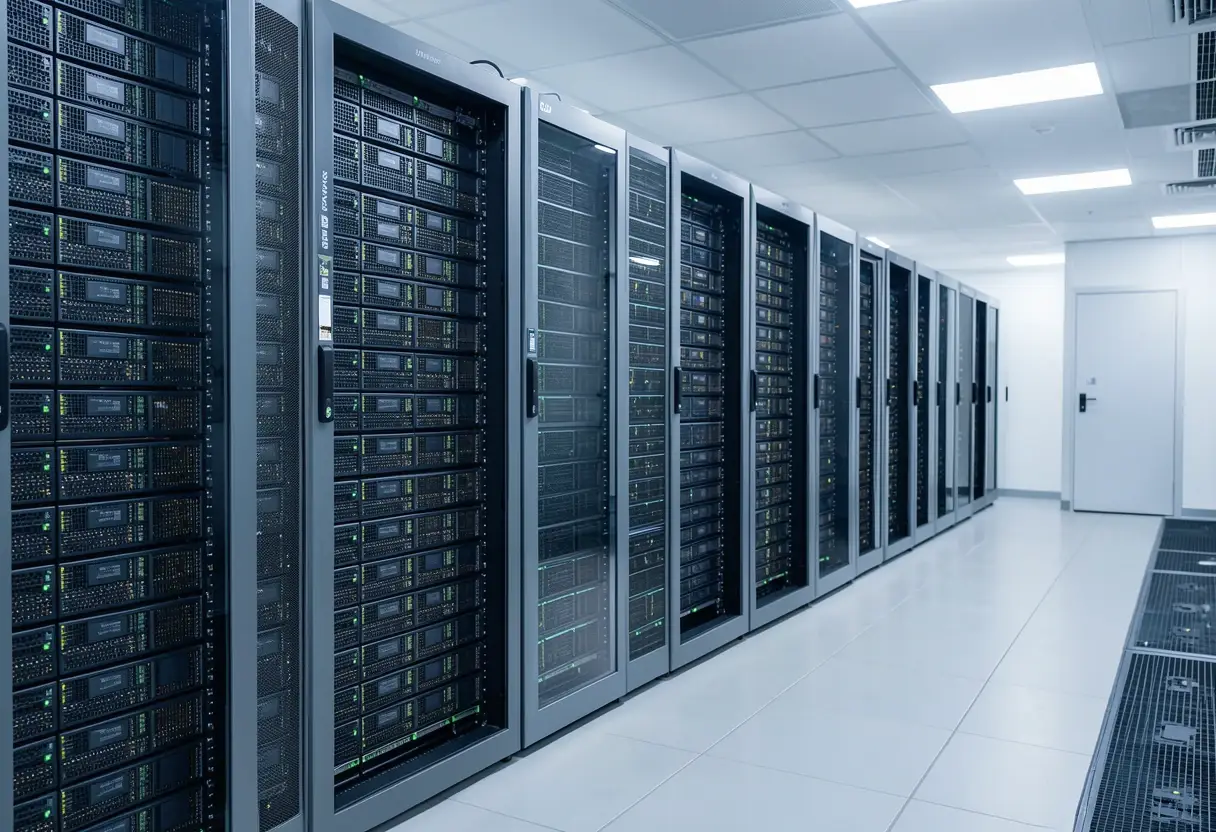
Nvidia sits at the center of the AI boom as the world's largest supplier of chips for AI data centers. By some estimates it controls 80% of that market. As of November 3, before the scandal fully hit the stock, it ranked as the most valuable company in the world.
Huang and cofounders Chris Malachowsky and Curtis Priem launched the company in 1993 to make graphics processing units for video games. In 2006 Nvidia rolled out a platform that opened GPUs to other uses. In 2012, researchers used Nvidia chips to train AlexNet, a breakthrough AI program that taught computers to recognize images. By the time ChatGPT launched, Nvidia's technology was fundamental to AI development.
The scale is hard to overstate. A large data center might run tens of thousands of Nvidia GPUs. Training a new AI model can involve as many as 100,000 GPUs running simultaneously for months. After training, GPUs handle "inference" — applying models to tasks like rewriting an email or drawing a cartoon cat. Roughly 60 million Americans use AI chatbots daily, according to a Pew survey this summer, and each query draws on that computing capacity. Nvidia also sells CPUs that coordinate tasks in data centers, plus networking equipment and software that lets GPUs communicate.
Takeaway: Nvidia is not just one supplier among many; it is the physical infrastructure underneath most of the AI products consumers touch.
How did Huang fall?
The New York Times first reported on October 29 that Huang had a relationship with Alice Huang (no relation), also known as Huang Le, a woman U.S. intelligence officials reportedly suspect of being a Chinese spy. The Chinese government has denied she is a spy. Alice Huang was a senior executive at Megaspeed International, a Singapore-based company that became an Nvidia customer and reportedly smuggled Nvidia chips into China, bypassing U.S. sanctions.
The U.S. first restricted exports of Nvidia chips to China in 2022, citing military and AI-competition risks. Alice Huang reportedly helped move $7.5 billion worth of Nvidia chips into China — roughly 240,000 banned chips, mostly H100 and H200 models, according to reporting cited by Tom's Hardware.
Jensen Huang initially called the relationship ordinary business, not an affair. On November 6, the Financial Times reported it was romantic. Two days later, Huang emailed Nvidia employees admitting the affair. On November 11, reports emerged of a second affair, this one with an Nvidia employee — reportedly Kimberly Powell, the company's vice president of healthcare. On November 12, under mounting board pressure, Huang resigned.
Takeaway: the resignation followed a two-week sequence of admissions and reports, not a single revelation.
Why can't someone simply replace him?
Huang ran Nvidia with an unusual level of control. A typical CEO might have five or ten direct reports; Huang had as many as 60. He reportedly sent hundreds of emails a day and was directly involved in decisions most executives delegate, from product construction details to how salespeople spoke with customers.
There was no succession plan. CFO Colette Kress is now interim CEO while the board searches. What happens next is unclear. Strategic decisions on products, manufacturing and customers could slow down. Huang oversaw how Nvidia's full system was integrated, not just its GPUs, and the next leader may lack the same product vision. Customer relationships could deteriorate. Internal power struggles are possible.
Takeaway: Nvidia's problem is not just finding a competent executive — it is that one man made most of the decisions.
What does Nvidia's circular business model mean for AI?
Nvidia sells to Microsoft, Amazon and OpenAI, but it also finances its own customers. It committed $30 billion to OpenAI's financing round and guaranteed up to $105 billion for an Ohio data center serving OpenAI. It sells GPUs to CoreWeave, invested in the company — including $2 billion in January — and agreed to purchase up to $6.3 billion of CoreWeave's unused computing capacity over the next several years. It has partnered with Apollo, BlackRock and other asset managers to mobilize AI infrastructure financing.
Anthropic, which had planned to file for its IPO next week, is equally entangled. Nvidia committed up to $10 billion in investment in 2025; Anthropic committed to use up to 1 gigawatt of Nvidia computing capacity. Nvidia was reportedly considering billions more in credit guarantees for a new Anthropic data center, plus up to $10 billion in Anthropic's IPO.
All of this means Nvidia has been propping up demand for its own technology, which makes it harder to judge how fast AI would have grown on underlying economics alone. Huang personally spearheaded these deals, and no one knows whether his successor will finance customers as aggressively. That uncertainty — not the scandal itself — may be what slows the AI industry's planned expansion.
Takeaway: if Nvidia pulls back from funding its customers, the financing behind a large share of AI buildout gets murkier, fast.
Original: siliconanalysts.com
More from Olivia Hart
Show full bio
Staff writer covering people, launches and day-to-day practice in entrepreneurship, startups and venture funding at Business Bearings.
2,006 articles