NVIDIA's Rubin HPC GPU Puts 50,000 CUDA Cores Behind Agent-Driven Science
NVIDIA unveiled Rubin HPC at SC26: 50,000+ CUDA cores, data movement weighted equal to compute, seventh-gen NVLink, shipping expected in 2028.
By Olivia Hart
3 min read
What's News
- NVIDIA announced Rubin HPC at SC26 on November 16, 2026, with more than 50,000 CUDA cores on one chip.
- Rubin HPC uses seventh-generation NVLink for GPU-to-GPU communication within and across racks.
- Rubin HPC is expected to be available in 2028; Vera Rubin-based systems are already shipping.
- Ian Buck, NVIDIA VP of hyperscale and HPC, said faster simulation means faster discovery.
- CUDA-X libraries span math, scientific computing, physics, parallel algorithms and data processing.
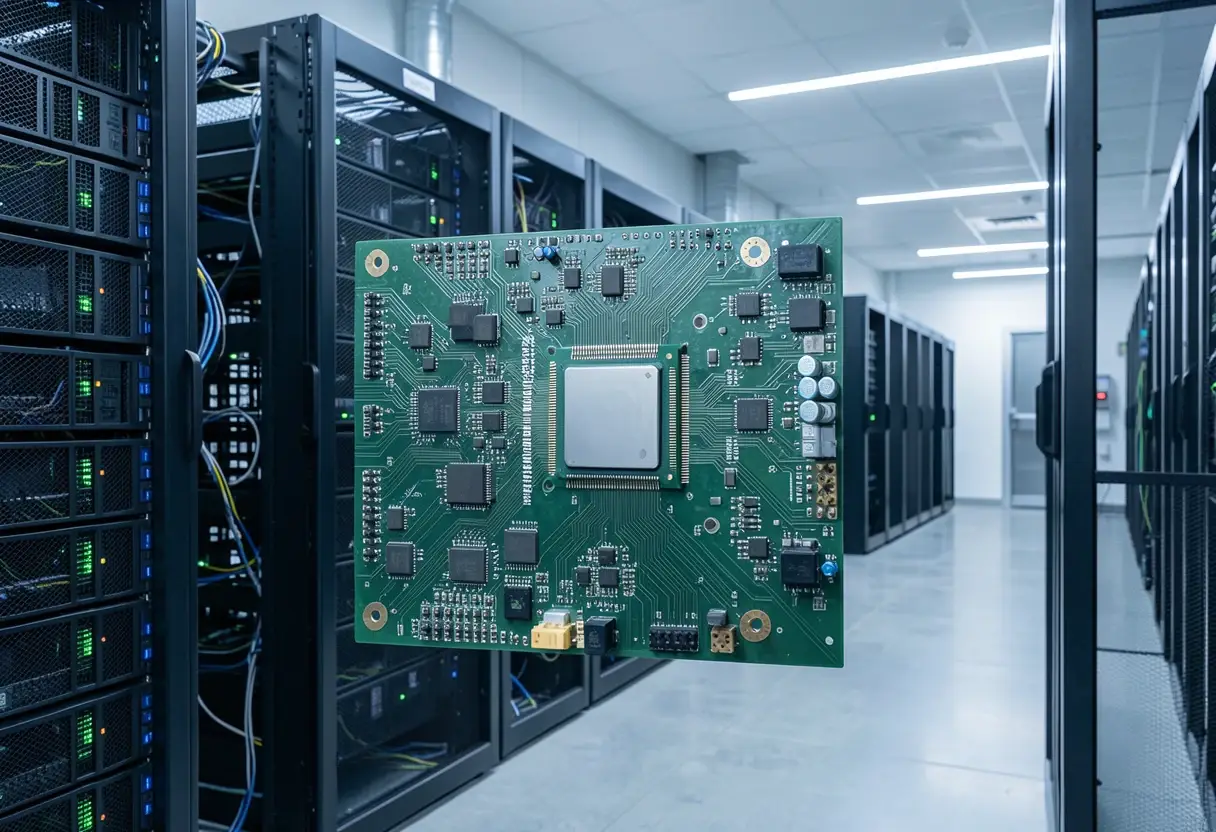
NVIDIA has announced Rubin HPC, a simulation and data-processing GPU carrying more than 50,000 CUDA cores on a single chip — a record count for the company. The announcement came at SC26 on November 16, 2026.
The chip targets scientific, engineering and analytics workloads where AI agents generate candidate materials, molecules and designs, then lean on simulations to evaluate them. More candidates mean more simulations. NVIDIA's argument is that computational feedback now sets the pace of discovery itself.
Why does core count alone not solve the problem?
NVIDIA identifies a shared computational pattern across climate modeling, engineering simulation, genomic analysis and financial risk. These applications repeatedly calculate results from small sets of values scattered through very large datasets. The same basic sequence runs at enormous scale.
That structure creates a bottleneck arithmetic cannot fix. Data must reach the cores fast enough to keep them busy. Rubin HPC's design gives data movement equal weight to compute capacity, and its sparse-data acceleration is intended to stop cores idling while they wait for information.
The targeted routines include:
- sparse-matrix and stencil calculations
- sorting and reductions
- other operations that recur across simulation and analytics
Together, those choices attack data-access patterns that would otherwise waste a large core count. In plain words: the chip is built to feed its own cores, not just to multiply them.
What did NVIDIA say about discovery speed?
"For agents tackling science and engineering, faster simulation means faster discovery," said Ian Buck, NVIDIA's vice president of hyperscale and high-performance computing. The stated design goal is a shorter cycle from hypothesis to simulation to refinement, helping teams decide what to test next and prioritize laboratory work around stronger candidates.
The claim is directional, not quantified. NVIDIA offered no benchmark figures on how much the cycle shortens.
How does software fit in?
CUDA-X supplies optimized algorithm implementations that agents can use directly with Rubin HPC. The libraries are designed as drop-in components, which shifts low-level GPU optimization away from application developers.
The documented range covers:
- math
- scientific computing
- physics
- parallel algorithms
- data processing
The point is reuse: prepared building blocks reduce the need for each research team to hand-tune every workload from scratch. What NVIDIA does not specify is how much porting effort existing scientific codes will require to exploit the new architecture.
What about GPUs talking to each other?
Data movement extends beyond a single processor. NVLink is NVIDIA's direct GPU-to-GPU interconnect; NVLink Switch joins multiple links so GPUs communicate all-to-all across a rack, and it can extend connections across nodes. Rubin HPC uses seventh-generation NVLink, so the data-movement design covers inter-GPU communication too.
That matters because agent workflows at this scale rarely fit on one chip. The interconnect is the connective tissue that makes 50,000 cores per GPU multiply across a rack rather than fragment.
When will it actually ship?
Rubin HPC belongs to the Vera Rubin platform, which NVIDIA describes as five purpose-built rack-scale systems combined into a multi-rack AI supercomputer for multi-step reasoning and long-context agent workflows. That broader platform is ramping into full production, and Vera Rubin-based systems are shipping now.
Rubin HPC itself is expected to be available in 2028 — roughly two years after the announcement. Buyers planning around it must weigh promises made in 2026 against hardware delivered in 2028.
For agent-driven research, the practical test is concrete: whether balancing compute, data access, software and multi-GPU communication actually shortens the path between an agent proposing a candidate and researchers receiving a simulation result that informs the next experiment. Until independent benchmarks appear, NVIDIA's framing remains a design intent, not a measured outcome.
Source: unite.ai
More from Olivia Hart
Show full bio
Staff writer covering people, launches and day-to-day practice in entrepreneurship, startups and venture funding at Business Bearings.
2,205 articles