Quest Diagnostics to Deliver At-Home HPV Test Kits Nationwide by Early 2027
Waters and Quest will ship FDA-cleared at-home HPV test kits nationwide starting early 2027, targeting the 30% of eligible U.S. women who go unscreened today.
By Olivia Hart
3 min read
Updated
What's News
- Waters and Quest Diagnostics will launch at-home BD Onclarity HPV test kits in early 2027.
- The FDA cleared the BD Onclarity assay for at-home self-collection in April 2026.
- Only about 70% of eligible U.S. women are screened for cervical cancer; 30% are unscreened or underscreened, per Waters' Dr. Jeff Andrews.
- The American Cancer Society projects 13,490 new cervical cancer cases and 4,200 deaths in 2026.
- Patients can return specimens by mail or to any of 2,000 Quest service centers; a clinician's order is required.
By Olivia Hart, Business Bearings
Waters and Quest Diagnostics will start shipping at-home HPV test kits to U.S. patients in early 2027, roughly a year and a half after the FDA cleared the BD Onclarity HPV assay for self-collection in April 2026. The companies announced the partnership Tuesday.
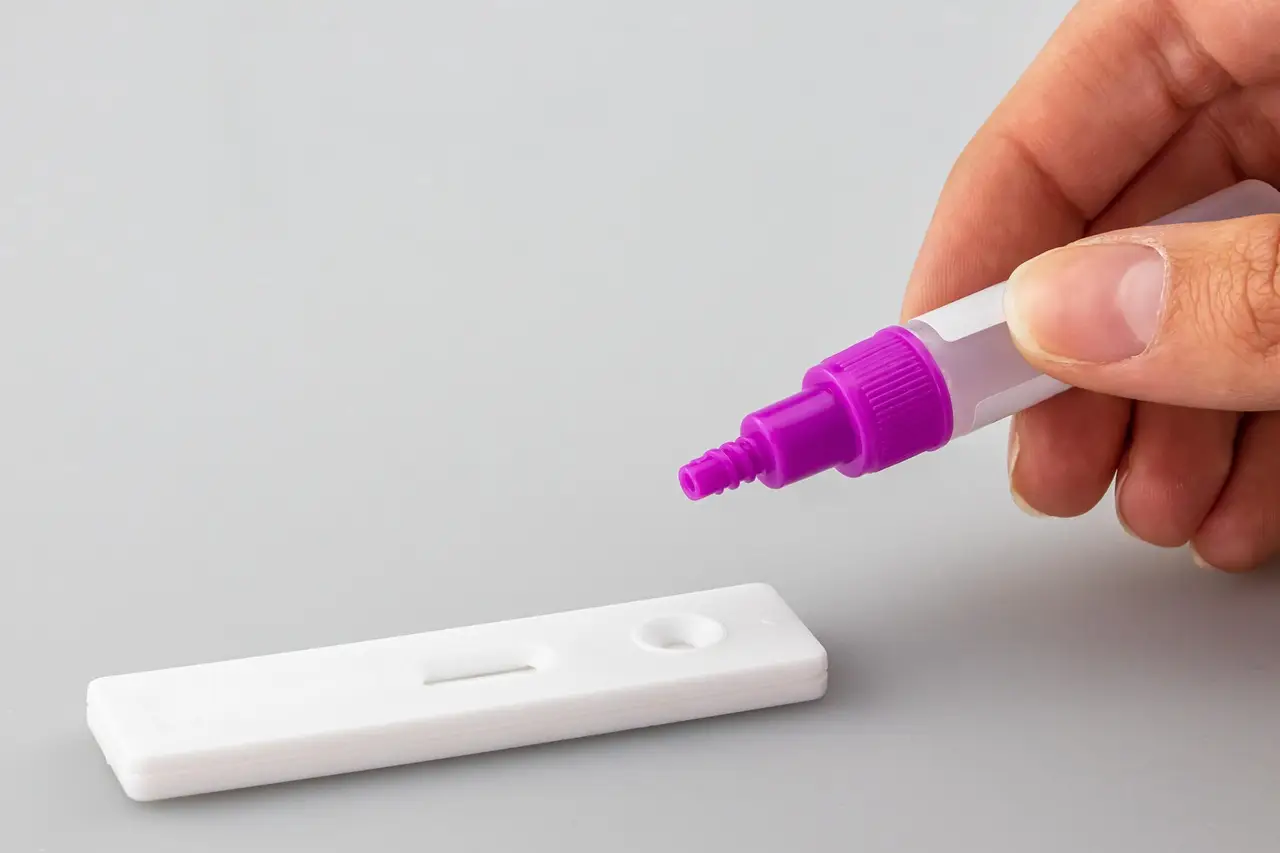
The kit requires a clinician's order. Patients receive it by mail, collect a dry swab specimen at home, and ship it back for testing or drop it off at one of 2,000 Quest service centers. No speculum, no stirrups, no office visit.
The companies frame the deal as an access play: reaching populations that current screening infrastructure misses. That claim has numbers behind it, though they come from the companies' own medical staff.
How big is the screening gap?
Cervical cancer ranks fourth among cancers in women. The American Cancer Society projects 13,490 new cases and 4,200 deaths in 2026. Yet the World Health Organization calls it among the most successfully treated cancers—when it is caught early.
The bottleneck is screening. Geography, cost, lack of insurance, lack of time, fear of pelvic exams, and simple unawareness all keep patients away from clinics.
"Of all the women who are eligible to be screened in the United States, only about 70% are screened. There's 30% that are unscreened or underscreened," says Dr. Jeff Andrews, VP of medical affairs for Waters Advanced Diagnostics. "This self-collection is an effort to reach those women by getting around some of the barriers to that."
Roughly three in ten eligible women, in other words, fall outside the current system. Whether a mail-in swab converts them into screened patients is the test the partnership has yet to pass.
What makes this test different?
At-home HPV kits already exist—Teal Health, for one, sells a kit with a specially designed collection wand. Onclarity's pitch is precision, not novelty. It is the first to offer extended genotyping in a self-collected format.
The assay genotypes beyond HPV 16 and 18, the two highest-risk strains. Competing tests either pool those results or require a separate lab run to reach the same depth. In plain terms: doctors learn exactly which genotype is present, which sharpens decisions about follow-up and treatment.
The test also differs from the Pap smear in kind. A Pap looks for abnormal cells in the cervix. An HPV test looks for the virus that causes those abnormalities in the first place.
Why did Waters need Quest?
The technology was already approved. Demand for mail-in diagnostics—HIV, STDs, COVID-19, colorectal cancer—was already proven. What Waters lacked was distribution.
"We saw the importance of self-collection with COVID, where patients realized they can do this at home," says Dr. Damian Alagia, senior medical director for women's and reproductive health at Quest Diagnostics. "That changed the way we were thinking about testing individuals in large populations."
Quest supplies the missing piece: relationships with half of the hospitals and physicians in the U.S. That network matters because every kit still requires a clinician's order—convenience for the patient, not removal of the doctor from the loop.
"We already have an assay that was approved. We know that it works," says Andrews. "Quest has the experience and the connections with the providers to get these kits to the home."
What neither executive specified: pricing, insurance coverage, or how the companies will measure whether the 30% unscreened population actually orders the kits. Those omissions will define whether this is a public-health shift or a convenience product for the already-screened. Early 2027 will supply the first data.
Original: bd.com
More from Olivia Hart
Show full bio
Staff writer covering people, launches and day-to-day practice in entrepreneurship, startups and venture funding at Business Bearings.
1,043 articles