Ray Dalio's Catalytic Leadership Playbook: $220M In, $720M Out
Ray Dalio says Indonesia's $220 million marine park investment, projected to return $720 million by 2045, proves catalytic leadership delivers double bottom-line returns.
By Grace Kim
3 min read
What's News
- Indonesia designated a 12-million-hectare marine protected area backed by ~IDR 4 trillion ($220 million), projected to generate ~IDR 13 trillion ($720 million) in net economic value through 2045.
- Ray Dalio has been a global macro investor for about 60 years and a philanthropist for about 30.
- The WEF's GAEA initiative assembles more than 100 government, business, financial and philanthropic leaders.
- Dalio identifies five macro forces driving a 'very difficult period': debt, political conflict, nation-state conflict, climate stress and technological disruption.
- OceanX, created by Dalio Philanthropies, completed a joint US-China young explorers mission in Chinese waters.
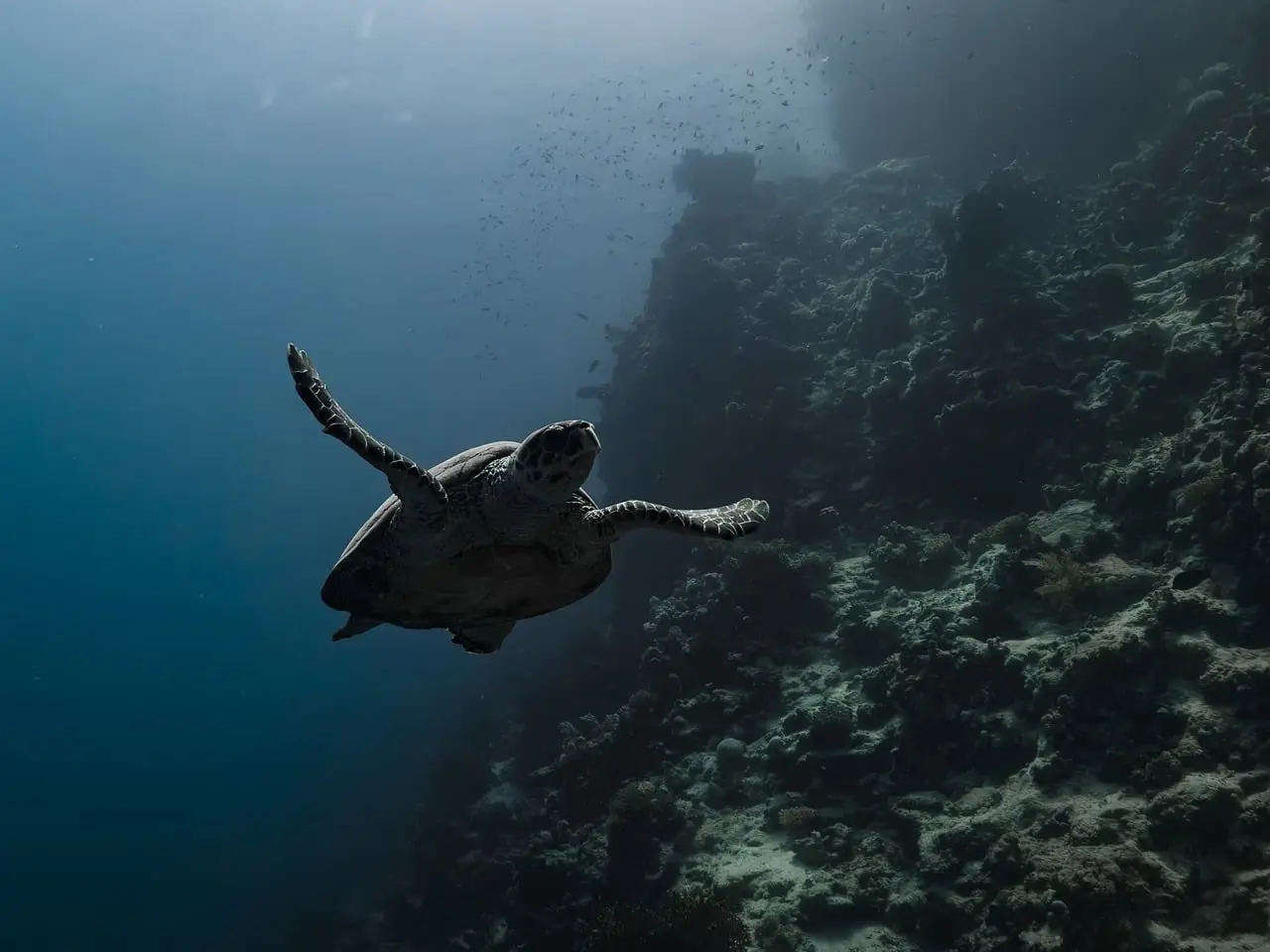
Indonesia poured roughly IDR 4 trillion ($220 million) into a 12-million-hectare marine protected area off Sumatra — and Ray Dalio expects it to generate around IDR 13 trillion ($720 million) in net economic value through 2045. That, he says, is catalytic leadership in action.
The billionaire founder of Bridgewater Associates, a global macro investor for about 60 years and a philanthropist for roughly 30, laid out the case in a commentary piece. His core definition: catalytic leadership is "the spark that lights the fire of much bigger changes," produced by people combining influence, intelligence, financial resources and time to deliver what he calls double bottom-line returns — positive results both socially and financially.
Dalio's own numbers frame the argument. He grew up in a lower-middle-class U.S. family, fell in love with markets as a child, and now manages his giving with two constraints: he wants beneficial impact on people and nature, and he does not want to overspend on himself and his family.
Why does Dalio think the timing matters now?
His day job forced the analysis. Studying global macroeconomic conditions to succeed as an investor, he concluded the world is "probably at the start of a very difficult period" driven by five forces:
- Unsustainable government debt burdens threatening the existing monetary order
- Irreconcilable domestic political differences, rooted in large wealth and values discrepancies, that threaten political orders
- Increasing conflicts between nation states
- Intensifying climate and nature stressors that can be extremely disruptive
- Immense technological changes bringing both opportunities and great threats
The counterweight, he writes, is that humanity has never had greater resources, more advanced technologies or deeper pools of capital to address its biggest challenges. The bottleneck isn't means — it's whether people "will rise above their self-interests to prioritize humanity's collective interests by realizing that operating in pursuit of our collective interest is also in their self-interest." In plain words: he's betting self-interest and collective interest can be made to align.
Who actually writes catalytic checks?
Catalytic capital can come from philanthropists, foundations, family offices, impact investors and certain institutional investors. Dalio says each has the connections and flexibility to start initiatives others overlook, unconstrained by traditional grant-making.
Catalytic leaders, he argues, do what governments and businesses cannot do alone:
- Accepting early risks and even losses that others will not
- De-risking pathways for others
- Building new markets where none exist
- Organizing coalitions of diverse stakeholders around a shared narrative and vision
Non-financial contributions often matter more than money, he adds. Leaders can contribute influence, intelligence or time; government actors can contribute enablement; corporate players can contribute resources from their domains.
What does the GAEA-OceanX deal show?
The World Economic Forum's Global Accelerator for Earth Action (GAEA) assembles more than 100 government, business, financial and philanthropic leaders to advance climate- and nature-positive solutions. Dalio calls it a prime example of catalytic leadership at work.
His own entry point was personal. Watching Jacques Cousteau's oceanographic exploration as a kid gave him a passion for the ocean, which led him and Dalio Philanthropies to create OceanX — an initiative that explores the ocean and produces media to motivate people to protect it.
Through GAEA, OceanX met leaders on similar ocean missions, producing what Dalio calls several win-win relationships. Two deals stand out.
First, the Indonesia project. OceanX worked with the Indonesian government plus scientists, explorers and oceanographic institutions from Indonesia and other countries to explore and document marine ecosystems off the west coast of Sumatra. That work, Dalio says, significantly contributed to Indonesia designating the 12-million-hectare protected area backed by the $220 million investment with its projected $720 million payoff through 2045.
Second, OceanX completed a joint US-China young explorers mission in Chinese waters, enhancing mutual understanding through shared ocean exploration — notable given Dalio's own warning about rising conflicts between nation states.
Dalio's ask to those holding significant capital: contribute some of it catalytically, or at least explore the approach and "experience the joy of helping drive beneficial financial and social impact." The Indonesia numbers are his proof that the model pays twice.
Original: initiatives.weforum.org
More from Grace Kim
Show full bio
Market editor covering people, launches and day-to-day practice in entrepreneurship, startups and venture funding at Business Bearings.
1,528 articles