Reed Hastings Left a $285 Billion Netflix to Fix a Ski Resort
Two months after stepping down as Netflix CEO in January 2023, Reed Hastings was skiing in Utah. Then he bought a struggling ski resort. He explains succession, Powder Mountain and Anthropic.
By Daniel Okafor
4 min read
What's News
- Reed Hastings stepped down as Netflix CEO on January 19, 2023; Netflix is now worth $285 billion on $45 billion annual revenue.
- His Netflix stake is under 1 percent, worth about $5 billion; he left the board in June 2024 after a silent retreat.
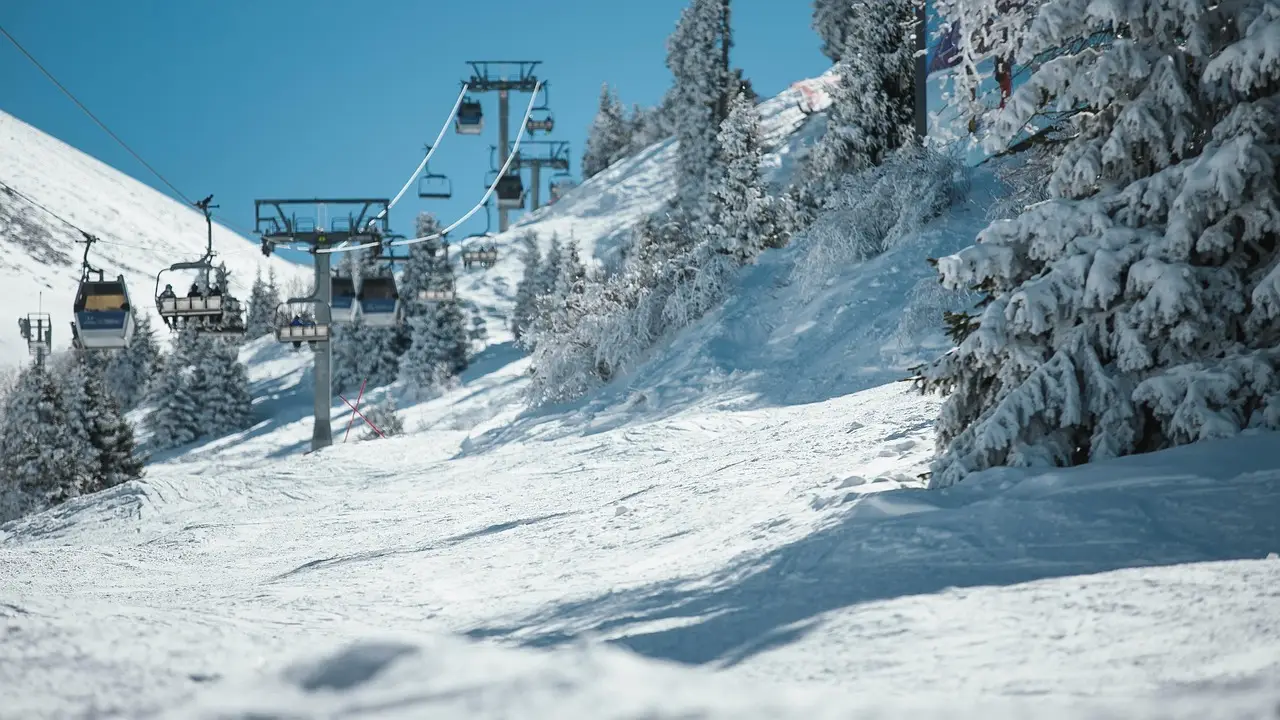
- He took over struggling Powder Mountain in spring 2023, splitting it into private and public ski areas.
- Succession planning started in 2015; Ted Sarandos and Greg Peters became co-CEOs in 2023.
- Netflix holds about 10 percent of television time, per Hastings.
Reed Hastings stepped down as Netflix CEO on January 19, 2023, and drove straight to a house he finished building in 2021 near the top of a Utah mountain. He spent the next two months skiing. "From 35 to 60, basically I did Netflix," Hastings says. "I loved the global intensity, the people dynamics, the leadership, the ups and downs, the disrupting of the industry. But I'm very happy to have, now, a new life."
Netflix is now worth $285 billion on annual revenue of $45 billion. Hastings holds less than 1 percent of the company, worth about $5 billion. He left the board of directors in June, after a weeklong silent retreat at a Buddhist monastery north of San Francisco. He remains on two boards: Bloomberg and Anthropic.
What came after Netflix?
Hastings planned philanthropy, hoping to become "sort of a baby Bill Gates of technocratic goodness for the world." Instead he found what he calls his "rebound business": Powder Mountain, a struggling ski resort an hour north of Salt Lake City. In spring 2023, while still Netflix chairman, he was approached about getting involved.
"What attracted me about Powder was just how different it is," he says. "I didn't know anything about real estate, and real estate development and real estate law. But I knew I loved the place and I had the money. I was just going to fund it, not really do much. And then I got so excited."
He split the territory into private and public ski areas. His pitch: the U.S. has only three private ski areas versus four thousand private golf courses. In the public zone he is building an art park modeled on Storm King in New York and Naoshima Island in Japan. He names three goals: build a community "that Patty and I want to spend a third of our time at," create a place where "each view is framed, each has intention," and make money. "I've always been a capitalist," he says. At this stage the motive is not need but the joy of "winning at the game of business."
How did the succession actually work?
Hastings says planning began in 2015. Greg Peters spent two years in Japan running content marketing and the new Japan operation before returning as head of all product. The board grew Ted Sarandos by "giving him marketing and then communications." Sarandos became co-CEO alongside Hastings in 2020.
On Netflix's 2020 Q2 earnings call Hastings said, "To be totally clear, I'm in for a decade." He says he meant it. "What changed for me was that Greg has developed so well that I don't need to do that." In summer 2022 he told the board it was a good time in the company's cycle to hand over in early 2023.
"So I get to say that I think it's time. They get to say who it is," he explains. The board chose the dual-CEO structure. "I think of co-CEOs as a high-performance technique," Hastings says. "I don't recommend it for most companies or in most situations. But if you happen to have or have developed two people who love the firm and can sublimate their own power and egos, then it works really effectively."
What does Hastings think of Netflix's future?
He offers Hewlett-Packard as a cautionary tale: "A 40-year run under the founders, and then basically steady downhill." The test for Netflix, he says, is the next decade. Netflix holds about 10 percent of television time, and he wants continued growth. "It'd be really hard to get above 50," he says. He no longer sweats the details: "I'm still a huge shareholder. But it's not my responsibility. So I don't have anxiety."
On Anthropic, he takes a clear position: "AI is the topic and Anthropic is the company." In his view, "they're genuinely obsessed with doing good by humanity—they're much less obsessed about capitalistic success than, say, I was at Netflix."
What about the Culture Deck's legacy?
Hastings posted 127 slides online in 2009. Sheryl Sandberg told GQ in 2013 it "may well be the most important document ever to come out of the Valley." He stands by the bluntest lines, including that adequate performance gets a generous severance package. "We were the first to say it out loud. And so that's why it caught on," he says. His verdict on influence: "On startups, quite a lot. Existing companies, not much."
Asked what he has achieved, Hastings answers: "Lots of things, but nothing that will matter in a thousand years." He sums up his philosophy plainly: "In the sense of history, it's all just a sediment layer."
Source: inc.com
More from Daniel Okafor
Show full bio
Correspondent covering money, funding and market shifts around entrepreneurship, startups and venture funding at Business Bearings.
1,724 articles