Safi Biotherapeutics Lands $4.7M Defense Award to Push Manufactured Blood Toward First Trial
Safi Biotherapeutics drew a $4.7 million Defense Health Program extension, lifting its non-dilutive U.S. funding past $27 million ahead of a planned 2027 IND filing for manufactured red blood cells.
By Nathan Brooks
4 min read
What's News
- Safi Biotherapeutics received a $4.7 million non-dilutive award extension from the U.S. Defense Health Program via MTEC.
- The award brings Safi's cumulative non-dilutive government funding to more than $27 million.
- Safi will use the funds to support an Investigational New Drug submission planned for 2027.
- Safi demonstrated production of more than one full transfusable unit of red blood cells in a single 10-liter bioreactor.
- The U.S. transfuses more than 10 million units of red blood cells annually.
Safi Biotherapeutics has secured a $4.7 million non-dilutive award extension from the U.S. Defense Health Program to advance its manufactured red blood cells toward a first clinical trial. The funding flows through the Medical Technology Enterprise Consortium under the Combat Casualty Care portfolio, and it pushes the company's cumulative non-dilutive government funding past $27 million. That's money raised without founders or existing investors giving up a single share.
The award will finance the final development activities Safi needs before filing an Investigational New Drug application with regulators in 2027. If that timeline holds, the first human study of lab-grown red blood cells built on Safi's platform would follow shortly after.
Why the military is bankrolling blood
The economics here are straightforward. The United States transfuses more than 10 million units of red blood cells every year — roughly one unit for every 33 Americans, annually. That entire supply depends on donors, and donations can't be scheduled around battlefield injuries, mass casualty events, or logistical disruptions.
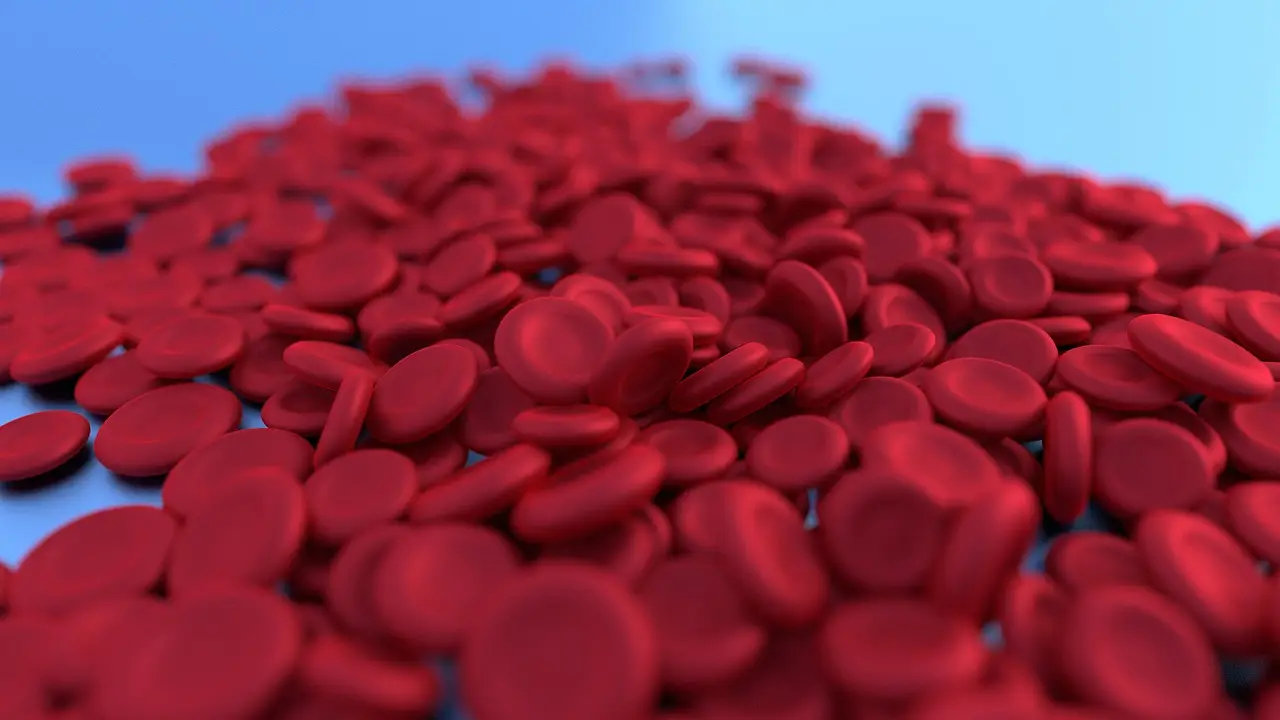
Safi, founded in 2020 through the U.S. Defense Department's On-Demand Blood program, is developing stem-cell-derived human red blood cells — what the industry calls manufactured red blood cells. The company grows them through controlled biomanufacturing processes rather than collecting them from people. Its target markets are hospitals, military medical facilities, and emergency response operations: the places where a fragile donor pipeline hurts most.
CEO and co-founder Doug McConnell framed the problem bluntly:
"A blood supply that depends on donors will always be fragile, whether on the battlefield, in a hospital setting, or in the aftermath of a mass casualty event. Patients with chronic conditions, people undergoing medical procedures, and trauma victims all depend on a supply that is vulnerable to fluctuations. We believe the future of blood is manufactured, and we've shown it can be produced at large scale."
The scale problem — and Safi's answer
Manufactured blood isn't a new idea. What has kept it out of clinics is cost at volume. One of the principal barriers to commercialization has been producing clinically useful quantities without runaway manufacturing expenses. Growing cells in bioreactors is expensive, and transfusion medicine tolerates very little markup over donated units, which are essentially free at the point of collection.
That's why Safi's recent technical milestone matters more than the funding headline. The company demonstrated a process that manufactures more than one full transfusable unit of red blood cells in a single 10-liter bioreactor. Safi believes this achievement provides a path toward scalable production for clinical applications — in plain terms, one modest-sized reactor can now yield a hospital-grade dose.
What does this change for practitioners?
For blood banks, trauma surgeons, and military medics, the honest answer today is: nothing yet. There's no approved product, no clinical data, and no manufacturing footprint. But the 2027 IND filing changes the trajectory. The initial clinical program will focus on acute blood loss — the core use case for trauma patients, emergency medical services, and military medicine.
Safi is also hedging on logistics, which is where donated blood fails hardest. Its pipeline includes three formulations of manufactured red blood cells:
- Refrigerated — the closest match to how donated blood is handled today.
- Cryopreserved — for stockpiling and longer-range planning.
- Freeze-dried — potentially storable and transportable where cold chains don't exist.
Those formats could eventually support medical settings where donated blood is difficult to obtain or maintain under proper storage conditions. Think forward-deployed units, disaster zones, and rural hospitals far from regional blood centers.
A team built for the problem
Safi's leadership roster reads like a deliberate assembly for this exact challenge, with veterans of DARPA, Vertex Pharmaceuticals, Mass General Brigham, and Loughborough University. The company's entire development arc has run on government support, from its 2020 founding through the current extension, and the Defense Health Program's continued appetite for funding it signals sustained institutional confidence in the approach.
McConnell closed with the near-term commitment:
"This award funding supports the critical work needed to file our IND and initiate our first clinical trial in 2027."
The so-what for the transfusion ecosystem: if Safi's 10-liter bioreactor process scales the way the company expects, the binding constraint on manufactured blood shifts from technical feasibility to cost and regulatory review — a much better problem to have. The next hard checkpoint is the IND filing itself, and the clock now runs through 2027.
Source: pulse2.com
More from Nathan Brooks
Show full bio
News editor covering regulation, policy and their impact on entrepreneurship, startups and venture funding at Business Bearings.
1,641 articles