Satlyt's software ran on a satellite in orbit — a first step to space data centers
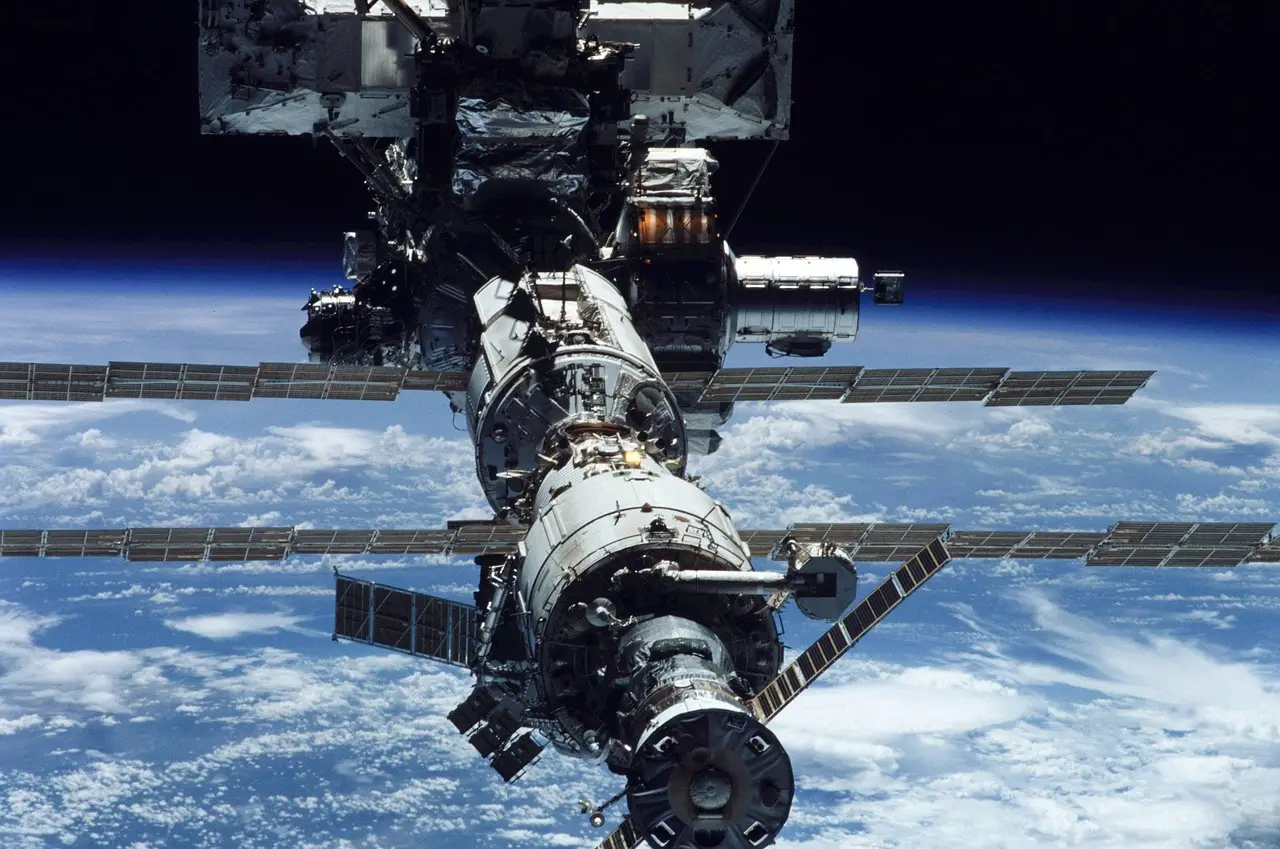
Satlyt ran task-sharing software on a computer in orbit in a NASA-funded test, a first step toward turning satellites into virtual AI data centers. Its software already flies on three satellites.
By Grace Kim
3 min read
What's News
- Satlyt completed a NASA-funded orbital software test this month after 13 months of work.
- Its software already runs on three satellites in orbit.
- The test used four computers, four users and eight services; one physical computer in orbit ran the software.
- Rama Afullo, ex-Google and SpaceX, founded Satlyt in 2024.
- NASA has not selected Satlyt for any mission or deployment.
Satlyt has run its task-sharing software on an actual computer in orbit, completing a NASA-funded test this month that marks the startup's first working proof of its orbital data center concept.
The test, conducted with the University of Houston, showed how Satlyt's software can distribute tasks among computers in orbit based on communication availability and compute capacity. It capped 13 months of work. Satlyt's software is already flying on three satellites.
"Let's GOOOO," was founder and CEO Rama Afullo's first reaction, he told TechCrunch.
What did the test actually prove?
Satlyt built a simulated network with four computers, four users and eight services. The software then worked out how to assign and run tasks on those computers, accounting for compute and communication availability. Only one physical computer on a spacecraft in orbit ran the software; the other three were simulations. Results came back to Earth.
The test proved Satlyt's software can generate plans on hardware in orbit. More testing is needed on how multiple physical computers transfer information among each other in practice.
"The finding is a trade-off," Afullo said. One approach worked best, though it required more computing power than the alternatives.
The startup, a top-five finisher in this year's TechCrunch Disrupt Battle, counts this as a win. "It's a building block toward satellites sharing computing work," Afullo said.
Who is behind it and why?
Afullo, who previously worked at Google and SpaceX, founded Satlyt in 2024 to turn spacecraft into virtual data centers. Its software lets operators run AI and other applications onboard, processing data closer to where it's collected. That cuts dependence on downlinks — the channels satellites use to send data back to Earth — and on ground-based analysis done mainly by humans.
A wildfire spotted from orbit is the concrete example: onboard software can help a spacecraft transmit relevant information much faster. "The goal is to get useful answers to people sooner and make better use of limited communication windows," Afullo said. "This experiment tested one planning component of that broader capability."
The vision is software that connects multiple satellites to share computing assignments. Users "will only need to define permissions, priorities, and operating limits," Afullo said, while the software makes decisions within those limits.
One caveat: although the test used NASA-funded research, the agency has not selected Satlyt for any particular mission or chosen to deploy its technology. Afullo said NASA missions face the same constraints Satlyt targets — "limited computing resources, intermittent communication, and the need to get useful information back to people."
NASA already operates a technology network designed to move data through space even when communication links face delays. The agency started using it earlier this year and has already tested it on aircraft.
What went wrong, and what's next?
The test surfaced a bug. Satlyt found an issue in how its software time-referenced delays, Afullo said: it stamped arrival time — when data arrived — rather than elapsed delay, how long it took to arrive. Those are different metrics.
That doesn't sink the result. "The software development, onboard execution, and return of outputs succeeded," Afullo said.
Plenty remains on the to-do list. Satlyt still needs to test its software under various workloads, hardware and connectivity conditions. "We also need usable communication links, permission from participating operators, secure transfers, resource scheduling, and recovery when a connection of computers becomes unavailable," Afullo said. The company hopes to launch in environments beyond low Earth orbit soon.
"Our next technical steps are broader validation and integration, followed by demonstrations of computing work shared across separate spacecraft," he said. "Longer term, we want developers to build applications for space without having to rebuild the infrastructure for every mission. That's what virtual AI data centers in space mean to us."
The near-term question is whether Satlyt can repeat this month's single-computer success across multiple physical spacecraft — the step that turns a planning demo into an actual orbital network.
Original: satlyt.ai
More from Grace Kim
Show full bio
Market editor covering people, launches and day-to-day practice in entrepreneurship, startups and venture funding at Business Bearings.
1,348 articles