Science Corporation Hits $3.5 Billion Valuation in $400 Million Raise
Max Hodak's Science Corporation raised $400 million at a $3.5 billion valuation to bring its PRIMA vision implant to the US and advance bio-hybrid brain sensors.
By Amara Osei
2 min read
What's News
- Science Corporation raised a $400 million Series D at a $3.5 billion valuation.
- The round included Khosla Ventures, Tenet Healthcare, Y Combinator and PLC Neurotech.
- PRIMA, its implantable vision chip, is approved in Europe and now trialled for Stargardt's disease.
- Science plans US entry via the FDA's Humanitarian Device Exemption.
- The company is designing human trials of a neuron-silicon bio-hybrid sensor with Yale's Murat Günel.
Science Corporation raised a $400 million Series D at a $3.5 billion valuation, a person familiar with the deal told TechCrunch. The company, founded in 2021 by former Neuralink president Max Hodak, announced the round in a blog post.
The new backers include Khosla Ventures, the Ackman Oxman Institute, Tenet Healthcare, 885 Capital, Y Combinator and PLC Neurotech. The round roughly cements Science's position among the best-funded brain-technology startups in the US.
Who is behind Science Corporation?
Hodak talked his way into a graduate neuroscience lab as a college student and has pursued biotechnology ever since. He co-founded Science in 2021 after serving as president of Neuralink, Elon Musk's brain-implant venture.
The company's stated purpose is to leverage new technologies to understand and interact with the brain. Its near-term business, though, runs through the eye.
What does the PRIMA implant do?
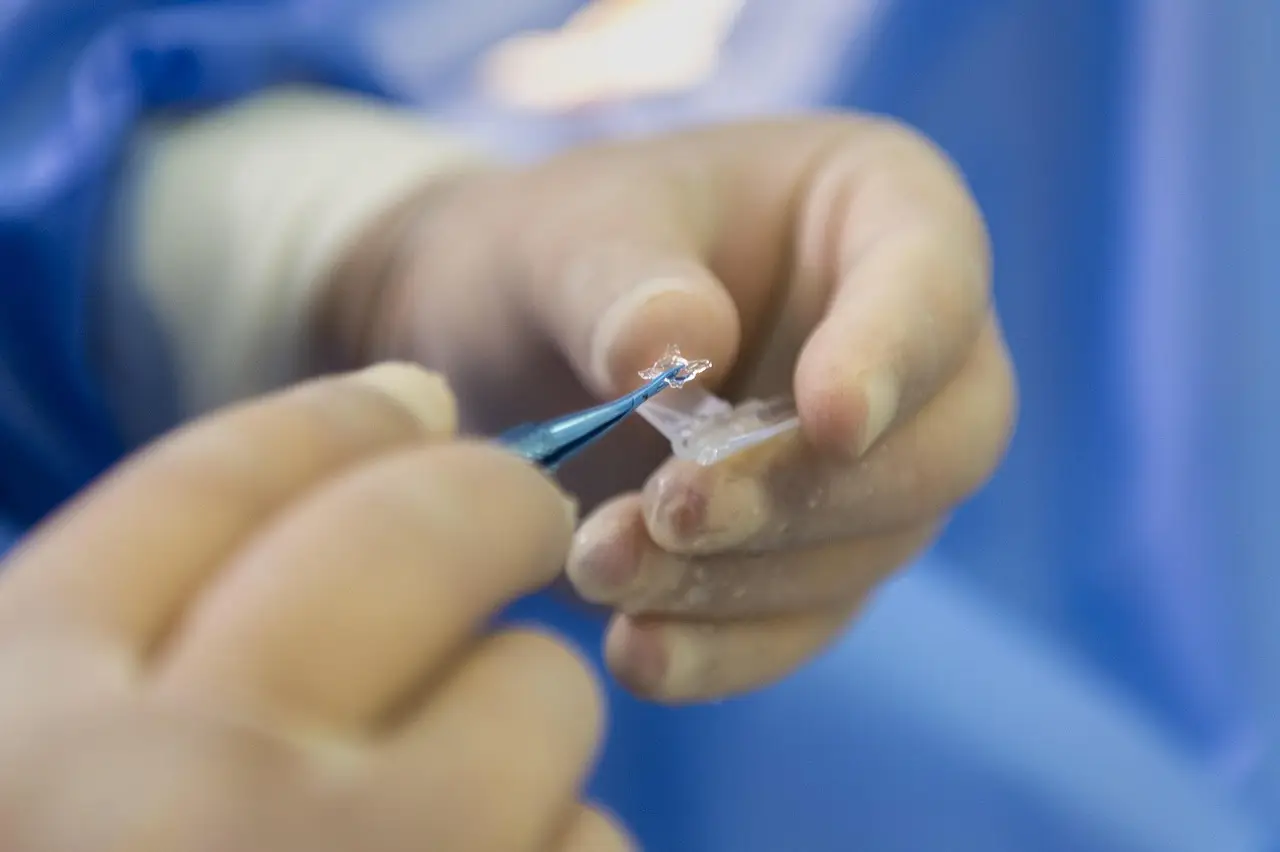
Science's first product is PRIMA, a wearable and implantable chip that helps people with age-related macular degeneration recover some vision. The device is approved in Europe and available in Germany, and it's being trialled for new conditions.
Onstage at TechCrunch Disrupt, Hodak announced that PRIMA is now being trialled in patients with Stargardt's disease, another blindness-causing condition. That expands the candidate population beyond macular degeneration, the leading cause of vision loss in older adults.
How will the funding be used?
Science aims to bring PRIMA to the United States through the FDA's Humanitarian Device Exemption, a pathway that lets experimental medical technology treat rare conditions. The company has already convinced the FDA that advanced macular degeneration in both eyes is uncommon enough to qualify, clearing the way to seek approval to use the device on people in the US.
The humanitarian pathway typically moves faster than full premarket approval, which matters for a startup that needs commercial revenue to fund its longer-horizon research.
What is the bigger ambition?
The startup's founding goal is connecting directly to the human brain through a bio-hybrid sensor built from cultured neurons combined with silicon. That device remains the company's central bet.
Science is currently designing initial human trials of the bio-hybrid implant with Yale neurosurgery professor Murat Günel. Günel told TechCrunch the device could offer potential treatments for Parkinson's disease, among other brain injuries and illnesses.
Human trials of a neuron-silicon interface would mark a significant step for the field, where most competitors work with conventional electrode arrays. If PRIMA wins US clearance and the Yale trials proceed, Science will be running both an commercial eye business and a frontier brain program at once — a combination its $3.5 billion valuation now explicitly prices in.
Original: science.xyz
More from Amara Osei
Show full bio
Senior reporter covering companies, deals and strategy in entrepreneurship, startups and venture funding at Business Bearings.
2,172 articles