Six Business Risk Signals Across Fraud, Climate and Trade
Texas data centers could reverse much air-quality gains by decade's end as fraud, quake coverage, mobile-home insurance, coastal storms and tariffs create distinct risks.
By Daniel Okafor
5 min read
What's News
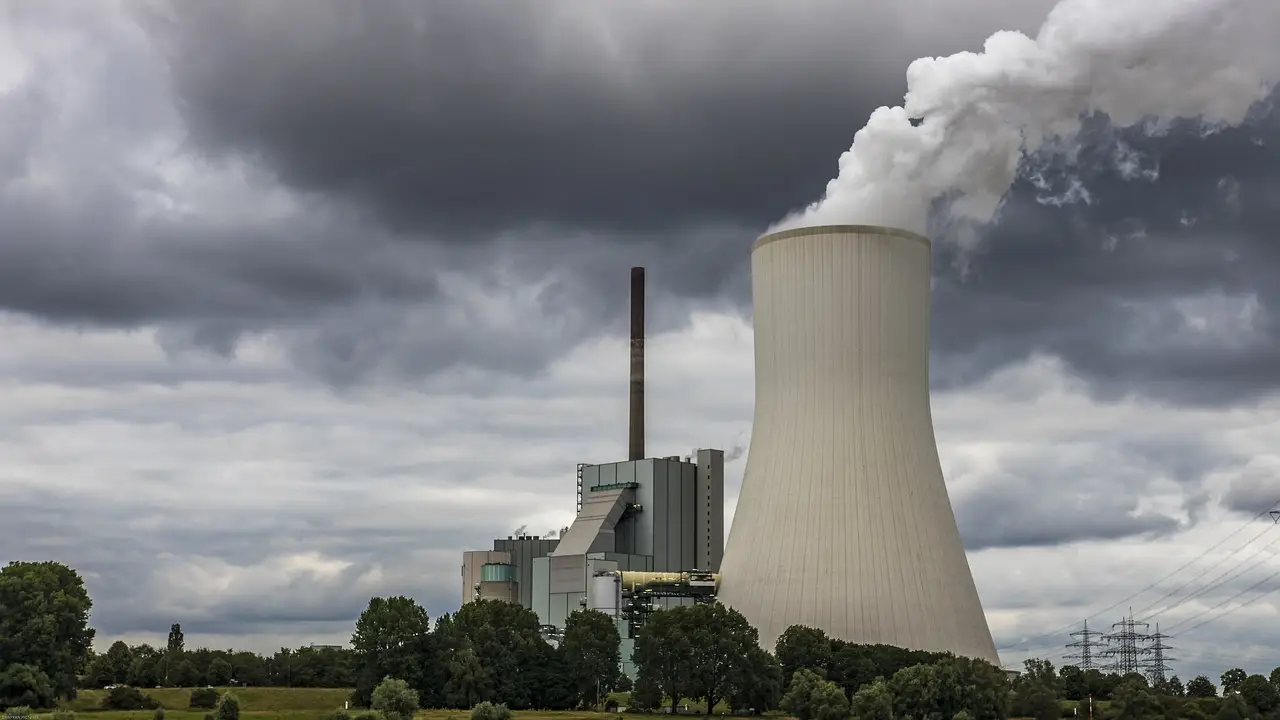
- A new Houston Advanced Research Center report says Texas data centers could reverse much of the state's air-quality progress by the end of the decade.
- Christine Mapes says Travelers sees more IT and bank fraud manipulation, token theft, and financial fraud and BEC volume than three or five years ago.
- Missouri's DCI says earthquake damage is excluded from standard homeowners and renters policies as households face higher annual premiums.
- American Mobile Insurance Exchange launched six years ago, exited Florida about four years later, and lost its certificate of authority.
- Liberty Justice Center filed in the U.S. Court of International Trade in New York for Gellert Global Group against the latest Canada tariffs.
By Daniel Okafor
Texas's rapidly growing data-center industry could reverse much of the state's air-quality progress by the end of the decade, the Houston Advanced Research Center said in a new report.
The projection sits among six declarations that shift attention to fraud controls, insurance choices, pollution standards, coastal damage and trade authority. Every one carries a direct operating consequence for a company, insurer, household or importer.
How is cyber fraud changing?
Travelers is seeing more IT fraud manipulation, bank fraud manipulation and token theft, said Christine Mapes, cyber managing director and counsel at the insurer. Attackers increasingly ask victims to hand over access rather than click a malicious link. The shift turns a phishing lure into something closer to an internal credential request.
“Now what we’re seeing is more IT fraud manipulation, the bank fraud manipulation, and the token theft. Instead of them engaging with the victim by asking them to click on a link, they’re actually getting them to turn over the keys to the kingdom voluntarily in a lot of instances…
The thing that surprises people the most when I talk to them about claims recently versus three years ago or five years ago is the sheer volume of financial fraud and business email compromise (BEC) that we’re seeing.”
That removes one routine warning sign for banks and other fraud targets. The decisive point becomes the victim's voluntary disclosure before criminals use those credentials.
Why are families dropping earthquake coverage?
Missouri Department of Commerce and Insurance Director Angela Nelson said families in the state's primary fault-line areas are dropping recommended earthquake coverage. Her guidance includes southeastern Missouri and the St. Louis region. DCI reported that residents already face higher annual premiums to protect their homes. Earthquake damage is not covered in standard homeowners or renters insurance policies.
“We see the numbers, and we understand why families are making the difficult decision to drop this coverage…When you are forced to choose between groceries or gas and an extra insurance premium, the immediate need almost always wins.”
That leaves households choosing between immediate necessities and protection against a separate, uncovered loss. Groceries or gas almost always win, in Nelson's assessment.
Can data centers reverse Texas air gains?
Carlos Gamarra, vice president for energy, air, and IT at the Houston Advanced Research Center, said the state's rapidly growing data center industry could reverse much of Texas's air-quality progress by the end of the decade.
“What we are showcasing here is that there is a significant increase in different pollutant emissions that needs to be addressed because otherwise this could have strong implications for the population and environment.
We need to treat data centers as the industrial facilities they are…to hold them accountable to the same industrial and power generation emissions standards that produced Texas progress.”
Gamarra's standard is specific: data centers should face the same industrial and power-generation emissions standards that produced Texas's progress. His warning links rising emissions to population and environmental effects.
Why did Florida end an insurer's authority?
Florida Insurance Commissioner Mike Yaworsky said he forced St. Petersburg, Florida-based American Mobile Insurance Exchange to surrender its certificate of authority.
Yaworsky said:
“Evasive companies that cancel all their policies and want to re-domesticate are not committed to Floridians and have no place in our state.”
The exchange launched six years ago and exited the distressed Florida market about four years later. Yaworsky's action brought some closure to a turbulent period for the exchange, property owners and agents placing mobile-home policies. Yaworsky targeted companies that cancel all policies and then seek re-domestication in Florida.
How serious is California's coastal threat?
Patrick Barnard, research director at UC Santa Cruz’s Center for Coastal Climate Resilience, warned of worsening erosion, flooding, wave impacts and damage.
“We’ve already seen some significant impacts in the state, but it’s most likely going to get significantly worse in terms of erosion and flooding and wave impacts and damage. It’s lining up to be a really significant winter for California.”
Wildfire and erosion are compounding, testing residents on the edge of the Pacific along the California coast. A powerful El Niño weather system is bringing damaging waves and worsening beach erosion. Gov. Gavin Newsom recently declared a statewide emergency as California prepares for more rainfall, landslides and coastal erosion.
Can courts limit Trump's tariff authority?
The Liberty Justice Center filed a lawsuit in the U.S. Court of International Trade in New York on behalf of U.S. food importer Gellert Global Group.
Sara Albrecht, CEO of the Liberty Justice Center, said:
“No president should have the power to pull a dormant statute off the shelf and use it to impose sweeping tariffs or import bans without the limits Congress required.”
The lawsuit seeks to stop the Trump administration's latest tariffs on imports from Canada. The filing says Trump has shifted legal rationales and invoked rarely used U.S. laws in a persistent effort to claim tariff power assigned by the Constitution to Congress. That makes the case a direct test of congressional tariff authority.
The next checkpoints are concrete. Texas confronts possible air-quality reversal as data centers expand. California faces a potentially worse El Niño winter. The U.S. Court of International Trade must test the statutes behind Canada's tariffs. Missouri families are dropping quake coverage, and Florida has ended a mobile-home insurer's authority. For businesses, the exposure now runs through fraud controls, insurance premiums, pollution standards and import costs.
Source: insurancejournal.com
More from Daniel Okafor
Show full bio
Correspondent covering money, funding and market shifts around entrepreneurship, startups and venture funding at Business Bearings.
1,687 articles