Speed Is Now Free: What Shimano, YKK and Zildjian Teach Business About Surviving AI
Fortune argues AI made speed worthless: Shimano's century of focus, YKK's half of world zippers, and Zildjian's 400-year-old craft show why depth, taste and patience now beat velocity.
By Grace Kim
4 min read
Updated
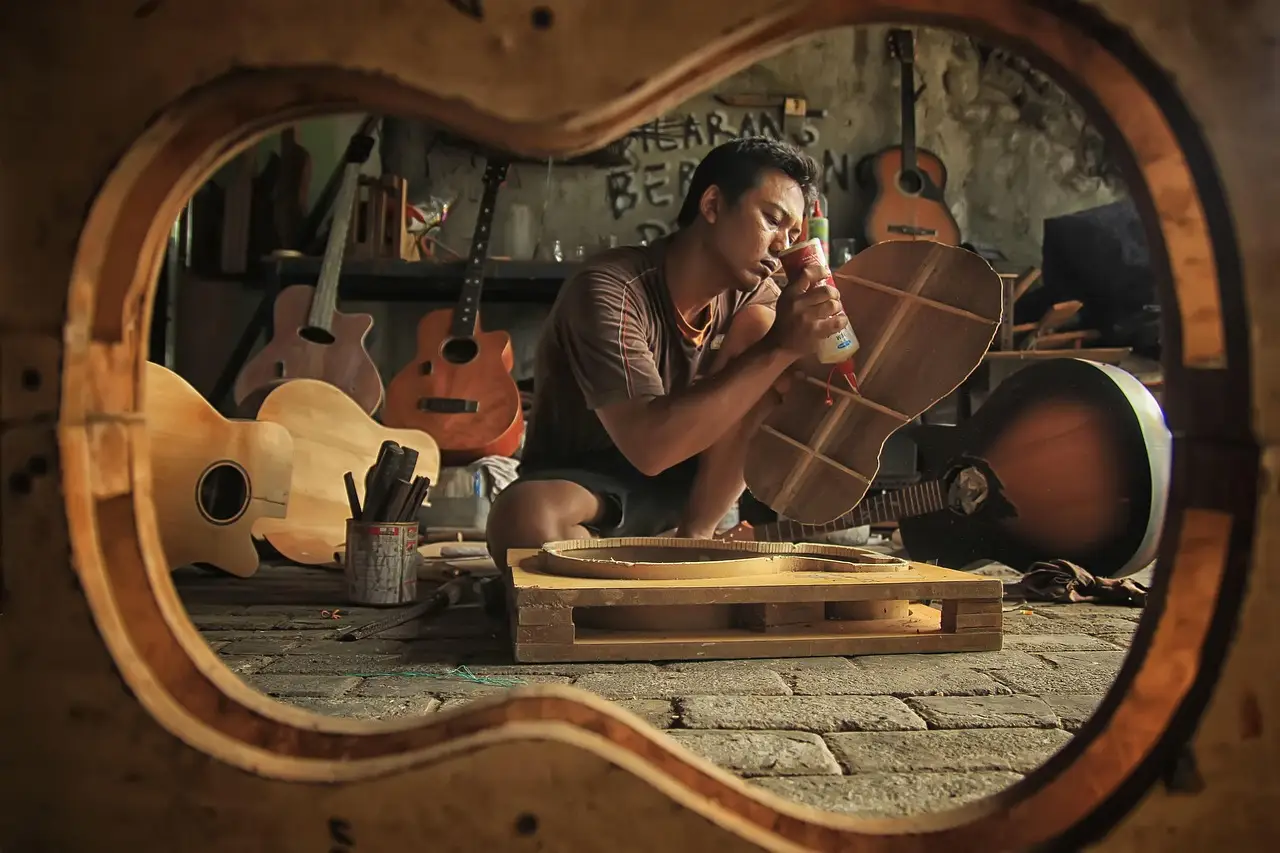
What's News
- Vinyl records passed $1 billion in US sales, their 19th consecutive year of growth, per the Fortune commentary of October 18.
- Shimano, founded in Osaka in 1921, supplies the majority of components on the world's high-performance bicycles.
- Nigo's Human Made label listed on the Tokyo stock exchange in 2025 at a valuation of roughly $460 million.
- YKK, founded in 1934 by Tadao Yoshida, produces roughly half the world's zippers and remains private.
- Zildjian, granted its workshop in 1623, has passed a secret alloy through fourteen generations; testers check up to 4,000 cymbals a day by ear.
By Grace Kim
Vinyl records passed $1 billion in US sales last year — their nineteenth consecutive year of growth — in an era when streaming has made music essentially free. That figure anchors a new Fortune commentary arguing that AI has made speed worthless and that the only durable moat left is exceptional craft.
The piece, published October 18, makes a blunt claim: "AI has effectively disrupted the disruptors. Speed is now free, which means, for the first time in history, speed is worthless." The author points to Japanese shokunin — master craftspeople — as the model, noting Nintendo opened in 1889, Shiseido in 1872, and the construction firm Kongo Gumi in 578.
The core question for leaders, the commentary argues, is not "what can we automate?" It is "what must we never automate?"
What does depth buy you that scale can't?
Shimano started making bicycle freewheels in Osaka in 1921. For a century it refused to diversify beyond bicycles and fishing gear, turning down expansion at every turn. The payoff: today the majority of the world's high-performance bicycles ship with Shimano components as standard, and the brand rarely advertises.
The discipline also sharpened its judgment. When the pandemic bicycle boom went bust, Shimano temporarily shuttered its main Japanese factory while e-bikes threatened its traditional components business. It used the downtime to build an AI-driven automatic shifter that adapts to a rider's pedaling habits — a fusion, the piece notes, that no competitor can replicate "because no competitor has the century."
Depth is what makes reinvention possible.
Can taste become a competitive asset?
Japanese denim makers think so. Hidehiko Yamane, founder of Evisu Jeans, and his partner Mikiharu Tsujita disassembled vintage jeans to learn why old selvedge denim — woven on shuttle looms Western makers abandoned as too slow — felt better than modern wear. Early on, the company produced fourteen pairs a day, hand-painting a seagull logo on each pocket.
"It's easy to make jeans exactly like vintage," Yamane explained. "Anyone can do that." By the turn of the millennium, David Beckham, Jay-Z and Beyoncé were wearing Evisu. Okayama's mills now supply premium denim worldwide for garments selling at hundreds, even thousands of dollars.
The market has priced the human touch: fashion mogul Nigo's label Human Made, which includes a Japanese denim line, went public on the Tokyo stock exchange in 2025 at a valuation of roughly $460 million. Customers aren't paying for efficiency. They're paying for taste.
Why did YKK stay private for a century?
In 1934, a Tokyo trading company went bankrupt and handed its twenty-something employee Tadao Yoshida what remained: a zipper operation. Yoshida built YKK, which today produces roughly half the world's zippers.
His philosophy, the Cycle of Goodness, held that "no one prospers without rendering benefit to others." In practice it meant total vertical integration: within fifteen years YKK made its own brass, dye, fabric tape and thread, and it still builds its assembly machines in-house and refuses to sell them. YKK remains private to this day — Wall Street never got the chance to object.
The lesson generalizes beyond manufacturing. Every outsourced input — the offshore call center, the subcontractor shipping work under your logo, the vendor's algorithm — is a piece of your reputation in someone else's hands. Trust compounds. Hype depreciates.
What does a 400-year-old cymbal maker know that startups don't?
In 1623, the Ottoman sultan granted Armenian alchemist Avedis permission to open a workshop and a new family name: Zildjian, "son of a cymbal maker." Four hundred years later, the Avedis Zildjian Company operates out of Norwell, Massachusetts — the oldest musical instrument maker on earth, with a secret alloy passed down through fourteen generations.
Debbie Zildjian, who oversees the alloy process today, learned it from her father. Her answer to questions about it never varies: "The secret part will remain a secret."
Before any cymbal ships, a craftsperson strikes it and compares the sound against a reference by ear — as many as four thousand cymbals a day. The approved pieces get stamped with the family name, a mark employees call "the Zildjian kiss." Buddy Rich, Ringo Starr, Sheila E. and Dave Grohl all played Zildjians.
The takeaway: when your name is on the work, you cannot hide behind the process.
The so-what
The commentary closes with a practical audit: for every AI tool an organization adopts, ask what human capability it replaces and whether that capability was part of what made the company good. If yes, the efficiency gain may be a competitive loss in disguise. When AI returns hours to your organization, the advice is to invest them in the craft itself, not in more output — move slow, and make things well.
Source: Fortune
More from Grace Kim
Show full bio
Market editor covering people, launches and day-to-day practice in entrepreneurship, startups and venture funding at Business Bearings.
959 articles