Tesla Lands Record 2,500-Semi Order as Diesel Tops $6.50 a Gallon
Tesla's record 2,500-Semi order backed by Microsoft and PepsiCo would double U.S. electric Class 8 trucks as diesel tops $6.50 a gallon and fuel savings shift the math.
By Daniel Okafor
4 min read
Updated
What's News
- A coalition including Microsoft and PepsiCo ordered 2,500 Tesla Semis — the largest U.S. electric heavy-duty truck order ever — with delivery expected in 18 months.
- Diesel prices rose from about $3.75 a gallon in February to more than $6.50 this week, driven largely by the Iran war.
- Catalyst Mobility says fuel and maintenance savings make the trucks cheaper than diesel after three years of use; Tesla's new Nevada factory targets 50,000 Semis per year.
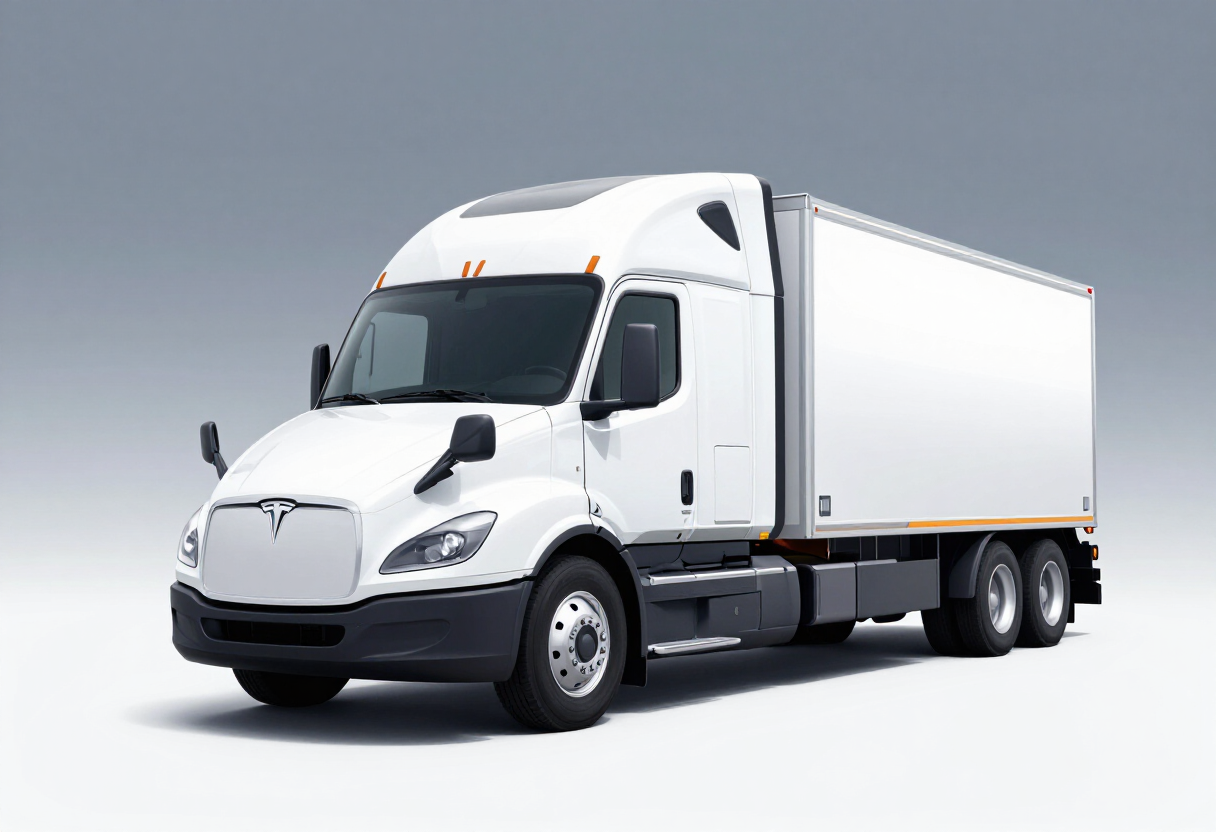
Tesla has secured the largest-ever U.S. order for electric heavy-duty trucks: 2,500 Tesla Semis, a single deal that would double the number of Class 8 electric trucks on American roads.
A coalition of companies including Microsoft and PepsiCo stands behind the order. Tesla expects to deliver the trucks within 18 months. A financing partner is buying the vehicles and will lease them to shippers, removing the biggest obstacle to adoption — the purchase price.
"The real goal here is to help bring down that upfront price barrier," says Jacob Richard, who manages the trucks project at Catalyst Mobility, the nonprofit running the program. The initiative is called the Zero-Emission Truck Shipper-Carrier Alliance Leading Electrification. "We're doing that by aggregating demand across multiple shippers."
The nonprofit declined to disclose the per-truck price. But it says fuel and maintenance savings over three years of use will make the trucks cheaper than diesel equivalents — a claim that now carries unusual weight given what is happening at the pump.
Diesel prices are surging. The average price climbed from roughly $3.75 a gallon in February to more than $6.50 a gallon this week, driven in large part by the Iran war. Higher transportation costs will likely push up prices of everyday goods. The coalition placed its order with climate goals in mind, but the economics have shifted in its favor: Catalyst Mobility reports a surge of interest in electric trucks from other companies as diesel costs climb.
How Tesla beat Volvo and Kenworth
Every heavy-duty electric truck manufacturer selling in the U.S. participated in the alliance's request for proposals, including Volvo and Kenworth. Tesla won on a combination of price, range, charging capacity, and production capacity — the full scoring rubric that matters to fleet buyers, not just the sticker number.
The Tesla Semi illustrates how the product has matured. Tesla launched the vehicle in 2017, but high-volume production only began earlier this year. The truck now comes with a range of either 325 miles or 500 miles. The company's new Nevada factory, which officially opened today, is designed to eventually produce 50,000 trucks a year — capacity that clearly figured into the alliance's decision to hand Tesla the largest order in the segment's history.
Where the trucks will run
The alliance plans to deploy the trucks across 10 hubs: three locations each in California and Texas, plus one each in Atlanta, Chicago, New York City, and Seattle. Richard says the sites were chosen where the economics made sense and where charging infrastructure already exists — a reminder that electrification today follows the grid, not the map.
That constraint defines the market. Electric trucks cannot yet fully replace diesel. Limited battery range makes the technology best suited to ports and local or short regional deliveries. "We really find the 150-mile to 300-mile daily route is the sweet spot, and today's models can meet that," Richard says. Long-haul routes will require either improved driving range or different fleet models, such as those using battery swapping. More charging stations are also needed.
The addressable market is larger than the constraints suggest. By one estimate, more than half of current heavy-duty trucking routes could be electrified with technology available today.
IMC Logistics, a large drayage operator, gave the trend another data point this week. The company said it is ordering 50 Tesla Semis to operate in Southern California, serving the port and making deliveries to inland warehouses — precisely the short-haul, high-utilization duty cycle where electric drivetrains already pencil out.
The payback math
The structure of the deal matters as much as its size. By aggregating demand across multiple shippers and routing the purchase through a financing partner that leases the trucks onward, the alliance converts a capital problem into an operating expense. Shippers get electric capacity without writing nine-figure checks. Tesla gets volume that helps justify its Nevada capacity ramp.
The bet hinges on the three-year payback claim. At $6.50-a-gallon diesel, the arithmetic moves fast in the trucks' favor. If diesel retreats toward its February level, payback stretches out — but the coalition's order is an 18-month commitment, not a spot purchase, and the manufacturers' production plans assume durable demand.
For now, the order doubles the U.S. fleet of electric Class 8 trucks in a single stroke and puts Tesla's Nevada factory at the center of the segment. Whether the rest of the industry follows depends on diesel prices, charging buildout, and whether the three-year savings materialize on the road. The alliance, and IMC Logistics, have now put real money on the answer.
Original: calstart.org
More from Daniel Okafor
Show full bio
Correspondent covering business strategy at Business Bearings.
234 articles