The Eiffel Tower’s Lesson on Chasing External Approval
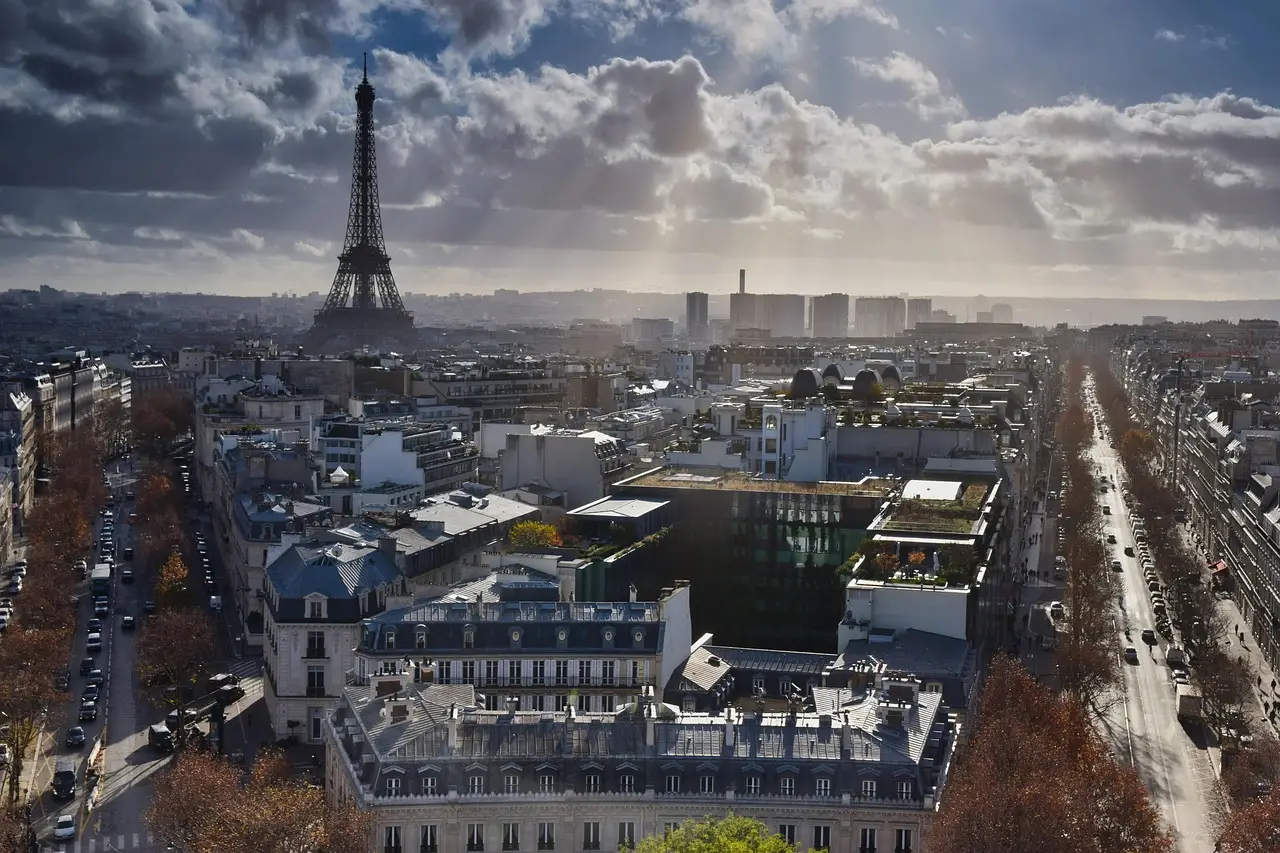
Gustave Eiffel’s 300-meter tower opened for a Paris fair that drew nearly 2 million visitors. Its later uses offer founders a practical test for ambition versus approval.
By Grace Kim
5 min read
What's News
- The 300-meter tower opened for Paris’s 1889 World’s Fair as the world’s tallest man-made structure.
- The fair drew nearly 2 million visitors.
- Around 40 artists and writers published a February 1887 open letter against the tower.
- Wireless telegraphy tests linked the tower to the Panthéon in 1898 across four kilometers.
- The City of Paris renewed Eiffel’s 20-year concession on January 1, 1910.
By Grace Kim
Paris’s 1889 World’s Fair drew nearly 2 million visitors; its 300-meter iron tower stood as the world’s tallest man-made structure at the time. An Entrepreneur opinion essay uses that record to examine a founder’s harder problem: the pull of approval after customers and markets have already delivered a decisive verdict.
What did Paris think of Eiffel’s tower?
The contributor places Gustave Eiffel among France’s best-known engineers of the 1880s. He had built railway bridges, viaducts, stations and other large iron structures across Europe. His company had earned a reputation for taking on work that looked difficult, expensive or “slightly mad,” then making it work.
The contributor recounts that Eiffel proposed a 300-meter iron tower for the 1889 World’s Fair in Paris, rising above the city. Paris did not embrace the plan. In February 1887, with construction already underway, around 40 prominent artists and writers published an open letter condemning the project.
Charles Garnier, the architect behind the Paris Opera, signed the letter. Guy de Maupassant, one of France’s most famous writers and a major figure in French literature, also signed. The protesters believed the tower would disfigure Paris.
The contributor says Eiffel defended the design by linking its shape to the engineering required to withstand wind, then continued building. A little more than two years later, Eiffel completed the tower. When the World’s Fair opened, nearly 2 million people came before it closed.
The protests lost steam because people paid to climb the tower. The Entrepreneur contributor writes: “Paris gave Eiffel its answer: It was a hit! Eiffel was vindicated!” The market had already answered the critics.
Why did Eiffel keep making the case?
The contributor explains that Eiffel held a 20-year concession. The agreement required the tower to pass to the City of Paris on January 1, 1910. After the fair, Eiffel no longer needed to prove that he could build it; he needed to persuade the city that it deserved to remain.
Even after a hit, Eiffel felt the tower still needed justification. He kept finding reasons for it to exist. From its first year, meteorologists worked there and scientists studied gravity and air resistance. Eiffel built a laboratory and later a wind tunnel, turning the structure into a research platform.
Radio supplied an even stronger argument. In 1898, researchers used the tower for wireless telegraphy tests with the Panthéon four kilometers away. In 1903, Eiffel supported military wireless experiments and helped finance part of the required installations, giving the tower a communications role.
On January 1, 1910, the City of Paris renewed Eiffel’s concession, and the tower survived. The contributor calls this more than an engineering triumph. Eiffel gave the tower a purpose that outlasted the argument, and the artists could keep disliking a structure that had become useful.
Utility gave Eiffel a stronger case than approval.
When does ambition become approval?
The contributor says most successful founders have people they would like to prove wrong. Sometimes a response makes sense. More often, the old critic takes one of three forms:
- Someone who dismissed the company.
- A former employer who said the founder would never make it.
- An investor who passed on the business and later watched it grow.
After a company succeeds, owners often check whether those naysayers have noticed. They wonder whether the critic has changed position, and every new award feels especially satisfying because that person might see it. Growth continues, but part of the founder’s attention remains pointed backward.
Recognition itself is not the problem. A founder wants customers to respect the company, employees to believe in it and the market to understand what the owner built. Trouble starts when recognition becomes the receipt needed before the founder can feel successful.
Owners can reach milestones they once considered enormous, then spend little time enjoying them because their attention moves to the person who still seems unimpressed. That person may hold no role in the business and exert no influence over the founder’s future, yet occupy a surprising amount of mental space.
Recognition remains satisfying, and ambition remains useful, but the pursuit starts costing time and focus once the critic becomes the only measure of a win.
What should founders do with old critics?
The contributor offers a diagnostic: “If the person I am trying to impress never finds out, do I still want the achievement? That’s how you separate ambition from approval.”
His distinctions are concrete:
- Build a larger company because the founder enjoys building it.
- Win a client because that client matters to the business.
- Take an award because it reflects work the founder is proud of.
If an achievement feels incomplete because one particular person has not acknowledged it, that person has become part of the goal without the founder noticing. The critic has become a customer, and the owner keeps supplying evidence: another revenue milestone, the next piece of proof, then another.
Eiffel’s case differed because the tower’s future genuinely remained at stake. His scientific and communications work gave Paris a reason to retain it. Founders should distinguish between defending something that matters and chasing approval from someone who no longer matters to the business.
The contributor says that trying to change a critic’s mind can become a lifetime project, while building something that makes the critic irrelevant can become a business.
The Eiffel Tower remains in Paris, now impossible to separate from the city. For founders who have already achieved more than they once thought possible, the contributor says they do not need every doubter to admit error. The practical test is whether the founder still wants what they are building if approval never comes.
The next win should strengthen the business and remain worth pursuing, not merely force a former critic to change the story.
Source: Entrepreneur
More from Grace Kim
Show full bio
Market editor covering people, launches and day-to-day practice in entrepreneurship, startups and venture funding at Business Bearings.
1,327 articles