Tripo AI Previews Print-Ready H3.5 Model and Polipop Agent
Tripo AI previewed H3.5, a 3D-native model it says prints with minimal editing, and unveiled Polipop, an agent carrying ideas from modeling to printer handoff, at Formnext in Frankfurt.
By Daniel Okafor
What's News
- Tripo AI previewed H3.5 and unveiled Polipop at Formnext in Frankfurt on November 17, 2026.
- H3.1's geometry ceiling is 1.5 million faces, rising to 2 million in detailed-geometry mode.
- Tripo says an H-series model can turn an idea into a 3D-printed object within minutes.
- The hands-on program at Formnext runs through November 20, 2026.
Tripo AI previewed its H3.5 generative model and unveiled Polipop, an AI printing agent, at Formnext in Frankfurt on November 17, 2026. The company claims H3.5 produces print-ready 3D content with minimal editing. H3.5 has not shipped. The Formnext presentation is a preview, not a general-availability launch.
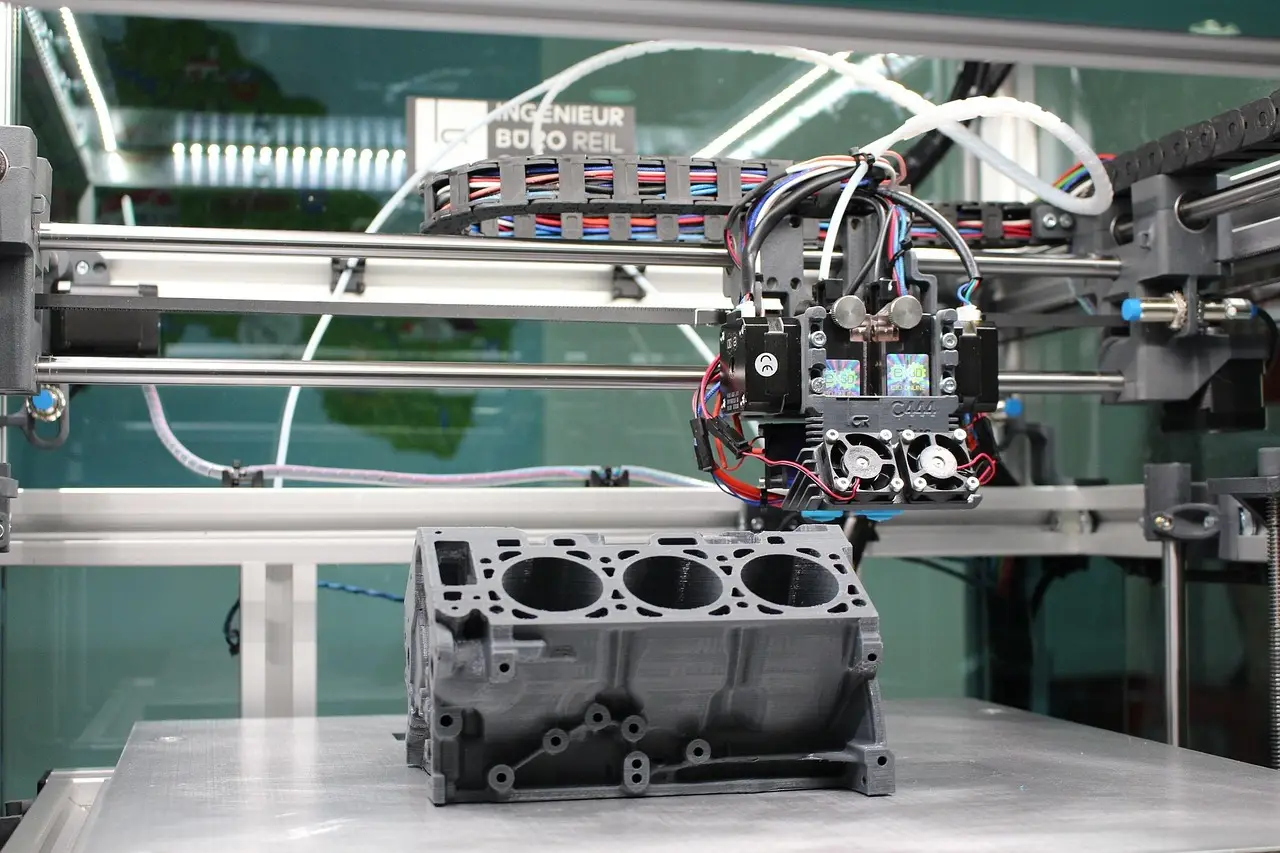
The stakes are concrete. Tripo's branding team displayed intricate 3D-printed pieces generated by H3.5 at the Frankfurt press conference. The objects put the model's detail claims into physical form. Tripo describes H3.5 as a 3D-native foundation model and a major upgrade from H3.1, with finer detail capture and better retention of visual exactness. The company also demonstrated how an H-series model can turn an idea into a 3D-printed object within minutes.
The hands-on program runs through November 20, 2026. Visitors can try an H-series model, explore Tripo Studio and experiment with Polipop.
What does Polipop actually do?
Research Lead Yuan-Chen Guo introduced Polipop on stage as an agent for turning ideas into bespoke 3D-printed items. Its stated sequence covers 3D modeling, print preparation and sending the result to a printer. Guo said Polipop was intended to make 3D printing "more accessible and easier to navigate."
The printer handoff builds on tools Tripo already ships. Its existing 3D Printing panel exports a model directly into Bambu Studio, Creality Print, OrcaSlicer, Blueprint Studio or ElegooSlicer. A separate Print to Home option through JuJuBit lets users order a physical print without leaving Tripo.
Those tools connect generated assets to slicing software or a print service. Polipop starts earlier. Its announced role begins with the idea and modeling steps and continues through printer handoff. Think of the old tools as the last mile; Polipop claims the whole road.
How does Agentic Canvas differ?
Tripo also runs a broader agent called Agentic Canvas. It plans and executes connected 3D workflows on a visual, node-based canvas, with user review before execution. A separate AI 3D Lab can check mesh printability and run automatic mesh repair.
Tripo's product descriptions split the roles. Agentic Canvas is a general 3D workflow system. Polipop targets one outcome: producing and printing a bespoke object.
Why H3.1 sets the baseline?
H3.1, the predecessor named in the announcement, was built around high-density geometry, surface detail and structural accuracy. It produces assets with materials for physically based rendering (PBR), so surfaces respond appropriately to lighting across environments. The model targets prominent assets that must hold up in close-up views and is available in Tripo Studio.
Its developer documentation lists support for text prompts, single images and multiview inputs. Output options include quad-mesh in FBX format and smart low-poly topology. The geometry ceiling reaches 1.5 million faces normally and 2 million with the detailed-geometry setting. That documented ceiling gives a measurable baseline for Tripo's claim that H3.5 improves detail reproduction.
The announcement connects two consequential parts of the additive manufacturing workflow: generating high-detail assets and preparing them for a physical printer. The Formnext objects demonstrate Tripo's intended output. The H3.5 release, when it arrives, is what will let users test the detail and minimal-editing claims inside their own print pipelines.
Source: unite.ai
More from Daniel Okafor
Show full bio
Correspondent covering money, funding and market shifts around entrepreneurship, startups and venture funding at Business Bearings.
2,189 articles