Tumbleweed Raises €6.9 Million After Austria's First Commercial Satellite
Vienna's Tumbleweed raised €6.9 million in Austria's largest SpaceTech Seed round, four months after orbiting the country's first commercial satellite, Oasis Alpha.
By Nathan Brooks
4 min read
What's News
- Tumbleweed raised €6.9 million led by PactVC — Austria's largest SpaceTech Seed round
- Oasis Alpha launched 7 July 2026 on SpaceX Transporter-17 as Austria's first commercial satellite, built in nine months
- Mission costs start at €15,000; Tumbleweed claims 5x faster and 10x cheaper than ISS-equivalent experiments
- European SpaceTech financings in 2026 total roughly €85.1 million
- The new capital funds three missions in 2027 and Oasis Beta, a re-entry-capable platform slated for 2028
Vienna-based SpaceTech company Tumbleweed has raised €6.9 million — reportedly the largest SpaceTech Seed round ever closed in Austria — just four months after putting the country's first commercial satellite into orbit.
PactVC led the round, with Vanagon Ventures, early backer Prototype Capital and EWOR joining. More than a third of Tumbleweed's 25-person team put their own money in. That's an unusual level of insider conviction for a Seed deal, and it tells you how the people closest to the technology read the risk.
CEO and co-founder Julian Rothenbuchner said the money has a specific job. "This funding will allow us to scale what we've proven on our first mission, Oasis Alpha: that microgravity can be a widely accessible industrial resource," Rothenbuchner said. The company's stated ambition: "a future where microgravity is used to make 10x better cures for cancer, 10x better semiconductors and 10x faster developed pharmaceuticals."
What does Tumbleweed actually sell?
Founded in 2024, the startup sells modular payload containers — Pods — to labs, manufacturers and R&D teams. A Pod handles power, data and certification, arrives pre-certified, and keeps customer experiments powered and connected in orbit. Pods come in different sizes, and mission costs start at €15,000.
Customers ship their payload directly to Tumbleweed and receive data during flight. The company's Oasis spacecraft carries the Pods up, operates them, and brings them back to Earth.
The economics are the pitch. Compared with equivalent experiments run through the International Space Station, Tumbleweed says customers ship five times faster and ten times cheaper.
How did Oasis Alpha prove the model?
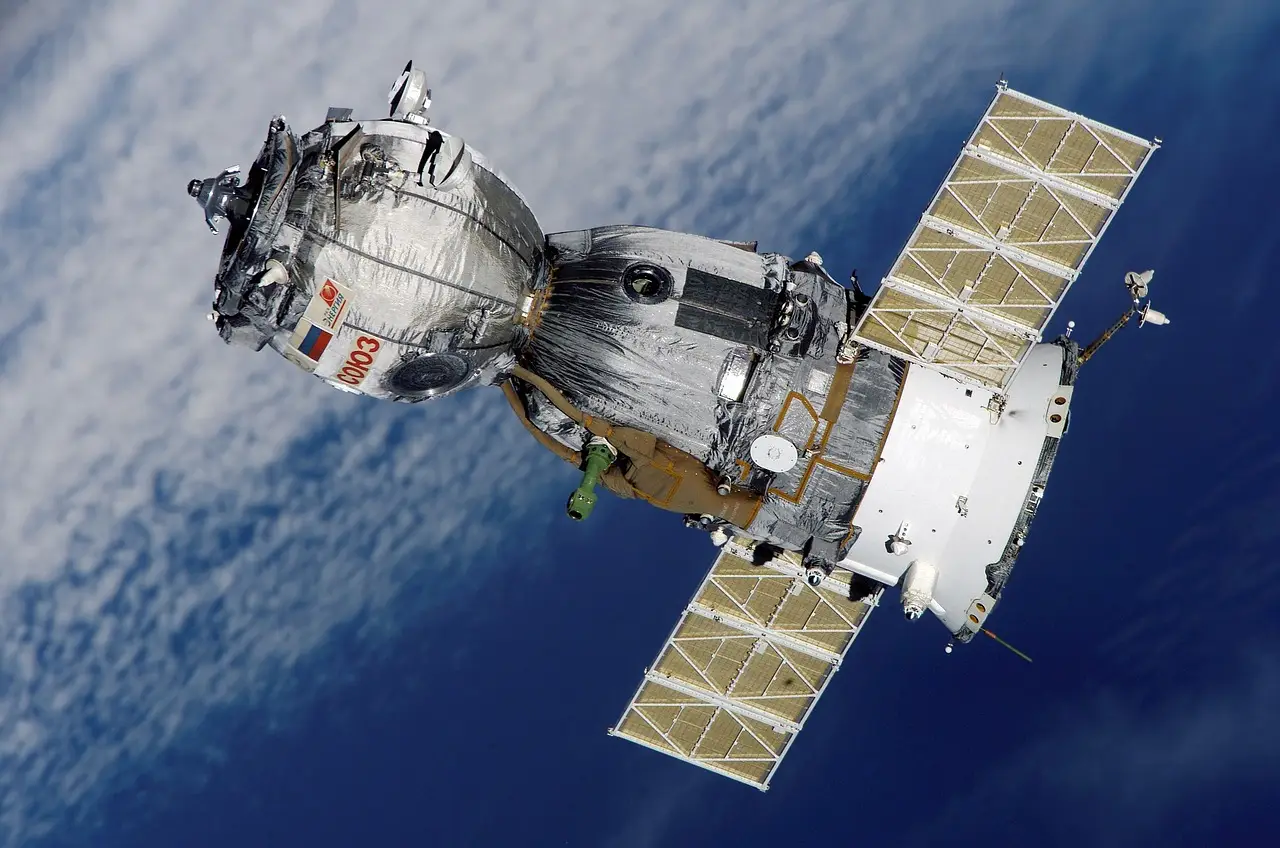
Tumbleweed built Oasis Alpha in nine months — five times faster than industry standard — and launched it on 7 July 2026 aboard SpaceX Transporter-17 as Austria's first commercial satellite. It carried four customers. The mission sold out a year before launch, and customers paid upfront.
That detail matters for anyone watching the business model. Pre-sold, pre-paid demand means the company isn't speculating on capacity — its first orbital product was validated commercially before it ever left the ground.
Daniel Dippold, CEO of EWOR, framed the execution speed directly: "Tumbleweed put Austria's first commercial satellite in orbit in less time than it usually takes to certify a single experiment. Julian has done exactly what he told us he would do when we first met him, only faster. Now every lab and manufacturer can use space without becoming a space company first."
Where does the €6.9 million go?
The funding will bankroll three missions in 2027 carrying more than ten customers. It will also accelerate development of Oasis Beta, Tumbleweed's next-generation orbital platform scheduled for 2028. Oasis Beta will support larger payloads and add re-entry capability to bring experimental samples safely back to Earth — the missing piece for pharmaceutical and materials research that needs physical returns, not just data.
Is this part of a bigger European trend?
Yes. Tumbleweed's round caps a string of European SpaceTech financings in 2026:
- Germany: ATMOS Space Cargo raised €25.7 million for orbital transport and re-entry services; deltaVision secured €10.2 million to expand spacecraft component production.
- UK: NewOrbit raised €16 million for very-low-Earth-orbit satellite technology.
- Switzerland: Stellar Alpina secured €3.8 million for in-space propulsion systems.
- Austria: Vienna-based ENPULSION landed €22.5 million in March to expand its spacecraft propulsion business.
Together with Tumbleweed's round, those deals total roughly €85.1 million.
Austrian Federal Minister for Innovation, Mobility and Infrastructure Peter Hanke cast the deal as a national signal. "The fact that Austrian space technology is mobilising international private capital and is already being used commercially in space sends an important signal about the strength of our research and business location," Hanke said, adding that such companies "strengthen domestic value creation, create skilled jobs, and demonstrate that Austria is internationally competitive in demanding future technologies."
For labs and manufacturers, the practical question is simple: what changes? Access to orbit without building a space program of your own — at €15,000 entry, and soon with sample return via Oasis Beta in 2028. That's the bet investors just priced at €6.9 million.
Source: GN: Startup Funding
More from Nathan Brooks
Show full bio
News editor covering regulation, policy and their impact on entrepreneurship, startups and venture funding at Business Bearings.
1,568 articles