Vertiv Opens ATLAS Lab to Test AI Factories Before the Chips Exist
Vertiv's new ATLAS Lab tests AI factory power, cooling and controls as a single installation using emulated NVIDIA compute, aiming to catch integration faults before customers commit capital.
By Nathan Brooks
3 min read
What's News
- Vertiv announced ATLAS Lab on November 16, 2026, with a ribbon-cutting alongside NVIDIA on November 6, 2026.
- The lab tests power, cooling, controls and IT as one pod using emulated NVIDIA workloads before production compute ships.
- ATLAS pairs physical testing with NVIDIA DSX digital-twin simulation using Omniverse libraries and SimReady assets.
- Vertiv CEO Giordano Albertazzi said the lab proves architecture 'before a customer commits capital to build it.'
Vertiv announced on November 16, 2026 that its new ATLAS Lab will test AI factory power, cooling, controls and IT systems as one installation — using emulated NVIDIA computing before the matching production chips even reach the market.
The lab's purpose is blunt: expose integration problems during engineering, not at a customer's site. ATLAS stands for Advanced Test Lab for Architecture and Systems. Vertiv and NVIDIA engineering leaders held a ribbon-cutting and technical working sessions on November 6, 2026, shifting the collaboration from architecture requirements and digital simulation to hands-on assessment of how power, liquid cooling, controls and emulated AI workloads behave together.
Why test a whole pod instead of products?
The lab attacks a mismatch in how infrastructure gets validated today. Equipment is commonly assessed product by product, but an AI factory runs as a connected system — and a flaw at one interface can cascade. Vertiv identifies five pressures that define this problem:
- Density
- Speed
- Scale
- Complexity
- Dynamic load profiles
Those pressures reinforce one another, according to Vertiv. Solve one in isolation and the constraint simply shifts to another part of the installation.
What does this change for practitioners?
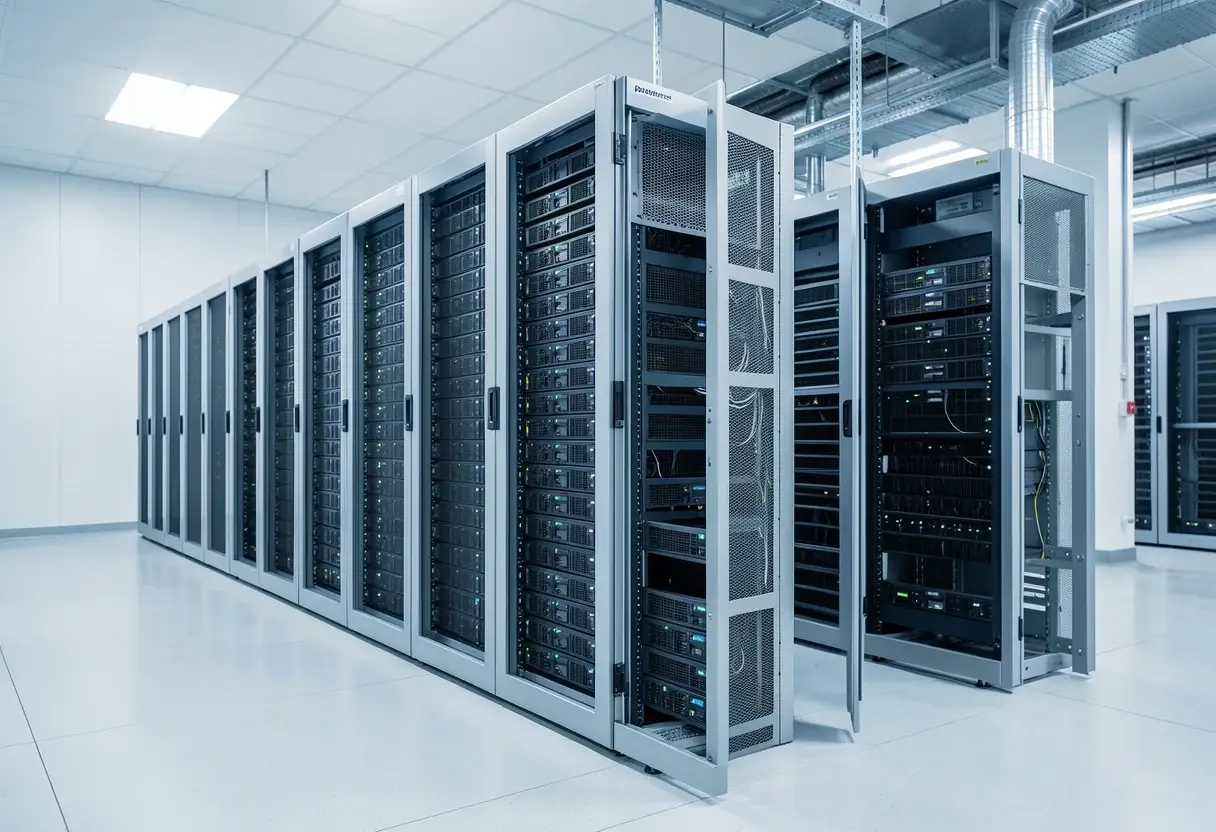
The physical installation represents one complete AI factory pod, with electrical, thermal, control and IT equipment sharing the same environment. Vertiv says its workload emulation reproduces the power and heat behavior of current and future NVIDIA accelerated-computing architectures. That means engineers can test infrastructure responses before the corresponding production compute systems are commercially available — no waiting on chip roadmaps to validate the building around them.
The testing sequence is staged. Engineers first use simulation and form-and-fit testing to assess design risk. They then emulate future compute loads and stress power and cooling systems together, with coordinated controls responding to rapid, synchronized AI workload swings. Coverage runs end to end: from the grid connection, through to the rack, and along the heat path from chip-level liquid cooling through rejection and reuse.
NVIDIA DSX ties the digital and physical together
ATLAS pairs physical testing with simulation and digital-twin workflows built on the NVIDIA DSX AI Factory Platform, using Omniverse libraries, DSX Sim and SimReady assets. The models incorporate Vertiv power and cooling assets, so infrastructure designs can be evaluated before anything is physically deployed. Requirements are informed by NVIDIA's AI factory reference designs.
NVIDIA describes DSX as unifying design, simulation, operations and ecosystem technologies across grid, facilities, chips, infrastructure software and partner systems. DSX Sim specifically models facility, infrastructure and IT systems together before construction begins. Inside ATLAS, those digital tools sit alongside physical integration work covering power architecture, liquid cooling and controls.
A shared table for suppliers
Vertiv is positioning the lab as common ground for chip manufacturers, server and rack-system makers, power and cooling providers, utilities and operators. Their technologies meet at shared interfaces — exactly where integration problems hit design, deployment and operation. A common test environment gives those parties one technical basis for decisions spanning chips, racks, facilities and the grid.
Vertiv chief executive Giordano Albertazzi said ATLAS lets the company "prove the complete architecture before a customer commits capital to build it." NVIDIA vice president of AI infrastructure Vladimir Troy said earlier system-level validation can help resolve infrastructure challenges before compute systems arrive.
The real test is repeatability
The stated objective is to shorten time to first token and turn available megawatts into productive compute sooner. Vertiv says a design validated at pod scale can become a reference design for an entire campus, sparing each deployment from fresh engineering.
That's the number worth watching. If a validated pod can supply a campus-scale, tested starting point, ATLAS stops being a hardware testbed and becomes a repeatable technical baseline for every customer project that follows.
Source: unite.ai
More from Nathan Brooks
Show full bio
News editor covering regulation, policy and their impact on entrepreneurship, startups and venture funding at Business Bearings.
2,230 articles