XPENG Unveils IRON Humanoid, Sets Q1 2027 Retail Training Start
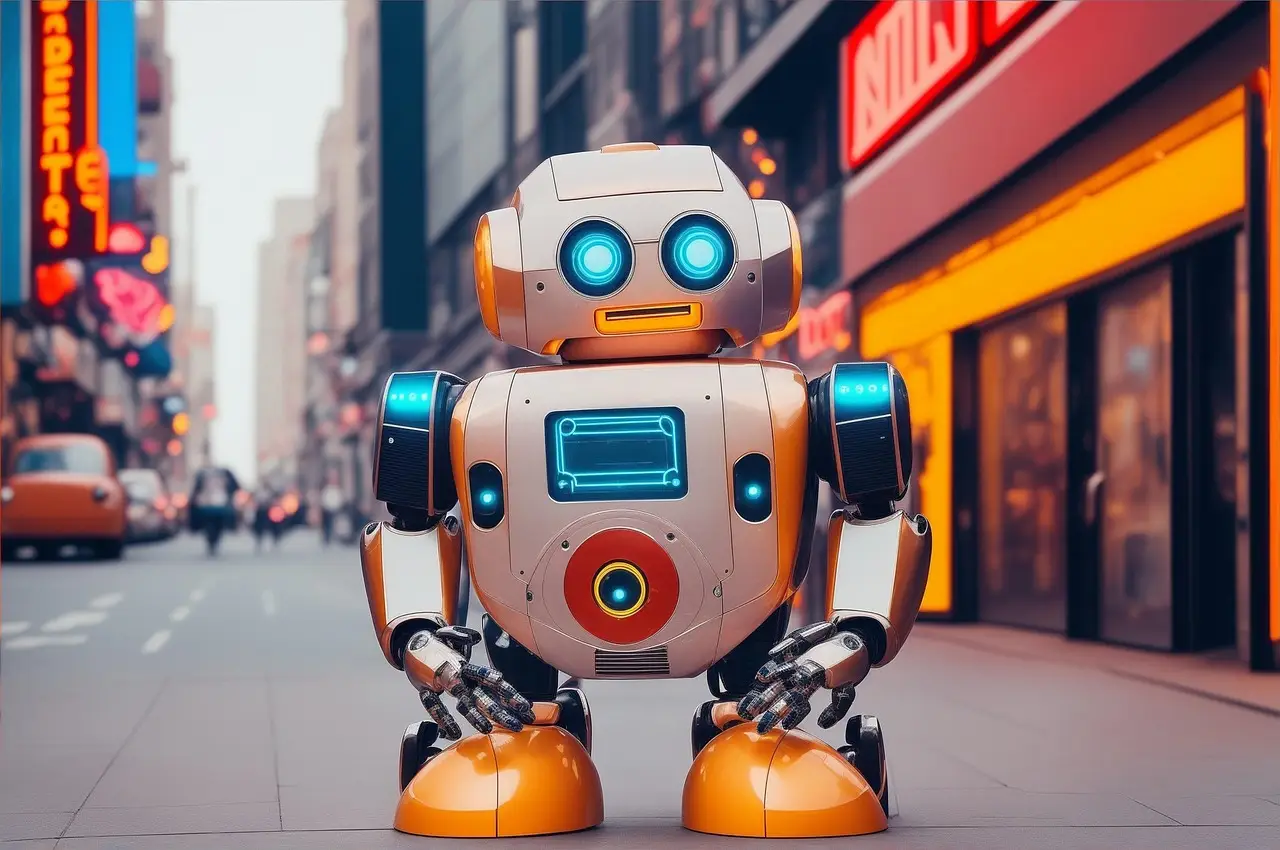
XPENG debuted the IRON humanoid at its eighth AI Day in Guangzhou on November 25, 2026, with 76 degrees of freedom, a three-chip Turing brain and a Q1 2027 start as a store assistant.
By Daniel Okafor
3 min read
What's News
- XPENG unveiled IRON, a 76-degrees-of-freedom humanoid, at its eighth AI Day in Guangzhou on November 25, 2026.
- IRON trains as a retail assistant in XPENG stores in Q1 2027 and gets a public release in Q2 2027.
- VLA 2.0 version 6.4.0 raises training speed by 10-12 times via autonomous closed-loop methods.
- VLA Adaptive Deceleration delivered a 12.4% increase in usable driving range; first OTA rollout is December 2026.
- Robotaxi program reached driverless road testing in eight months; YOLO-01 is due in 2027.
XPENG unveiled its IRON humanoid on November 25, 2026, at its eighth AI Day in Guangzhou, scheduling the robot to start work as an assistant in XPENG retail stores in Q1 2027 ahead of a public release in Q2 2027. The company paired the debut with a shared physical AI architecture, the Turing Physical AI Architecture or VLA 3.0, that splits cognition, real-time decision-making and physical execution across three connected systems.
IRON carries 76 degrees of freedom and more than 1,500 tactile sensing points, with tactile coverage across more than 80% of key body areas. Three proprietary Turing AI chips support onboard models and whole-body control. Chairman and CEO He Xiaopeng framed the goal as AI that can work alongside people and grow through real-world experience. "The brain and body must evolve together," he said.
How does the three-system architecture work?
System 0 handles the physical layer. It brings power, energy, communication and execution into the control loop, supplying body-state feedback and information on the system's ability to act safely. System 1 handles immediate responses, using VLA 2.0 to interpret surroundings and turn that understanding into action. System 2 handles higher-level planning: a vision-language task planner interprets objectives, while an Agent Runtime state machine coordinates the steps complex work requires.
Feedback flows back through the stack. The architecture receives both the body's condition and the outcome of each action, supporting continued adaptation and optimisation. Computing, data infrastructure, control and safety technology span XPENG's automotive and robotics programs, while hardware- and task-specific capabilities stay separate. Automotive research, testing and manufacturing experience feeds robotics; advances in robotic sensing and interaction can inform future vehicles.
What speeds up model training?
XPENG reports that VLA 2.0 version 6.4.0 supports agent-driven autonomous closed-loop training, recursive self-improvement and model self-distillation. The result is a 10-12x increase in overall training speed, which the company says accelerates development and adaptation across computing platforms.
How will IRON be built and deployed?
The humanoid combines multimodal understanding, task planning, navigation and manipulation with physical execution and safety monitoring. For work roles, IRON is being developed to navigate and charge autonomously, accept tasks through voice or app instructions, report abnormal conditions and monitor its own operating health.
XPENG's Robot Data Factory covers more than 250 scenarios and 15 job categories, reusing automotive data-processing and evaluation tools. A dedicated automated assembly line applies more than 600 AI holographic quality-inspection items and over 1,000 tests to complete robots and key components.
The company also plans an open ecosystem. Partners would download capability packages, customise functions, and develop and validate skills for specific business applications. The commercial model combines hardware sales, software subscriptions and the open platform, with token-based subscriptions and scenario-based services still under exploration.
What happened on the vehicle side?
X-VMC 2.0 connects propulsion, braking, steering and suspension, letting AI coordinate driving, safety, cabin comfort and energy management. VLA Adaptive Deceleration uses road-scene understanding to adjust deceleration and energy recovery when the driver lifts off the accelerator. XPENG's urban-congestion tests reported a 12.4% increase in usable driving range compared with energy recovery switched off. The first over-the-air rollout lands in December 2026.
The robotaxi program moved from staffed to driverless road testing in eight months. It obtained a Guangzhou qualification for driverless demonstration operations 11 months after the business was announced, and driverless passenger tests have begun. XPENG plans selected-area demonstration operations by the end of 2026 and a 2027 release for the purpose-built YOLO-01, intended to supply vehicle platforms and autonomous-driving capabilities to operating partners.
The retail assignments give XPENG a concrete checkpoint. They will show whether the shared automotive-derived foundation can support useful work before IRON reaches the public in Q2 2027.
Source: unite.ai
More from Daniel Okafor
Show full bio
Correspondent covering money, funding and market shifts around entrepreneurship, startups and venture funding at Business Bearings.
2,706 articles