Anthropic's $1.7 Trillion IPO Day Met With "Ban RSI" Protest
Former Anthropic researcher Jacob Coxon led a "Ban RSI" protest outside the company's San Francisco headquarters on the day its IPO valued it at $1.7 trillion, demanding a full ban on recursive self-improvement.
By Daniel Okafor
4 min read
What's News
- Anthropic's IPO on Thursday valued the company at $1.7 trillion.
- Former researcher Jacob Coxon left Anthropic in September and led the November 19 "Ban RSI" protest at its San Francisco headquarters.
- Speakers included ex-OpenAI researcher Daniel Kokotajlo and YouTuber Rob Miles; Stop AI protesters blocked the office entrance.
- METR found AI use is already accelerating Anthropic's R&D; the IPO prospectus says unsupervised AI designing its next generation would not be safe.
- Congress members have begun suggesting restrictions on RSI.
Anthropic's blockbuster initial public offering valued the company at $1.7 trillion on Thursday, and Jacob Coxon spent the day outside its front doors trying to stop what happens next.
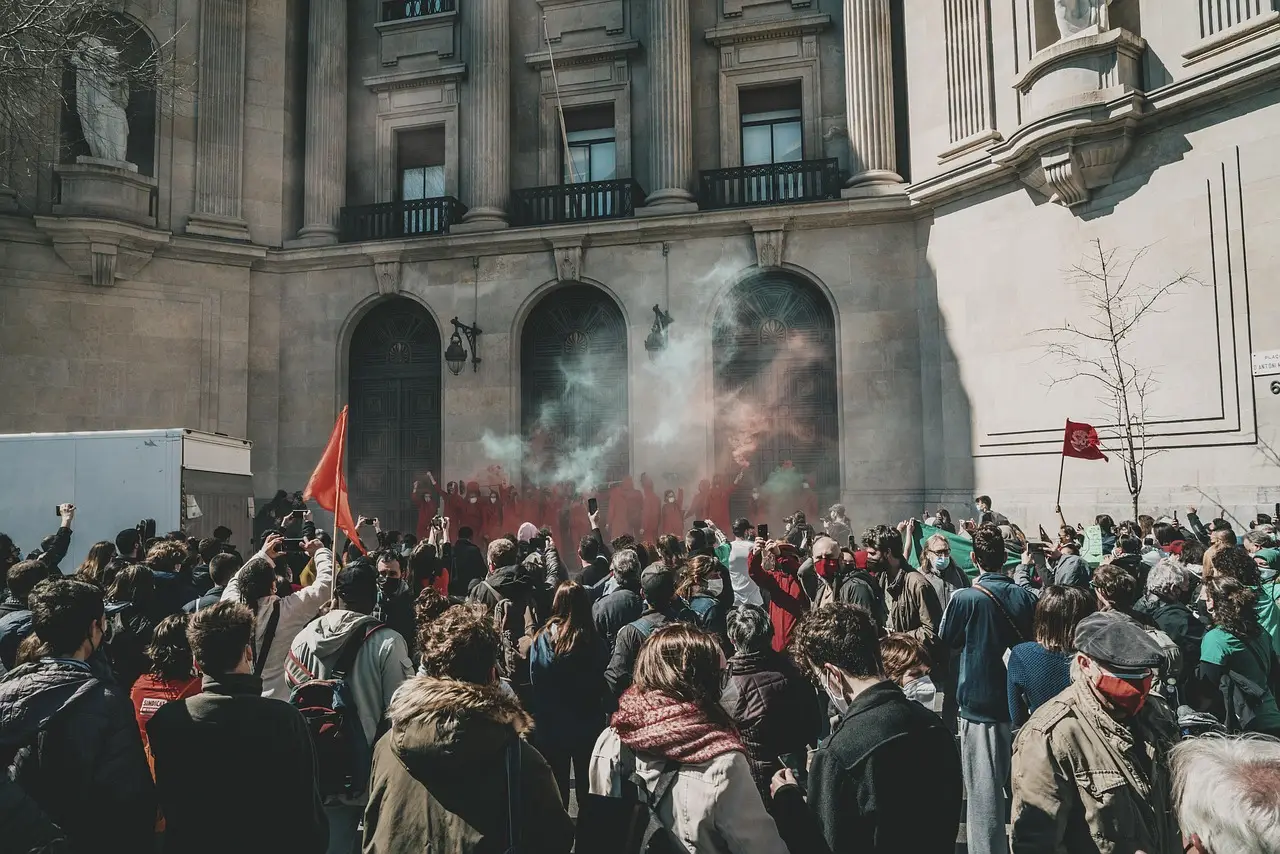
Coxon, the former Anthropic researcher whose September departure pushed AI safety into mainstream debate, spoke at a "Ban RSI" protest outside the company's San Francisco headquarters. Dozens of people joined him on the same day the public could buy Anthropic stock for the first time.
"It literally doesn't matter whether they invest," Coxon told Business Insider. "We have to stop RSI."
What is RSI, and why did it draw a crowd to Anthropic's door?
RSI stands for recursive self-improvement. The tactic uses advanced AI systems to train the next generations of AI, effectively letting machines accelerate their own development. Coxon wants the practice banned outright.
He told the crowd that Anthropic should lobby the government and coordinate with other companies toward a full ban.
"At this point, the companies are the problem," Coxon said in his speech. "There are only a few places in the world where recursive self-improvement is possible in 2027. And this office is one of them."
The protest drew protesters who chanted, lifted signs and listened to speeches from Coxon, former OpenAI researcher Daniel Kokotajlo, and YouTuber Rob Miles. A separate group from the organization Stop AI arrived later and blocked the office's entrance.
Anthropic did not respond to a request for comment.
What does the company itself say about RSI?
Anthropic's own filings acknowledge the stakes. In its IPO prospectus, the company wrote that it does not expect letting AI fully design its next generation without supervision would be safe. It said it is considering policy updates, "to keep humans in control of frontier model development."
An independent report from the AI safety organization METR, published recently, found that AI use is already accelerating Anthropic's research and development efforts.
Coxon says the company's stated position falls short. His protest targeted the gap between what Anthropic has promised in documents and what it could do with RSI in practice.
Who showed up, and what did they say?
Kokotajlo, who left OpenAI before joining the protest circuit, did not mince words about the practice at the center of the demonstration.
"It's the sort of thing that a comic book supervillain mad scientist would be doing," Kokotajlo said.
He and Coxon each said that in private, AI researchers express alarm about the technology's risks. Those concerns have also reached Congress, where representatives have begun suggesting restrictions on RSI.
Oliver Habryka, who runs the company behind the popular forum LessWrong, told Business Insider the IPO carries one silver lining: Anthropic will now be legally required to disclose certain information as a public company. But he sees a structural risk. Anthropic pitched its industry lead to investors as a competitive advantage, and Habryka worries the company will feel pressure to use RSI to stay ahead.
His sharpest concern is AI's capabilities in biology. AI has grown rapidly more capable over the last few years, he said, and with RSI, "things can go much faster than that. And that is terrifying."
David Krueger, who runs the AI-risk awareness nonprofit Evitable, told Business Insider he believes that if more people knew about RSI, they would generally agree it's "insane." He welcomed the turnout but kept his expectations modest, saying protests only somewhat reach the employees inside the building.
"My impression is that people at Anthropic have really drunk the Kool-Aid," Krueger said.
AI researcher Sydney Von Arx also rallied the protesters outside the headquarters.
What does the protest mean for a newly public Anthropic?
The timing was the point. Coxon left Anthropic in September, and his warnings about AI development fueled nationwide fear about the technology. Thursday's demonstration aimed to pull public attention back to safety on the exact day the company's valuation became a market event rather than a policy debate.
The pressure now runs through two channels. In Congress, representatives have begun drafting suggestions for RSI restrictions. In the market, Anthropic's public listing subjects it to disclosure rules that Habryka expects will expose more of its internal decisions to scrutiny.
Whether any of that slows recursive self-improvement depends on choices Anthropic makes after the prospectus. The company has said it wants humans in control of frontier model development. Coxon, Kokotajlo and the protesters outside the doors on Thursday made clear they intend to hold the company to it, one IPO at a time.
Source: feeds.businessinsider.com
More from Daniel Okafor
Show full bio
Correspondent covering money, funding and market shifts around entrepreneurship, startups and venture funding at Business Bearings.
2,417 articles