Anthropic's $81.34 Billion IPO Draws Twin-Coast Protests
Anthropic raised $81.34 billion pricing 980 million shares at $83, as ACT UP NY and Ban RSI protested its Nasdaq listing over AI in healthcare and recursive self-improvement on November 19, 2026.
By Amara Osei
3 min read
What's News
- Anthropic priced 980 million Class A shares at $83 each on November 19, 2026, an $81.34 billion offering.
- A single founder-held Class F share carries 50.1% of general voting power; the Long-Term Benefit Trust picks most directors.
- Ban RSI's San Francisco rally drew 164 RSVPs; speakers included Jacob Coxon, Daniel Kokotajlo and Rob Miles.
- Anthropic's prospectus frames Claude building its successor as a structural advantage rather than a risk.
Anthropic priced 980 million Class A shares at $83 each on November 19, 2026, raising $81.34 billion in an Nasdaq offering that drew organized protests in New York and San Francisco over AI safety, healthcare and retirement-fund exposure.
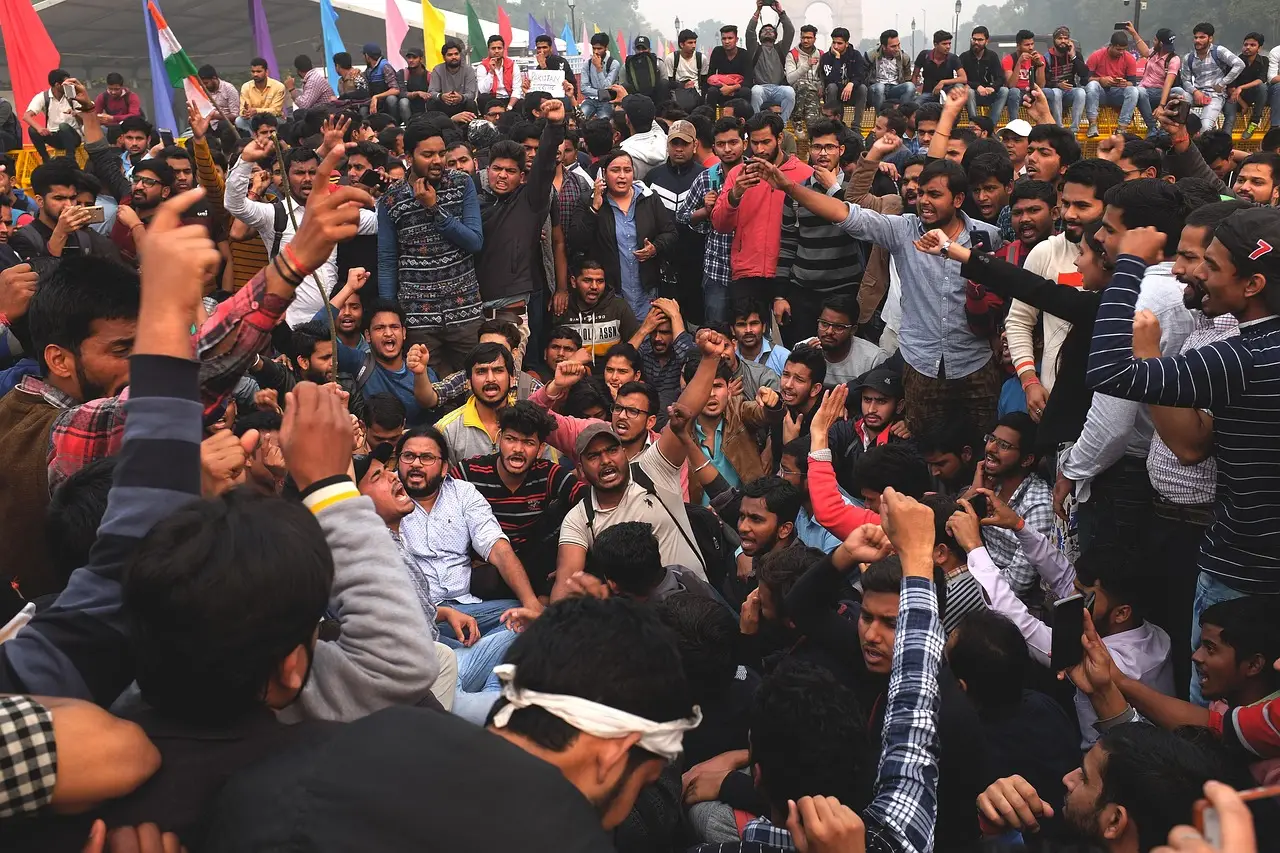
ACT UP NY and Ban RSI staged separate demonstrations the morning Anthropic entered public markets. ACT UP NY called supporters to 4 Times Square at 8:30 a.m. ET, where the company held its IPO event. Ban RSI scheduled a rally outside Anthropic's office at 500 Howard Street in San Francisco from 11 a.m. to noon Pacific.
What did the protesters want?
ACT UP NY's action notice asked members to hold an "AI Out Of Our Healthcare" banner, distribute flyers and potentially speak at the rally and to reporters. The group said some practices it opposes have already begun in hospitals and doctors' offices. Its concerns include AI replacing live medical screening or hospital staff, influencing treatment and outcomes, training on health data, and racial, gender and anti-LGBTQ bias.
Ban RSI wants large AI companies prohibited from using systems more powerful than those available at the time of the rally for AI research, ideally through an international treaty. Its enforcement proposal has three parts:
- Safeguards in more powerful systems that block such research even internally
- Red-team testing of those safeguards
- Exceptions for monitoring and safety research that clearly don't increase AI capability
The group defines recursive self-improvement as AI doing the work of building more powerful AI. Its rally page listed 164 accounts in its "Went" category — a host-platform RSVP status, not a verified crowd count. Scheduled speakers included former AI researchers Jacob Coxon and Daniel Kokotajlo and AI safety educator Rob Miles.
How does Anthropic answer?
The company's final prospectus frames the practice as a feature, not a bug. It describes "closing the loop" as a structural advantage: successive Claude versions assist in building the next through experiments, training-data generation and processing, evaluations, safety audits, and code writing and review.
An Anthropic Institute article says full recursive self-improvement — an AI system autonomously designing and developing its own successor — has not arrived and is not inevitable. It also says such a capability could increase the risk of humans losing control. The article identifies a remaining gap in Claude's judgment about which goals and experiments to pursue, even as the system takes on more engineering and research work.
Anthropic says it would expect to slow down or temporarily pause if other developers at or near the frontier did so verifiably. Its proposed conditions include multiple well-resourced labs in multiple countries and systems that can confirm compliance.
That leaves a narrow point of agreement and a sharp divide. Ban RSI also rejects a unilateral-pause demand. But the protesters want Anthropic to announce concrete, verifiable steps itself — possibly urging other companies to follow or lobbying for legislation — while Anthropic's stated expectation to pause depends on reciprocal action. The company argues a unilateral pause would accomplish less and could change the industry front-runner.
Who actually controls the company?
A separate joint petition sponsored by the Action Center on Race and the Economy, Stop Funding Billionaires, Climate Defenders and other organizations called for a boycott of the IPO, a pause on all AI and data-center investments, and a pledge not to use taxpayer or retirement money for an AI bailout. It targets bank executives underwriting or facilitating the offering, state and local financial officers, asset managers, university endowments and foundations.
The prospectus concentrates power in two places. A single Class F share held by the founders' Founder LLC carries votes equal to 50.1% of general voting power, while Class A shares carry one vote each. The Long-Term Benefit Trust generally can elect and remove the Class T directors who constitute a board majority.
The IPO therefore leaves investors and protesters with a paired accountability question: whether Anthropic's development practices can be verifiably constrained, and whether that governance structure upholds its stated public-benefit purpose of responsible AI development for humanity's long-term benefit.
Source: unite.ai
More from Amara Osei
Show full bio
Senior reporter covering companies, deals and strategy in entrepreneurship, startups and venture funding at Business Bearings.
2,393 articles